
Buying help
Ladder and Truck Equipment Resources on Ladder Heights, Fall Protection, Staging, Job Site Storage, Racks and More
Reach charts and duty ratings, OSHA ladder rules, harnesses and lifelines, pump jacks and siding brakes, chests and piano boxes, and the racks, truck boxes and van shelving that carry a crew’s kit.
Our ladder and truck equipment resources answer the buying questions contractors bring to our counters, and Nation Wide Ladder writes them from the equipment we quote, deliver and install across New England. They take in ladders by height and duty rating, fall protection, pump jack staging and siding brakes, lockable job site storage, and the truck boxes, ladder racks and van shelving that carry it all to work.



- Over 50 years serving contractors
- MA, NH, CT, ME, VT & RI
- Weekly Maine deliveries
Ladder and Truck Equipment Resources for New England Contractors
A crew’s kit works as one system. The ladder sets the length of the rack, the rack sets what rides overhead, and the job site box decides what stays behind when the truck leaves at night. Each of our resources takes one buying question from that system, such as which extension ladder height reaches a two-storey eave or how a piano box differs from a chest, and answers it with the figures the manufacturers publish.
Every resource links into the brand pages for the equipment it discusses, so a general ladder or truck question leads straight to the models we carry. Ratings, sizes and OSHA ladder rules appear as their sources state them, with the source listed.
Browse All Ladder and Truck Equipment Resources
 Fiberglass vs Aluminum Extension LaddersFiberglass or aluminum rails on an extension ladder, weighed on power-line safety, carry weight, ratings and rungs.
 Ladder Duty Ratings Explained: Type III to Type IAAThe five ladder duty classes, what counts toward the load, and which Werner and Louisville series carry each…
- How to Choose the Right Extension Ladder HeightWork back from the gutter or roof edge to the right extension size, using reach charts, overlap and…
 How to Choose the Right Step Ladder HeightPick a step size from the work height, using Werner reach figures, Louisville standing heights and the two-step…
- Step Ladders vs Podium LaddersFolding step or enclosed podium, compared on reach, standing room, guardrails, casters and ratings.
- Twin Step Ladders vs Single-Sided Step LaddersTwin or single-sided stepladders compared on two-person use, ratings, weight and tops across Werner and Louisville.
- Multi-Position Ladders vs Step LaddersOne MT frame with five setups or a dedicated folding step, compared on reach, ratings, levelers and setup…
- Werner vs Louisville Extension LaddersWerner and Louisville extension lineups side by side, on ratings, locks, shoes, utility fittings and parts.
- Werner vs Louisville Step LaddersWerner and Louisville step ranges side by side, on ratings, materials, tops, twins, Cross-Step and podiums.
- Extension Ladder Setup and the 4 to 1 Angle RuleThe 4 to 1 ladder angle rule as Werner, OSHA and Cal/OSHA state it, with the arm test,…
- Ladder Inspection Checklist for ContractorsWhat to check on step, extension and single ladders before each use, and what OSHA requires when one…
- Ladder Stabilizers and Levelers: When You Need ThemWhen a standoff stabilizer or a leveler solves the problem, with Werner, Louisville and LeveLok options compared.
- Why Fiberglass Ladders for Electrical WorkWhy OSHA points electricians to fiberglass rails, where that protection ends, and how to rate and care for…
- Two-Section vs Three-Section Extension LaddersTwo-section and three-section extension ladders compared on closed length, working height, overlap and weight.
- Choosing Manhole and Single LaddersHow single and manhole ladders differ, which materials and ratings suit each site, and how to size them.
- Ladder Jacks and Planks for Siding and PaintingHow ladder jack staging goes together, what planks it needs and the OSHA limits on height, overhang and…
 How to Carry Ladders on a Work Truck or VanRack types, load figures and tie-down habits for carrying ladders on a pickup or work van.
- Self-Retracting Lifelines vs Shock-Absorbing LanyardsHow a self-retracting lifeline and a shock-absorbing lanyard differ on free fall, clearance, reach and anchor height.
- How to Plan Fall Clearance for an SRLHow free fall, arrest distance, anchor position and swing add up to the clearance a self-retracting lifeline needs.
- Leading Edge SRLs: When You Need ThemWhen foot-level tie-off calls for a Class 2 self-retracting lifeline tested over an edge.
- Choosing a Fall Protection Harness by TradeWhich harness D-ring layout suits roofing, steel, rebar, climbing, electrical and roadside work.
- Roof Anchors: Permanent vs TemporaryWhen a permanent roof anchor earns its place and when a temporary one suits the job.
- Horizontal Lifelines ExplainedHow a horizontal lifeline works, what it does to its anchors and how rope and cable systems differ.
- Vertical Lifelines and Rope GrabsHow vertical lifelines and rope grabs work together, and how trailing and manual grabs differ.
- Arc Flash Fall Protection GearWhy arc exposure changes harness, lanyard and SRL choice, and what OSHA and ASTM ask of arc flash…
- Fall Protection Inspection and ReplacementPre-use checks, yearly reviews and the signs that a harness, lanyard or SRL must be replaced.
- 6 ft vs 11 ft SRLs: Which Length to BuyWhat a 6 ft and an 11 ft self-retracting lifeline each suit, and what changes with a longer…
- Pump Jack Scaffolding vs Traditional ScaffoldingPump jacks or frame staging? How the two systems compare on bracing, platform width, load, height and the…
- Alum-A-Pole Pump Jacks vs ReechCraft PowerPoleFoot-pumped Alum-A-Pole jacks or the drill-driven ReechCraft PowerPole, compared on lift method, ratings, heights and setup.
- Van Mark vs Alum-A-Brake Siding BrakesVan Mark or Alum-A-Brake? Throat depth, hems, bending limits, lengths and built-in cutting compared fairly.
- How to Choose a Siding Brake LengthHow to pick a siding brake length by trim piece, weight, castings and the truck or van that…
- Roof Brackets and Guardrails for Roofing CrewsHow roof brackets give footing and guardrails protect the edge, with the OSHA rules and Acro systems behind…
- Wall Jacks for Framing CrewsHow wall jacks raise a sheathed frame, how to size and space them, and how to keep the…
- Ladder Hoists for Moving Roofing MaterialWhy roofers use ladder hoists, how 200 and 400 pound platform hoists compare, and how to land loads…
- Bending Trim Coil on the Job SiteHow siding crews dispense, cut, measure and bend trim coil on site, and the tools and limits that…
 Van Shelving Layouts by TradeHow HVAC, electrical, general service and locksmith work each shape a van interior, from tank racks and bins…
- Holman vs Weather Guard Van ShelvingHolman and Weather Guard van interiors compared fairly, from trade packages and starter kits to bulkheads, folding shelves…
 Matching Van Shelving to Your Roof HeightHow compact, low, mid and high roof vans change shelf unit height, reach, layout and bulkhead choice.
- Planning a Ford Transit UpfitThe order to plan a Ford Transit work van in, from wheelbase and roof to shelving, bulkhead and…
- Sprinter vs Transit Van UpfitsMercedes Sprinter and Ford Transit work vans compared for shelving, folding shelves, partitions and roof racks.
- Drop-Down vs Clamp-and-Lock Van Ladder RacksDrop down and Clamp & Lock van ladder racks compared by roof height, loading routine, mechanisms and mount…
- Van Cargo Racks vs Ladder RacksVan cargo platforms and ladder racks compared for pipe, lumber, ladders and mixed loads, with Holman, Vantech and…
 Do You Need a Van Bulkhead?When a work van needs a bulkhead, and how steel, composite, window and mesh partitions differ by van…
- Steel vs Aluminum Truck RacksAluminum and steel pickup racks compared on weight, rust, repairs and finish, with real racks from both camps.
- Holman Pro II vs System One Truck RacksHolman Pro II and System One pickup racks compared fairly on build, mounting, caps, tool boxes and tie-downs.
- TracRac vs System One Truck RacksThule TracRac and System One pickup racks compared fairly on ratings, mounting, sliding access, tool boxes and tie-downs.
- Headache Racks vs Full Truck RacksHeadache racks and full over-bed truck racks compared on cab protection, ladder carrying, lighting and tool box fit.
- Truck Tool Box Types: Crossover, Saddle, Side Mount and ChestCrossover, saddle, side mount, chest, wheel well and underbody truck tool boxes, and how to tell which one…
- Weather Guard vs K&W Truck BoxesWeather Guard and K&W truck boxes compared fairly by style, size, gauge, lock, finish and warranty.
- Low-Profile vs Standard Crossover Truck BoxesLow profile and standard crossover truck boxes compared on height, capacity, bed wall height and rack fit.
- Underbody Truck BoxesUnderbody truck boxes for flatbeds and service bodies, with Weather Guard and K&W sizes and how to measure…
- Truck Bed Drawers vs Truck Tool BoxesTruck bed drawers and truck tool boxes compared on reach, deck load, rail space, covers and racks.
- Truck Bed SlidesTruck bed slides compared on payload, extension, size and accessories, from DECKED CargoGlide to BEDSLIDE Classic.
- Ladder Racks for Pickups With CapsLadder racks for pickups with caps, from Holman roof-mount kits to System One and Holman racks that stand…
 Securing Ladders and Cargo With Straps and Tie-DownsSecuring ladders and cargo with locking racks, winches, retractable ratchet straps, stops and anchors.
- Powder Coated Truck RacksPowder coated truck racks explained, from factory black and white finishes to custom colors on new System One…
- What to Plan Before a Van UpfitWhat to settle before a van upfit, from roof height and wheelbase to shelving, bulkheads and roof racks.
- Outfitting a Fleet of Work VansHow to outfit a fleet of work vans with standard layouts, package levels, roof racks and good records.
- Job Site Chests vs Piano Boxes vs Field StationsLid-top chests, front-opening piano boxes, field stations and carts compared by how a crew reaches, stores and moves…
- Knaack JOBMASTER vs STORAGEMASTERKnaack chests and piano boxes compared model by model, from latch points and lid springs to open heights…
- How to Size a Job Site BoxHow to size a job box from the tools inside, the floor space, the headroom to open it…
- Keeping Tools Secure on the Job SiteLayered protection for tools on the job, from steel boxes and recessed locks to locking carts, truck box…
- Hard Hat Types and Classes ExplainedWhat Type I, Type II and Class G, E and C mean on a hard hat, and how…
- Cut-Resistant Gloves and ANSI Cut LevelsWhat ANSI cut levels A1 to A9 mean, how to read a glove label, and how to choose…
- Working on Uneven Ground With Ladder LevelersWhy OSHA wants a level footing, how quick connect ladder levelers work, and how to fit them to…
- Pole and Line Safety Gear for Utility CrewsLadder straps, nonconductive ladders, rated hard hats and hi-vis vests for crews working at utility poles.
- How to Order Truck and Van Equipment With a QuoteWhat to send for a truck or van equipment quote, from vehicle details and parts lists to fleet…
- What to Expect From Truck Equipment InstallationWhat happens when racks, truck boxes, transfer tanks and van shelving are fitted, from fitment checks to aftercare.
- Choosing Equipment for New England WintersRacks, truck boxes and ladder footing chosen for New England salt, snow and ice.
- OSHA Ladder Rules Contractors Should KnowThe OSHA 1926.1053 ladder requirements contractors meet every day, from setup angle and landings to load, rails and…













Ladder Resources on Height, Duty Rating and Rail Material
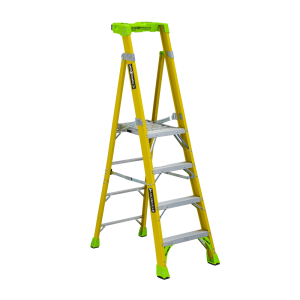
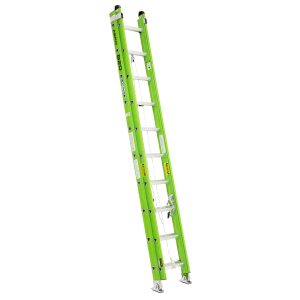
Most ladder questions come down to three choices. Height comes first, and the figure that matters is the height you can work at rather than the size on the label. Werner and Louisville both publish reach charts for each size, and Werner sets the highest standing level on an extension ladder four rungs down from the top, while on a step ladder it sits two steps down. For roof access OSHA wants the side rails to run at least 3 feet past the landing, and Werner advises an extension ladder 7 to 10 feet longer than the highest point it rests against. Our ladders by height pages set both brands side by side at each size.
Duty rating comes second. Ratings in our ladder range run from Type II at 225 pounds to Type IAA at 375 pounds, and the load counts the climber, tools and material together. Rail material is the third choice, since OSHA calls for nonconductive side rails wherever the worker or the ladder could contact exposed energized electrical equipment, which is why electricians standardize on fiberglass. You can weigh Werner ladders against Louisville ladders series by series.
Our team checks ladder height and duty rating against the work you describe, so the ladder on your quote reaches the job and carries the load.
Fall Protection and Siding Equipment Resources for Work Above the Ladder
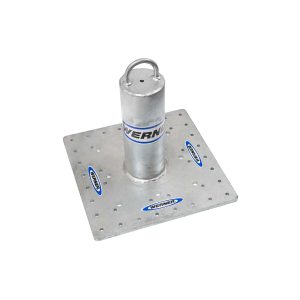
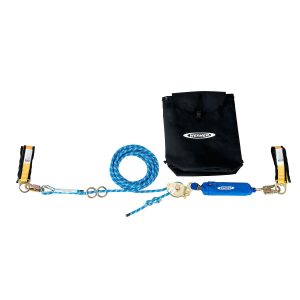
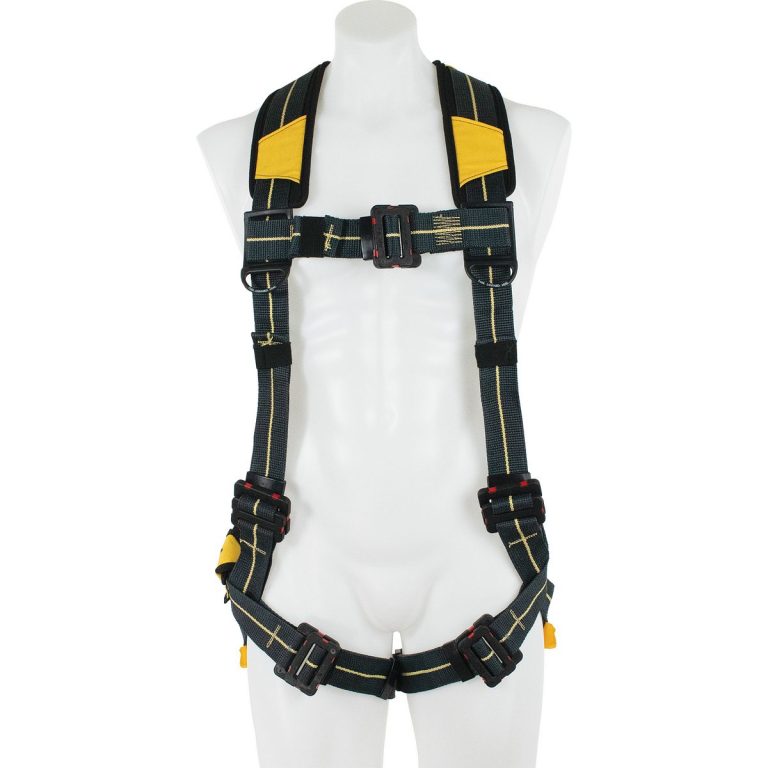
Work at height often moves past what a ladder can do. Werner notes that fall protection becomes required at 6 feet in construction, so roofers, siders and steel crews need a full-body harness and a connector matched to the clearance under them. Werner rates its overhead-anchored Bantam, Max Patrol and Baseline self-retracting lifelines to stop a fall within 24 inches, far less distance than a 6 foot lanyard and shock pack need, which matters on low roofs. Our pages on Werner fall protection harnesses show how harness, connector and anchor fit together.
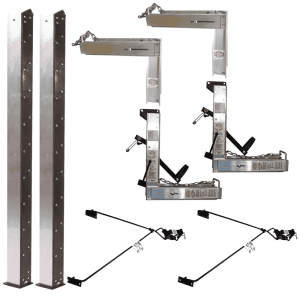
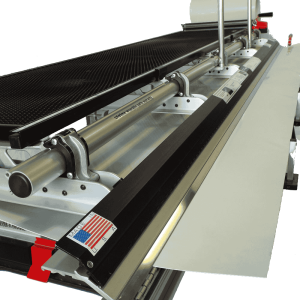
Siding work brings its own equipment. Pump jack scaffolding raises a working platform up aluminum poles set along the wall, and Alum-A-Pole traces its first aluminum pump jack pole to a siding contractor in 1980. Trim and flashing are bent on site with a portable brake, a tool Van Mark has built since Gene Van Cleave patented the Trim-A-Brake in 1964. The Alum-A-Pole scaffolding and Van Mark brakes pages list the models we carry for both kinds of exterior work.
Over 50 years of supplying New England siders, roofers and steel crews means we can talk through harness, staging and brake equipment in one conversation.
Job Site Storage Resources, From Lockable Chests to Truck Boxes
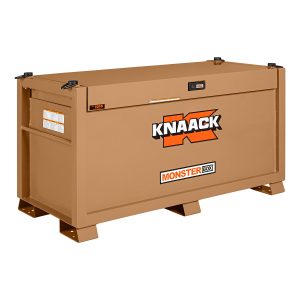
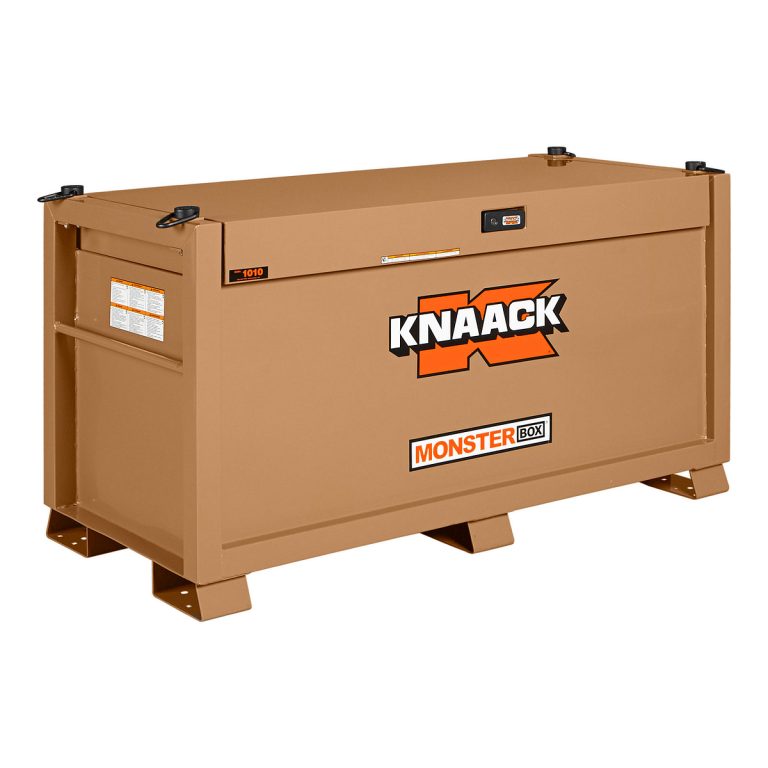
Tools left on site overnight need a box that resists a pry bar. Knaack builds its job site storage in three formats. Lid-top chests run from the 7 cubic foot JOBMASTER 36 to the 31 cubic foot Monster Box 1010, STORAGEMASTER piano boxes open from the front onto shelves and hold 35.3 to 57.5 cubic feet, and the 119-02 Field Station is an upright cabinet of about 121 cubic feet for a foreman’s drawings and tools.
Choosing between them depends on how often the crew reaches in, how the box moves and where it will stand. Chests suit bulky gear lowered in from above, piano boxes suit trades pulling small parts all day, and the larger units call for a forklift or the Knaack caster set, rated at 2,600 pounds for the box and its contents. Knaack fits its patented Watchman IV lock system as standard across most of the line, and our Knaack job site boxes page compares every model we list. On the truck itself, storage moves to saddle, side, wheel well and underbody boxes.
Our own trucks deliver door to door across New England, so a 380 pound piano box arrives at the site rather than at a loading dock.
Truck and Van Equipment Resources on Racks, Boxes and Shelving
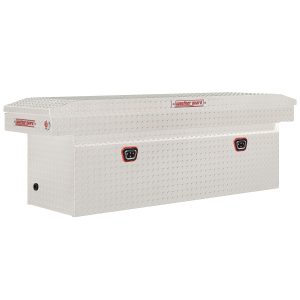
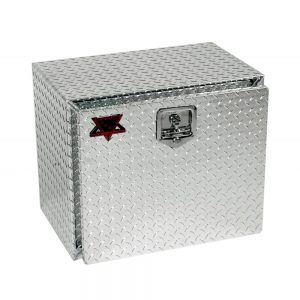
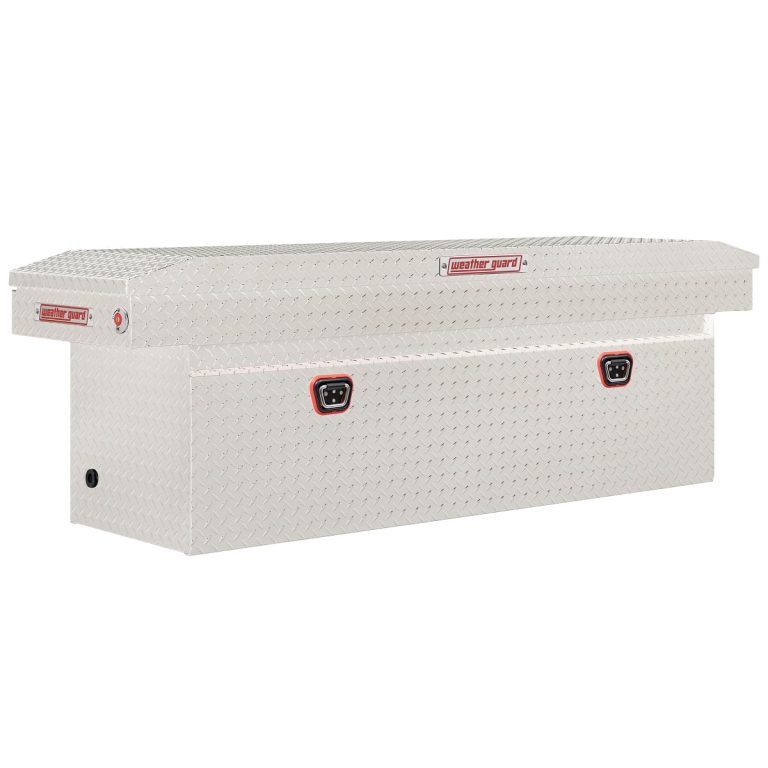
A work vehicle carries the ladders, the storage and the crew, so its equipment is planned around the vehicle first. On a pickup, Weather Guard truck and van equipment covers saddle, lo-side, hi-side, wheel well and underbody boxes and steel transfer tanks, and Weather Guard matches each box to a truck from the bed length, width and height. Overhead, System One ladder racks are modular aluminum rigs, and System One rates its Heavy Duty Contractor Rack at 1,250 lb.
Vans work differently, because roof height and wheelbase decide nearly every part number. Holman truck and van equipment includes van shelving packages built for a named model and wheelbase, along with Clamp & Lock, drop down, crossbar and cargo roof racks, and Weather Guard treats one bulkhead plus three shelving units as a sensible starting layout for most trades. Rack ratings deserve a careful read, since System One points out that no industry standard governs how rack makers rate their products. Before loading ladders on a van rack, check the roof load rating as well, which Weather Guard notes can be lower than what the rack itself will carry.
We install racks, truck boxes, transfer tanks and van equipment ourselves, so the parts on a truck quote go onto your vehicle as one job.
Ladder and Truck Equipment Makers Compared by Category
Several of these makers are related. Werner Co., now ProDriven Global Brands, owns Knaack, and Knaack builds Weather Guard, so the ladder on the rack, the box in the bed and the chest on site can come from one family, while plenty of crews mix makers to suit each job. A typical pickup might run a Werner ladder on a System One rack over a Weather Guard box, with a Knaack chest waiting at the site.
To see every manufacturer on our shelves grouped by category, start from our ladder and truck equipment brands hub.
Quotes Built From Our Ladder and Truck Equipment Resources
Each question our resources answer ends in the same place, a list of equipment matched to the work, the crew and the vehicle. Send that list through our quote form, call 603-434-6911 in New Hampshire or 508-754-3030 in Massachusetts, or visit Windham or Worcester on a Saturday morning, and we will price the equipment our resources helped you choose. Nation Wide Ladder keeps adding ladder and truck equipment resources as contractors bring us new questions.
Ladder and Truck Equipment Resources FAQs
What do your ladder and truck equipment resources cover?
Ladders by height and duty rating, OSHA ladder rules, fall protection, pump jack staging and siding brakes, job site storage, and truck boxes, ladder racks and van shelving.
How do I get a price after reading the resources?
We price ladder and truck equipment by quote. Send a list through our quote form or call 603-434-6911 in New Hampshire or 508-754-3030 in Massachusetts.
Where do the ladder figures in the resources come from?
Reach, duty rating and weight figures in our ladder and truck equipment resources come from Werner and Louisville, and ladder safety rules come from the OSHA construction standard, 29 CFR 1926.1053.
Which ladder duty rating do I need?
Match the rating to the heaviest climber with tools and material. Ratings in our range run from Type II at 225 pounds to Type IAA at 375 pounds.
Do you install the truck equipment the resources describe?
Yes. We install truck racks, truck boxes, transfer tanks and van equipment, and our team checks fitment for your truck or van before we quote.
Can I see ladder and truck equipment before buying?
Our Windham, NH and Worcester, MA showrooms offer free in-person consultations and estimates, and both open on Saturday mornings.
Need help choosing the right ladder or truck equipment?
Talk to the team or send us your list and we will put a quote together.