
Resources
Roof Anchors, Permanent Posts Versus Temporary Knock-Down Units, With Strength Ratings, Fastening and More
When a roof needs a permanent tie-off point and when a job-length anchor makes more sense, OSHA roof and anchorage rules, Werner post and truss anchors, pull angle, inspection and rescue.
Roof anchors give a crew the tie-off point every personal fall arrest system starts from, and the first decision is whether that point should stay on the building or come off when the job ends. Nation Wide Ladder helps roofers, remodelers and building owners weigh permanent post roof anchors against temporary knock-down and truss-mounted units, along with the harnesses, lifelines and ladders that work with them.

- Over 50 years serving contractors
- MA, NH, CT, ME, VT & RI
- Weekly Maine deliveries
Why Every Roof Job Starts With Anchors and the OSHA Rules
OSHA requires protection for anyone doing roofing work on a low-slope roof, working on a steep roof or doing residential construction with an unprotected edge 6 feet or more above a lower level. On a steep roof that means guardrails with toeboards, safety nets or a personal fall arrest system, and on most houses the arrest system is the practical answer. On a low-slope roof OSHA also allows warning line combinations, and on roofs 50 feet or less in width a safety monitoring system alone, yet any worker who ties off still needs a sound roof anchor. Werner teaches fall protection as anchorage, body support, connectors, descent and rescue, and education, with anchorage first because nothing else holds if the anchor fails.
The anchorage rule is the same for permanent and temporary roof anchors. OSHA calls for anchorage that supports at least 5,000 pounds per attached worker and stays independent of any anchorage used to support a platform, unless a qualified person designs it as part of a complete system with a safety factor of at least two. OSHA also bars tying a personal fall arrest system to a guardrail system, so a roof anchor has to be planned in rather than improvised from whatever is on the roof.
Our team helps you select roof anchors from the roof pitch, structure and crew count you describe, before anyone climbs to the eave.
Permanent Roof Anchors for Buildings That Need Repeat Access
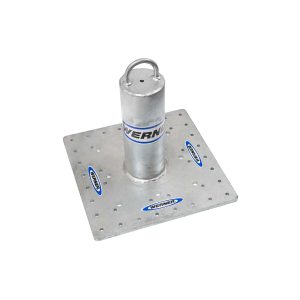
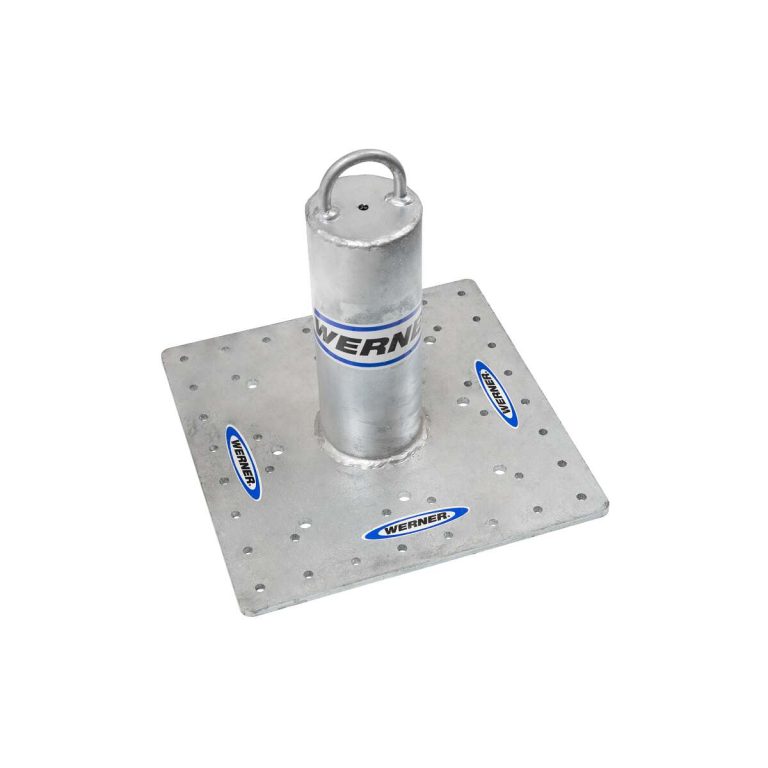
Some roofs see workers long after the roofer has left. Rooftop equipment, chimneys and flat commercial roofs bring service crews back season after season, and a permanent anchor gives each visit the same tie-off point without new holes in the roof. The Werner A525400 post anchor is built for that, as a permanent anchor point for roof work with a minimum breaking strength of 5,000 pounds. Its base is drilled for wood, concrete or I-beam installation, with the separate A525405 part needed for I-beams, and Werner lists it as meeting ANSI Z359.18-2017 and OSHA 1910.140 and 1926.502.
Permanent roof anchors suit building owners, property managers and contractors who return to the same roof, such as crews servicing rooftop units, cleaning gutters on tall buildings or maintaining flat commercial roofs. The anchor becomes part of the building, so its installation, fasteners and later inspections need recording, and the people who use it should know which roof anchors are on the roof and where they sit before they go up.
Over 50 years of supplying contractors and homeowners means we can talk through where a permanent roof anchor will serve the most future visits.
Temporary Roof Anchors for Reroofing and New Shingle Work
On a reroof or a new house, nothing should stick up once the shingles are done, so crews use anchors made for the length of the job. Werner sells a knock-down roof anchor, the A230400, as the job-length option, and its truss-mounted A210400 roof anchor fastens to the truss with 12 screws or nails. Werner also stresses direction of pull, saying that anchor should be loaded within 22 1/2 degrees of center, which shapes where it sits relative to the work and the eave.
Temporary roof anchors are fastened by the crew on every job, so the user instructions for each model govern the fasteners, the framing they go into and the number of workers the anchor supports. Check those instructions before planning the system around any anchor. Set temporary roof anchors before the work exposes anyone at the edge, and keep the fall path clear of lower obstructions, since OSHA caps free fall at 6 feet with no contact with a lower level. OSHA requires any part of a fall arrest system that has taken an impact load to come out of service until a competent person finds it undamaged, and for a job-length anchor that has held a fall, the practical answer is a new one.
Saturday morning hours at both of our locations let a roofing crew pick up temporary roof anchors without losing a working weekday.
Roof Anchors, Ladders and Harnesses Planned Together
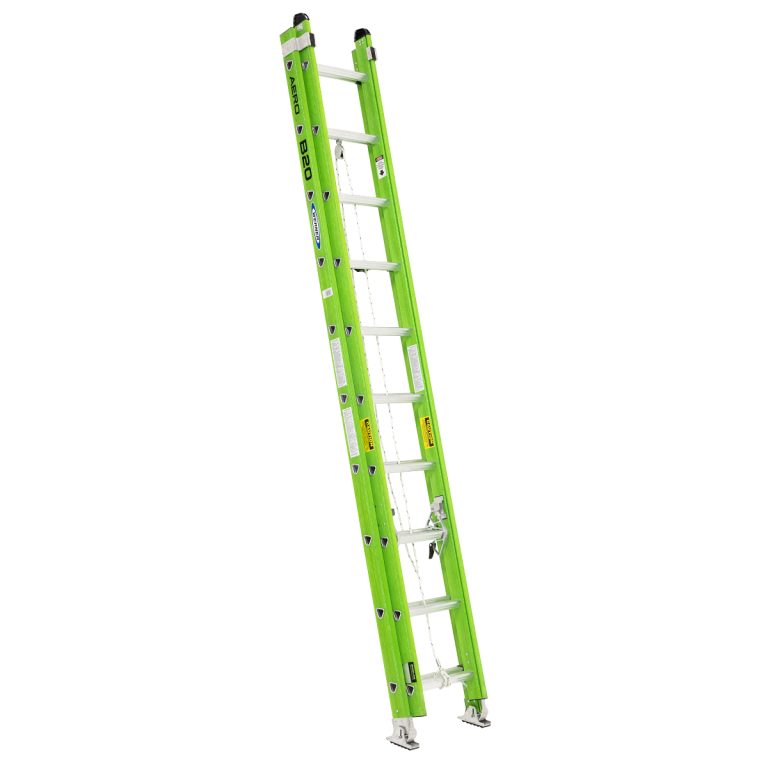
An anchor is set by someone who first climbed to the eave, often on one of our Werner extension ladders, and then tied in with a construction harness and a lifeline or self-retracting lifeline. Choosing those pieces with the roof anchor keeps the climb and the tie-off in one plan.
To size up every maker of that roofing access gear, open our ladder and truck equipment brands hub.
Choose Roof Anchors to Match How Often a Building Is Revisited
Send us a list of the roofs you have lined up and how often each will be revisited, or call 603-434-6911 in NH or 508-754-3030 in MA, and we will quote permanent or temporary roof anchors from our Werner fall protection anchors range to suit.
Roof Anchors FAQs
Should I use permanent or temporary roof anchors?
Permanent roof anchors suit buildings that see repeat visits for maintenance. Temporary anchors suit reroofing and new construction where nothing should remain once the shingles are done.
How strong do roof anchors need to be?
OSHA requires anchorage that supports at least 5,000 pounds per attached worker, unless a qualified person designs it as part of a complete system with a safety factor of at least two.
What is the Werner A525400 post anchor rated for?
Werner lists a minimum breaking strength of 5,000 pounds and compliance with ANSI Z359.18-2017 and OSHA 1910.140 and 1926.502.
Which direction should a roof anchor be pulled?
Werner says its A210400 roof anchor should be pulled within 22 1/2 degrees of center, so place it in line with the work.
Can I reuse a temporary roof anchor after a fall?
OSHA requires equipment that has taken an impact load to come out of service until a competent person finds it undamaged. For a job-length anchor, replacing it is the practical answer.
Can I tie off to a guardrail on a roof?
No. OSHA does not allow a personal fall arrest system to be attached to a guardrail system.
Need help choosing the right ladder or truck equipment?
Talk to the team or send us your list and we will put a quote together.