
Resources
Pump Jack Scaffolding vs Traditional Frame Staging by Bracing, Platform Width, Load, Height and More
Poles and pump jacks against stacked frames, OSHA platform widths and tie-in rules, rated loads, working heights and the siding, painting and window jobs each system suits.
Choosing between pump jack scaffolding and traditional frame staging comes down to the wall, the crew and how often the platform has to move, and Nation Wide Ladder helps New England crews weigh both before they commit. We compare aluminum poles, pump jacks, linked stages and workbenches with frame sections and planks, plus drill-driven pole systems, covering OSHA platform and bracing rules, rated loads, working heights and the jobs where each method fits.
- Over 50 years serving contractors
- MA, NH, CT, ME, VT & RI
- Weekly Maine deliveries
How Pump Jack Scaffolding Climbs a Wall Compared With Stacked Frame Sections
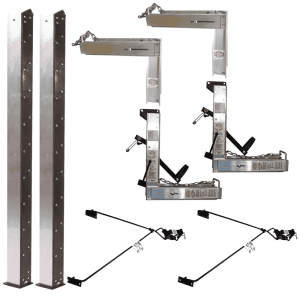
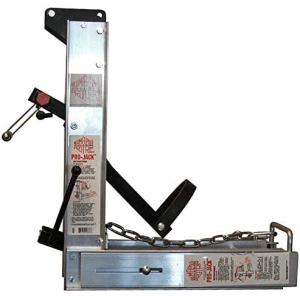
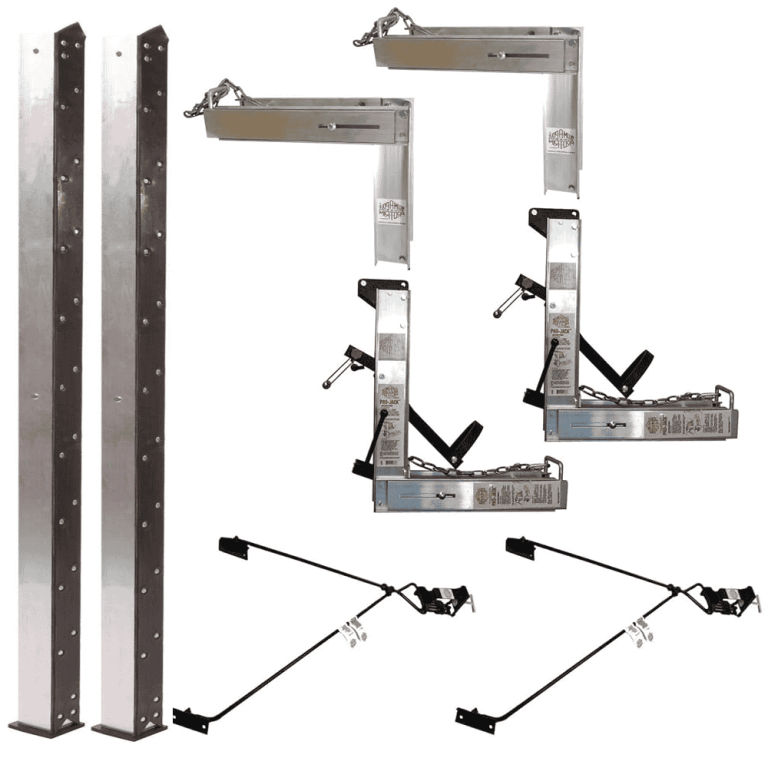
A pump jack system stands aluminum poles against the building and ties each one back to the structure. A pump jack rides each pole, and a foot pump on the jack lifts the stage a few inches at a time, so the deck follows the work as siding courses or paint go up. OSHA 29 CFR 1926.452(j) requires two positive gripping mechanisms on every pump jack bracket and rigid triangular bracing at the bottom, the top and other points as needed. When a pump jack has to pass a brace, a second brace goes about 4 feet above it and stays until the first is back in place.
Frame scaffolding works the other way. The crew stacks frames to a set level, lays planks and climbs onto a fixed deck, and moving the work height means moving planks. OSHA 1926.451 asks for most supported scaffold platforms to be at least 18 inches wide, while pump jack platforms may be as narrow as 12 inches. Once a frame tower is taller than four times its base width, it has to be tied, braced or guyed, with ties repeated every 20 or 26 feet depending on width. You can see the poles, jacks and stages that make up one pump jack system on our Alum-A-Pole pump jack scaffolding page.
Our team helps you select the right products for each wall, so the pump jack or staging layout on your quote suits the house you are working on.
Rated Loads, Working Heights and Fall Rules for Pump Jack Staging
OSHA requires every scaffold and component to hold its own weight plus at least four times the maximum intended load, and a competent person has to inspect the scaffold before each work shift. Anyone on a scaffold more than 10 feet above a lower level needs fall protection, and a pump jack workbench may never serve as the standing platform. Those rules apply to pump jacks and frames alike, so the real difference is in the ratings each maker publishes.
Alum-A-Pole rates its complete pump jack system for two workers and 500 pounds with a 4 to 1 safety ratio, which makes material on the stage part of that figure. Its poles come in 6, 12, 18 and 24 foot lengths, the Alum-A-Joint splices two poles together, and the company says the system is approved by OSHA to a 50 foot shoulder working height. It lab rates the poles to 5,000 pounds and each Pro-Jack pump jack to 4,000 pounds. Frame towers carry whatever the frame maker rates them for, and their extra capacity is the reason some crews choose them for heavy masonry or long stays. Starter sets of aluminum poles and pole packages group the parts a first pump jack setup needs.
Free in-person consultations at our Windham, NH and Worcester, MA showrooms let you check pump jack ratings and fall protection with our team before you order.

Which Jobs Suit Pump Jack Scaffolding and Where Frames Still Earn Their Keep
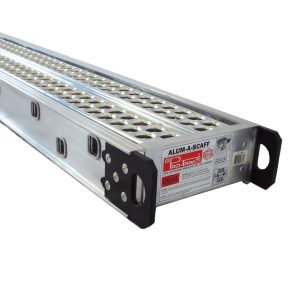
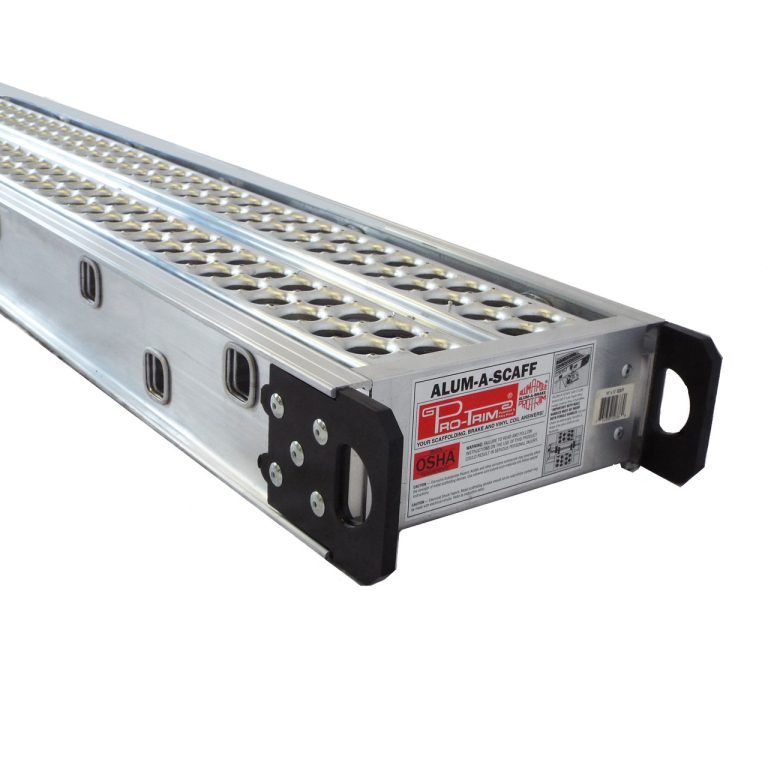
Pump jack scaffolding suits long, flat wall faces where the work moves up in small steps. Siding installers, painters, window crews and remodelers use it on houses and light commercial buildings, and Alum-A-Pole notes that it handles uneven ground. Two people can carry the aluminum parts around a house. Alum-A-Pole sets every stage at the same rail height, so stages and end rails link pole to pole into one walkway, in 14, 20 and 24 inch widths and lengths up to 24 feet.
Drill-driven poles sit between the two approaches. The ReechCraft PowerPole replaces pumping with a 1/2-inch drill on each climbing unit, rated at 650 pounds per unit, and stands to a 24 foot work height with its outrigger base. Frame scaffolding still makes sense when a crew and pallets of material share one deck for weeks, or where a wide deck matters more than adjusting height. Keep any pump jack setup within one brand, since Alum-A-Pole says other makers’ parts will not connect properly to its poles and jacks.
Our own trucks deliver door to door across New England, so long poles and stages reach the house where the pump jacks will go up.
Pump Jack Scaffolding Within a Full Exterior Access Setup
Staging covers the wall face, but the crew still climbs extension ladders to reach it, bends trim on a brake at the base and carries long poles between jobs on a truck rack. Many siding crews run Alum-A-Pole poles beside its Alum-A-Brake, so the staging and the trim station come from one maker.
If you want to see the ladder, rack and safety makers that work around a staging system, take a look through our ladder and truck equipment brands hub.
Planning Pump Jack Scaffolding or Frames for Your Next Exterior Job
Nation Wide Ladder has supplied homeowners and contractors for over 50 years, and we quote pump jack scaffolding by the wall heights, run length and crew size you send us, so the poles, pump jacks, stages and braces arrive as one working system.
Pump Jack Scaffolding FAQs
Is pump jack scaffolding safer than frame scaffolding?
Neither is safer by default. Both have to meet OSHA 1926.451, including the 4 to 1 capacity rule, inspection before each shift and fall protection above 10 feet, and pump jacks add the bracing and gripping rules in 1926.452(j).
How wide must a pump jack platform be?
OSHA allows pump jack platforms as narrow as 12 inches, against 18 inches for most other supported scaffolds.
How high can pump jack scaffolding go?
Alum-A-Pole says its system is approved by OSHA to a 50 foot shoulder working height, reached by splicing poles with the Alum-A-Joint.
How much weight does pump jack scaffolding carry?
Alum-A-Pole rates its complete system for two workers and 500 pounds with a 4 to 1 safety ratio, including material on the stage.
Can a pump jack workbench be used as the platform?
No. OSHA 1926.452(j) bars using a workbench as a scaffold platform, though it may act as a toprail if it meets the guardrail criteria.
When does frame scaffolding make more sense than pump jacks?
When a crew and heavy material stay on one deck for weeks, or a wide fixed deck matters more than adjusting height as the work rises.
Need help choosing the right ladder or truck equipment?
Talk to the team or send us your list and we will put a quote together.