Resources
Fiberglass Ladders for Electrical Work, From Step and Extension Models to Single, Manhole and More
Why OSHA calls for nonconductive side rails, where fiberglass stops protecting a climber, duty ratings for loaded tool belts, and how to keep rails clean, dry and out of the sun.
Fiberglass ladders for electrical work exist because OSHA requires nonconductive side rails wherever a worker or the ladder could contact exposed energized parts, and the challenge is that fiberglass only helps when it is clean, dry and kept clear of overhead lines. Nation Wide Ladder supplies Werner and Louisville fiberglass step, extension, single and manhole ladders to electricians, utility crews and facility teams, and our team matches rail material, duty rating and height to each job.



- Over 50 years serving contractors
- MA, NH, CT, ME, VT & RI
- Weekly Maine deliveries
Why OSHA Points Electrical Work Toward Fiberglass Ladders
OSHA’s construction ladder standard, 1926.1053, requires nonconductive side rails wherever the employee or the ladder could contact exposed energized electrical equipment, and the general industry rule in 1910.333 says the same for portable ladders near exposed energized parts. Cal/OSHA puts it plainly, saying metal ladders should never be used for work on or around exposed electrical elements and that a wood or fiberglass ladder is needed. Cal/OSHA also notes that aluminum is the most common ladder material, which is why electrical crews have to choose fiberglass on purpose.
Labels matter as much as material. Cal/OSHA warns that some nonmetal ladders are reinforced with steel or other conductive parts, so read the maker’s labels and directions, and it expects metal ladders to carry a caution label against electrical use. Louisville marks its fiberglass models as safe around electricity and its aluminum models as unsafe, and Werner recommends fiberglass for electrical work, so electricians and utility crews standardize on fiberglass ladders for electrical work.
Our team confirms rail material on each quote, so fiberglass models go to the crews whose work brings them near live equipment.
Limits of Fiberglass Ladders Around Wet Rails and Overhead Electrical Lines
Fiberglass reduces risk without making live work safe. Werner describes the rails as nonconductive when the ladder is clean and dry, and Cal/OSHA warns that water on a wet ladder makes it conductive, telling workers not to use a metal, wet wooden or fiberglass ladder for electrical work on or near energized conductors. In wet and damp locations where electrical work is expected, Cal/OSHA says to use only nonconductive ladders, so wipe mud and residue off the fiberglass rails as well.
Overhead lines bring a separate rule. For an unqualified person working in an elevated position, OSHA 1910.333 keeps the person and the longest conductive object they may contact at least 10 feet from unguarded, energized overhead lines of 50 kV or less, adding 4 inches for every 10 kV over that. OSHA treats any object without an insulating rating for the voltage involved as conductive, so an ordinary fiberglass ladder still needs that clearance. Cal/OSHA adds a simple habit, which is to look for overhead power lines before handling a ladder at all.
Free in-person consultations at our Windham and Worcester showrooms give electrical crews time to talk through site conditions with our team before choosing a fiberglass model.
Duty Ratings and Care for Fiberglass Ladders on Electrical Jobs
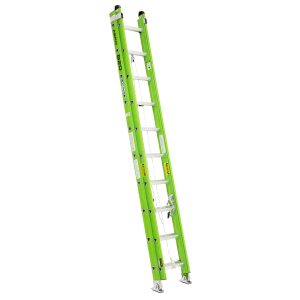
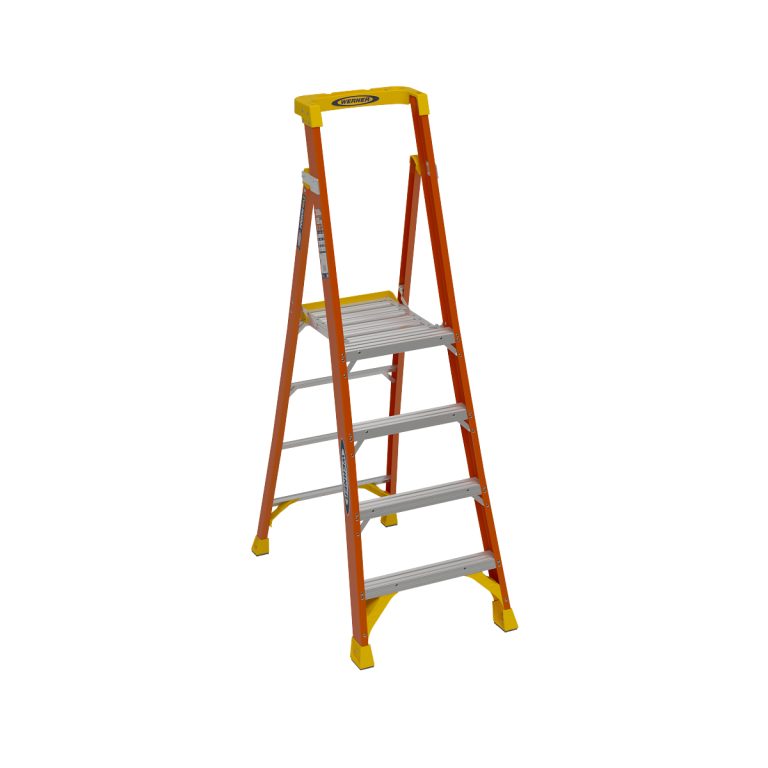
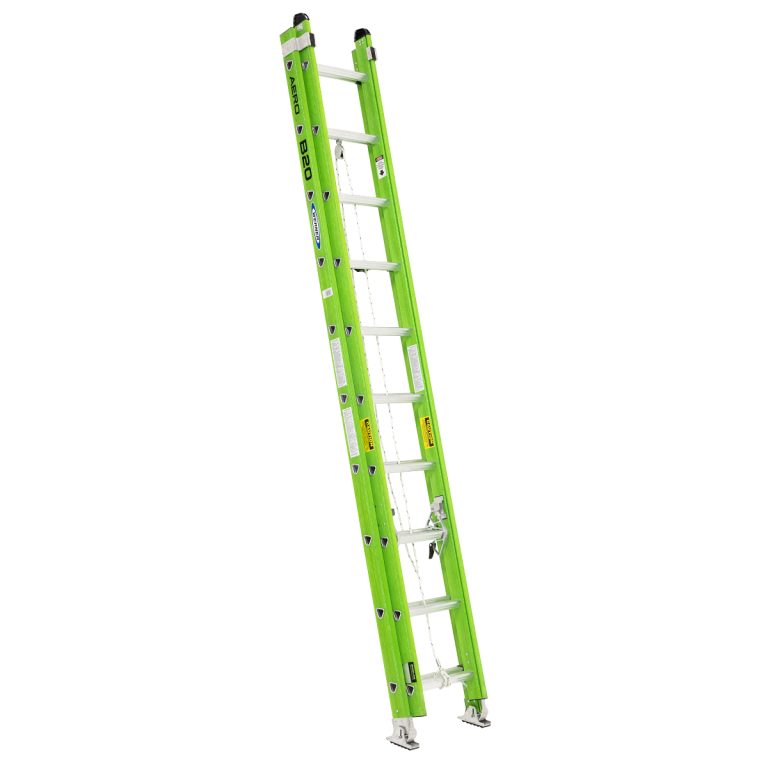
A belt, meters and fittings add up, and Cal/OSHA’s duty scale runs from Type III at 200 pounds to Type IAA at 375, counting the climber and everything carried. In step ladders, the Werner 6200 is Type IA at 300 pounds and the 7300 Type IAA at 375, while Louisville offers the Type IAA FS1300HD and the Type IA FS1500 and L-3016, all in our Werner step ladders and Louisville fiberglass step ladders ranges. For exterior reach, our Werner extension ladders include the Type IA D6200-2 and the Type IAA D7100-2 and Aerolite B7100-2. Louisville’s fiberglass FE3100 single and FE8900 manhole ladders, in our Louisville single and manhole range, cover fixed landings and vaults.
Care keeps the protection in place. Cal/OSHA advises storing fiberglass out of sunlight and other ultraviolet sources, and checking for cracks, chips, splinters and rails deformed by heat or chemicals. Werner points owners to its Fiberglass Ladder Technical Manual for UV, weather and cold resistance and service life, and on a stepladder Werner sets the highest standing level two steps down from the top.
A fiberglass ladder that fails its check late in the week can be replaced on a Saturday morning, when both of our locations are open.
Fiberglass Ladders in an Electrical Crew’s Wider Kit
Electrical and utility crews rarely carry one ladder. A fiberglass step for panels and fixtures usually rides with a fiberglass extension ladder for service drops, and long rails need a rack that supports them in transit. Our Werner fiberglass extension ladders range sets the D6200, D7100 and Aerolite options side by side, and the Aerolite B7100-2X adds a cable hook and V-rung for strands and poles up to 10 inches across, while arc flash harnesses and lanyards round out the kit for crews near energized equipment.
For racks and fall protection from other makers, you can browse every manufacturer we carry in our ladder and truck equipment brands hub.
Quotes on Fiberglass Ladders for Electricians and Utility Crews
Nonconductive rails, the right duty rating and a clean, dry ladder are what make fiberglass ladders for electrical work do their job, alongside safe distances from overhead lines. Send us your heights and ratings as a list, or call 603-434-6911 or 508-754-3030, and we will quote Werner and Louisville fiberglass models to match.
Fiberglass Ladders for Electrical Work FAQs
Why are fiberglass ladders used for electrical work?
OSHA requires nonconductive side rails wherever the worker or the ladder could contact exposed energized electrical equipment, and fiberglass rails meet that requirement.
Is a wet fiberglass ladder safe for electrical work?
No. Cal/OSHA warns that water makes a ladder conductive and says not to use a wet fiberglass ladder for work on or near energized conductors.
How close can fiberglass ladders get to overhead power lines?
For unqualified workers, OSHA 1910.333 sets at least 10 feet from lines of 50 kV or less, and it treats objects without an insulating rating for the voltage as conductive.
Which duty rating suits fiberglass ladders for an electrician?
Type IA at 300 pounds covers many climbers with a tool belt, while Type IAA at 375 pounds leaves more room for heavy tools and material.
How should fiberglass ladders be stored?
Cal/OSHA advises storing them away from sunlight and other ultraviolet light, and Werner's Fiberglass Ladder Technical Manual covers UV and weather resistance.
Are aluminum ladders acceptable near electrical work?
Not where contact with exposed energized parts is possible. Louisville marks its aluminum models as unsafe around electricity.
Need help choosing the right ladder or truck equipment?
Talk to the team or send us your list and we will put a quote together.