Resources
Fiberglass or Aluminum Extension Ladders, Compared on Conductivity, Weight, Duty Ratings, Rungs and More
Nonconductive rails near service drops, carry weight on a long day, Type II to Type IAA ratings in each material, rung sizes and the closed length that sets your rack.
Deciding between fiberglass or aluminum extension ladders starts with what runs overhead, then how often the ladder moves and how much load it carries. Nation Wide Ladder helps crews and homeowners weigh both rail materials across the Werner and Louisville extension ranges we carry, from light Type II aluminum to Type IAA fiberglass, including three-section fiberglass and lightweight Aerolite utility models with cable hooks.


- Over 50 years serving contractors
- MA, NH, CT, ME, VT & RI
- Weekly Maine deliveries
Fiberglass Extension Rails Around Power Lines, and Where Aluminum Ladders Stop
Electricity settles the question before anything else. OSHA 1926.1053 requires nonconductive side rails wherever the worker or the ladder could contact exposed energized electrical equipment, and aluminum conducts. Werner says plainly that aluminum should never be used near electrical hazards, while it treats fiberglass as nonconductive when the rails are clean and dry. Louisville labels its fiberglass FE3200 safe around electricity and its aluminum AE models unsafe, so both makers draw the same line.
That line covers more jobs than people expect. A gutter, a soffit vent or a satellite dish often sits a few feet from the service drop, and a tall aluminum extension can swing into it while it is being raised. Electricians, roofers near the mast and utility crews therefore run fiberglass rails as standard, which you can compare in our Werner fiberglass extension ladders range or among the Louisville extension ladders we list.
Fiberglass is not a license to work live. Cal/OSHA warns that water makes a wet ladder conductive and says not to use a metal, wet wood or fiberglass ladder for work on or near energized conductors. It also notes that some nonmetal ladders carry steel or other conductive reinforcement, so read the labels.
Our team asks where the service drop, panel or overhead lines sit on your jobs, then recommends fiberglass or aluminum for each ladder on the order.
Carry Weight and Rack Length With Aluminum or Fiberglass Extension Ladders
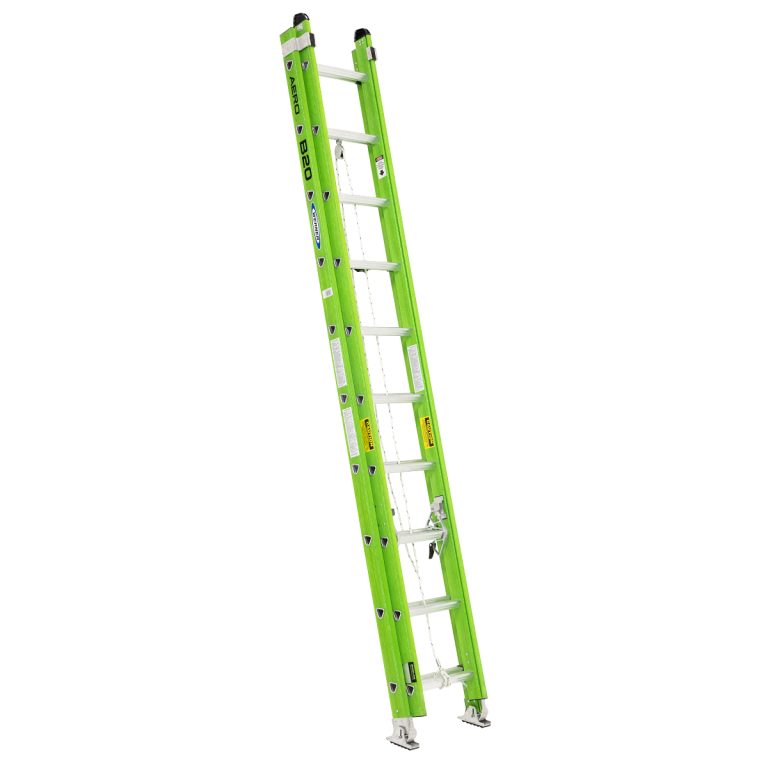
Aluminum earns its place on the carry. Werner describes aluminum as lightweight and easy to move and store, and points it at painting, household tasks and maintenance work where the ladder is repositioned again and again. Louisville’s own figures show the gap, with a 20 ft aluminum AE3220 at 32 pounds against 42 pounds for the 20 ft fiberglass FE3220, and its 24 ft aluminum models at 38 to 42 pounds against 51 pounds for the fiberglass FE3224. A painter walking a 24 along a house all day feels those pounds, which is why our Werner aluminum extension ladders stay popular with crews working away from wiring.
Fiberglass has narrowed the gap. Werner’s Aerolite B7100 extension ladders keep a Type IAA rating while weighing about 25 percent less than a standard 375 pound ladder, and the three-section fiberglass D6200-3 closes shorter than a two-section ladder of the same size, which helps a crew carrying inside a van. Closed length matters as much as weight, since the longest ladder on board sets the rack length.
We install truck and van ladder racks as well as supplying the ladders, so the rack can be sized to the fiberglass or aluminum ladder it will carry.
Duty Ratings and Rungs Across Fiberglass and Aluminum Extension Series
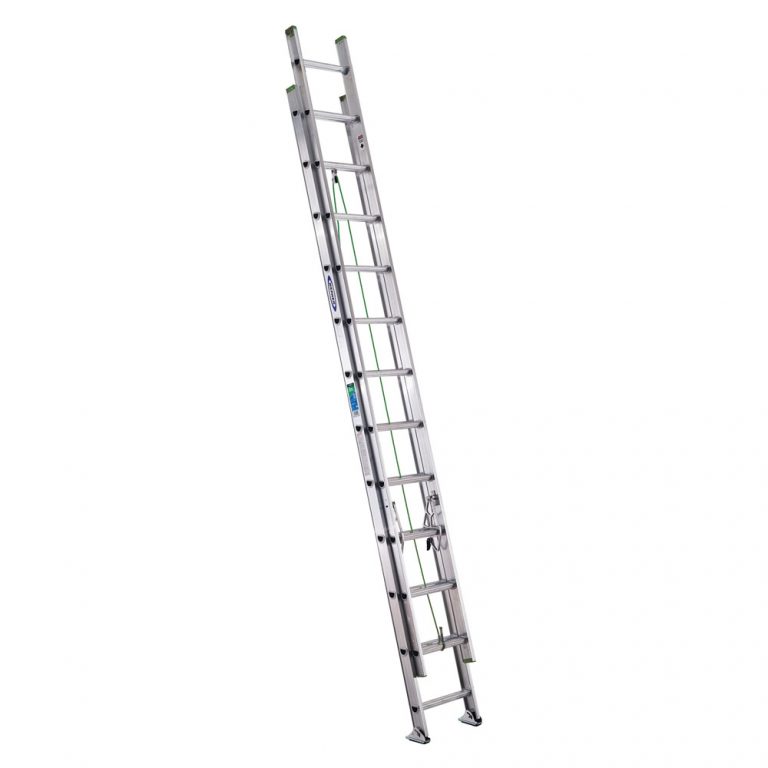
Both materials span the duty scale, so rail material and rating are separate decisions. Cal/OSHA lists Type IAA at 375 pounds, Type IA at 300, Type I at 250, Type II at 225 and Type III at 200, and OSHA counts the climber, tools and materials together. On the aluminum side, Werner runs from the Type II D1200-2 and Type I D1300-2 to the Type IA D1500-2 and the D500-2, which is Type IAA at 20 to 32 ft and Type IA from 36 ft. Louisville covers Type II with the AE4200, Type I with the AE3200 and Type IA with the AE2200 and AE1200, all detailed in our Louisville aluminum extension ladders.
Fiberglass starts higher in our range. The Louisville FE3200 and Werner D6200-2 are Type IA, while the Werner D7100-2 and Aerolite reach Type IAA. Rung hardware differs slightly too, with 1.75 inch D-rungs on Werner aluminum ladders and 1.63 inch D-rungs on the D6200 and D7100 fiberglass series. Werner designs and tests both materials for extreme temperatures. On fiberglass, Cal/OSHA adds a check for rails or rungs deformed by heat, chemicals or weather, and our Werner extension ladders page sets every series side by side.
At our Windham NH and Worcester MA showrooms you can lift a fiberglass and an aluminum ladder of the same size and compare ratings in person.

Mixing Fiberglass and Aluminum Extension Ladders on One Truck
Many crews end up with both, keeping fiberglass for the jobs near power and a lighter aluminum ladder for painting and gutters. Once the material is settled, height is the next call, and our extension heights overview lines up each size with the reach Werner and Louisville publish. Racks, staging and fall protection usually join the order from other makers.
If the truck needs more than ladders, you can weigh racks and boxes from every maker in our ladder and truck equipment brands hub.
Quotes on Fiberglass or Aluminum Extension Ladders
Fiberglass for anything near power, aluminum where the carry matters more, and a rating sized to the heaviest climber cover most jobs. Send us your list or call 603-434-6911 in NH or 508-754-3030 in MA, and we will quote fiberglass or aluminum extension ladders from Werner and Louisville with door-to-door delivery across New England.
Fiberglass or Aluminum Extension Ladders FAQs
Are fiberglass extension ladders safe near power lines?
Werner treats fiberglass as nonconductive only when clean and dry, and Cal/OSHA warns that a wet ladder conducts. Fiberglass meets OSHA's call for nonconductive rails, but keep yourself and the ladder clear of energized parts.
How much lighter are aluminum extension ladders than fiberglass?
Louisville lists a 20 ft aluminum AE3220 at 32 pounds and a 20 ft fiberglass FE3220 at 42 pounds. At 24 ft its aluminum models weigh 38 to 42 pounds against 51 for the fiberglass FE3224.
Do aluminum extension ladders come in high duty ratings?
Yes. Werner's D500-2 is Type IAA at 375 pounds from 20 to 32 ft and Type IA from 36 ft, and the D1500-2 is Type IA at 300 pounds.
Is there a lightweight fiberglass extension ladder?
Werner's Aerolite B7100-2 is rated Type IAA and weighs about 25 percent less than a standard 375 pound ladder.
Can I use an aluminum ladder for electrical work?
No. OSHA requires nonconductive side rails where the worker or ladder could contact exposed energized equipment, and Werner says aluminum should never be used near electrical hazards.
What should I check on fiberglass rails?
Cal/OSHA asks users to look for rails or rungs deformed by heat, chemicals or weather, along with the usual checks on rungs, locks, hardware and feet.
Need help choosing the right ladder or truck equipment?
Talk to the team or send us your list and we will put a quote together.