Resources
Utility Pole Safety for Line and Cable Crews, Pole Straps, Nonconductive Ladders, Rated Hard Hats, Vests and More
Securing an extension ladder to a round utility pole, OSHA's rules on conductive ladders near energized lines, Class E and G head protection, roadside visibility and fall protection for climbers.
Utility pole safety starts with a ladder that will not twist off a round pole and runs through the head protection, visibility and fall protection a line or cable crew needs, and Nation Wide Ladder supplies the safety gear that covers those points. We cover straps that hold an extension ladder to a utility pole, OSHA's rules on conductive ladders near energized lines, nonconductive fiberglass rails, Class E and G hard hats, hi-vis vests for roadside work and fall protection for climbing.


- Over 50 years serving contractors
- MA, NH, CT, ME, VT & RI
- Weekly Maine deliveries
Ladder Work at the Utility Pole, Straps and Securing Rules
An extension ladder is built to lean on a flat wall, and a round utility pole gives its rails almost nothing to bear on, so the top can roll sideways under load. OSHA’s ladder rule, 29 CFR 1926.1053, says the top of a non-self-supporting ladder must have both rails supported equally unless it has a single support attachment. For overhead line work, 29 CFR 1910.269 adds that portable ladders and platforms must be secured so they cannot be dislodged, and must not be loaded past their working loads. Together those two rules are the starting point of utility pole safety for anyone setting a ladder at a pole.
A strap made for utility work meets that need. The LeveLok LSS-150 ladder safety strap is a 25 foot strap that loops a rail between the 4th and 5th rungs with its swivel buckle, clips to a D-ring and wraps one full turn around the pole before both sides are tightened. Installed properly, LeveLok says it limits side rail movement to 3 inches, takes under a minute to set up, and suits most aluminum, wood and fiberglass extension ladders up to Type IAA, 375 pounds. LeveLok lists the polyester webbing at 4,100 pounds breaking strength. Our LeveLok ladder accessories page covers the strap with the leveler and roof straps.
Our team helps you select the right straps and ladders for each truck, checking ladder type and duty rating before we quote utility pole safety gear.
Nonconductive Ladders and Rated Head Protection Near Utility Lines
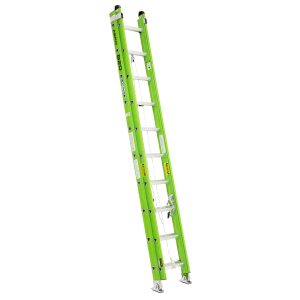
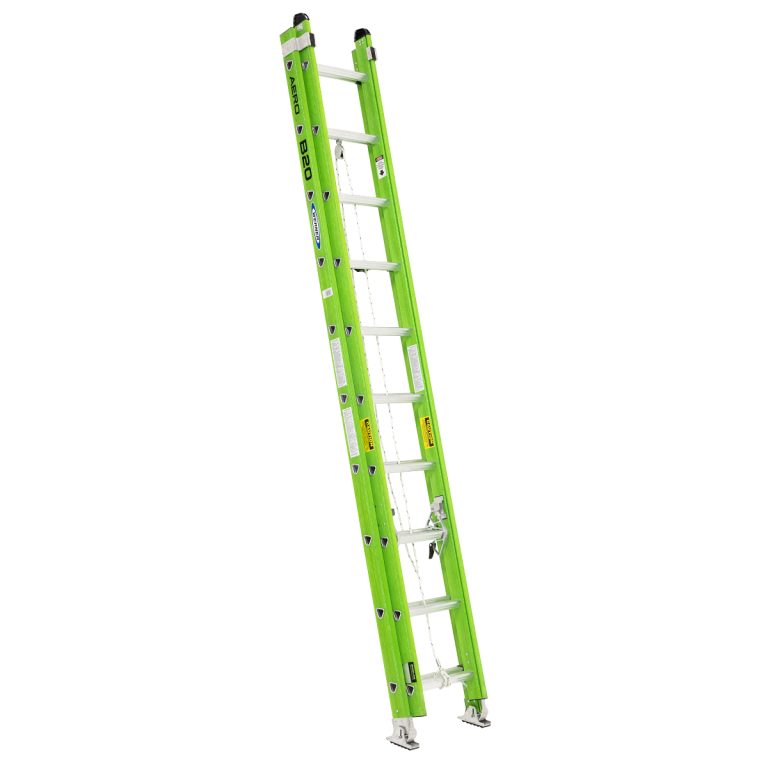
Electrical exposure changes the ladder choice on a utility job. OSHA 1910.269 bars portable metal and other conductive ladders near exposed energized lines or equipment, except in specialized high-voltage work where the employer shows a nonconductive ladder would be the greater hazard, and the construction rule calls for nonconductive siderails wherever a worker or ladder could contact exposed energized equipment. Fiberglass rails are nonconductive, which is why Werner fiberglass extension ladders suit utility work near service drops.
Head protection follows the same logic. OSHA 1910.135 requires a helmet designed to reduce electrical shock hazard for anyone near exposed conductors that could contact the head. ISEA lists Class E hard hats as tested to withstand 20,000 volts and Class G as tested at 2,200 volts, while Class C gives no electrical protection, so the vented Class C climbing helmet on our Global Glove helmets page suits work away from lines rather than on them. Distributor listings for the ERB Omega II cap print several classes together, so read the class marked inside the shell before a line job. Helmet class belongs in a crew’s safety plan alongside ladder rail material.
Free in-person consultations at our Windham, NH and Worcester, MA showrooms let you check ladder rails and helmet classes against your crew’s utility pole safety plan.
Roadside Visibility and Fall Protection for Utility Pole Crews
Most utility poles stand beside a road. For public work areas, OSHA 1910.269 requires warning signs or flags and other traffic-control devices placed where they alert and channel approaching traffic before work begins, with barricades where more protection is needed and warning lights at night. Visibility is a safety issue for the worker as well. The ERB 61817 vest belongs to a line that retail listings describe as meeting ANSI/ISEA 107-2015 Type R, Class 2, and the Federal Highway Administration accepts Type R garments in Class 2 or 3 for workers in temporary traffic control zones. Signs and vests work together as roadside safety, one warning drivers and the other making the worker visible.
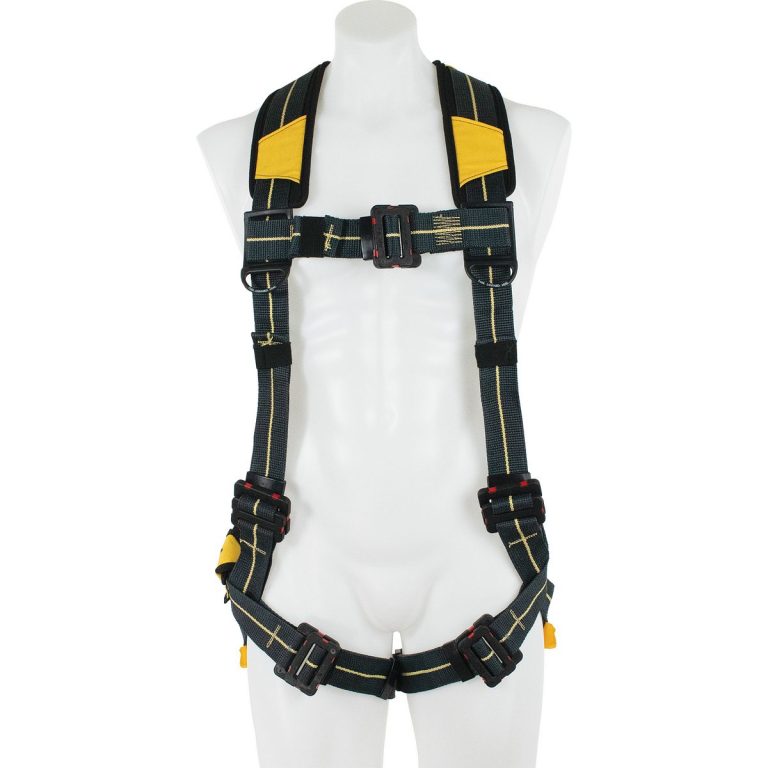
Climbing the utility pole itself brings its own rule. Since April 1, 2015, OSHA 1910.269 has required each qualified employee climbing or changing location on poles, towers or similar structures to use fall protection, unless the employer can show it is infeasible or a greater hazard. That points to personal fall arrest, work positioning or fall restraint equipment, with harnesses such as the Werner harnesses we carry for the fall arrest side. Ladders and harnesses ride together on most utility trucks.
Our own trucks deliver door to door across New England, so straps, vests, hard hats and ladders for a utility crew can arrive on one delivery.
Utility Pole Safety Within the Truck and Ladder Kit
Utility gear rides on the same truck as the ladders, racks and storage that carry it, so a crew’s utility pole safety plan usually starts with the vehicle and works out to the strap and helmet.
If you are choosing the ladders and truck equipment that go with that gear, you can compare the makers we carry in our ladder and truck equipment brands hub.
Quoting Utility Pole Safety Gear for Line and Cable Crews
Nation Wide Ladder has supplied contractors for over 50 years, and we quote utility pole safety gear as one list, from pole straps and fiberglass ladders to rated hard hats and Class 2 vests, matched to the poles, lines and roads your utility crews work beside.
Utility Pole Safety FAQs
How do you secure a ladder to a utility pole?
With a pole strap such as the LeveLok LSS-150, which loops a rail, wraps one full turn around the pole and clips to a D-ring, limiting side rail movement to 3 inches when installed properly.
Can aluminum ladders be used for utility pole work?
OSHA 1910.269 bars portable metal and other conductive ladders near exposed energized lines, except in specialized high-voltage work where a nonconductive ladder would be the greater hazard.
What hard hat class does utility pole safety call for?
Near exposed conductors, a helmet designed to reduce electrical shock. ISEA lists Class E as tested to withstand 20,000 volts and Class G at 2,200 volts.
Do utility climbers need fall protection?
Yes. Since April 1, 2015, OSHA 1910.269 requires qualified employees climbing or changing location on poles to use fall protection unless it is infeasible or a greater hazard.
What vest meets utility pole safety needs beside a road?
FHWA accepts ANSI/ISEA 107 Type R garments in Class 2 or 3 for workers in temporary traffic control zones.
Which ladders fit the LeveLok ladder safety strap?
LeveLok says it suits most aluminum, wood and fiberglass extension ladders up to Type IAA, 375 pounds.
Need help choosing the right ladder or truck equipment?
Talk to the team or send us your list and we will put a quote together.