
Brand spotlight
Alum-A-Pole Scaffolding, From Aluminum Pump Jack Poles, Pro-Jacks and Stages to Alum-A-Brake Siding Brakes and More
Aluminum pump jack staging and portable trim brakes from a Scranton maker founded by a siding contractor, with load ratings, OSHA context and planning advice for exterior wall work.
Staging an exterior wall safely without hauling steel frames is the challenge on every siding and roofing job, and Nation Wide Ladder meets it with Alum-A-Pole scaffolding, planned around your walls by our team and delivered across New England. We supply aluminum poles and joints, Pro-Jack pump jacks, Alum-A-Scaff stages, workbenches and end rails, along with the Alum-A-Brake siding brake, coil holder, legs and wheel kit for bending trim on site.
- Over 50 years serving contractors
- MA, NH, CT, ME, VT & RI
- Weekly Maine deliveries
Why siding and roofing crews choose Alum-A-Pole scaffolding
Alum-A-Pole makes aluminum pump jack scaffolding and portable siding brakes in Scranton, Pennsylvania, a product mix that grew out of founder Carl Anderson's own siding work in 1980. Siding, roofing and exterior trim crews set the poles against a wall and pump a platform up its face, which spares them the weight of steel frames, and homeowners tackling a single gable end use the same poles. Because the company also builds the Alum-A-Brake, a crew can stage the wall and bend its own trim coil with equipment from one maker.
The line splits into two categories. Pump Jack Scaffolding covers poles in 6 to 24 foot lengths, Pro-Jack units, stages, braces, workbenches and end rails, with the complete system rated for two workers and 500 pounds. Siding Brakes centers on the Alum-A-Brake Ultima Q series and the legs, wheel kit and coil holder made to go with it. Decide whether the job calls for staging, bending or both, then open the matching category for parts and specifications.
Alum-A-Pole Scaffolding History, From a Siding Contractor’s Idea to a Scranton Plant
Alum-A-Pole traces back to 1980, when siding contractor Carl Anderson went looking for a safer way to stage exterior work than the wood poles and nailed brackets common on job sites at the time. His answer was the first aluminum pump jack pole, an aluminum pump jack pole, which the company describes as the first of its kind in the industry. The business operates from Capouse Avenue in Scranton, Pennsylvania, where it says its products are manufactured, and it holds patents on the designs.
The scaffolding grew in steps. In 1983 Alum-A-Pole worked with OSHA toward approval of a 50 foot working height, well above the 30 foot ceiling that applied then. Other lines followed, including DuroBend solid vinyl trim coil in 1989, the Alum-A-Brake siding brake in 2004 and Pro-Trim pre-creased flashing, and Alum-A-Pole reports selling well over one million poles since the first one left the shop. Nearly everything the company makes is aimed at the person working on the wall, whether the job is lifting the platform, bending the trim or flashing the openings, so the scaffolding and the brake are designed to work side by side.
We have served homeowners and contractors for over 50 years, and we bring New England crews Alum-A-Pole scaffolding that started on a siding contractor’s own walls.
The Alum-A-Pole Scaffolding and Siding Brake Range for Exterior Work
The range we carry splits into two families, one for staging and one for trim fabrication.
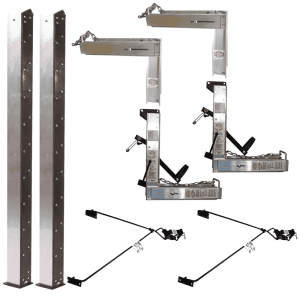
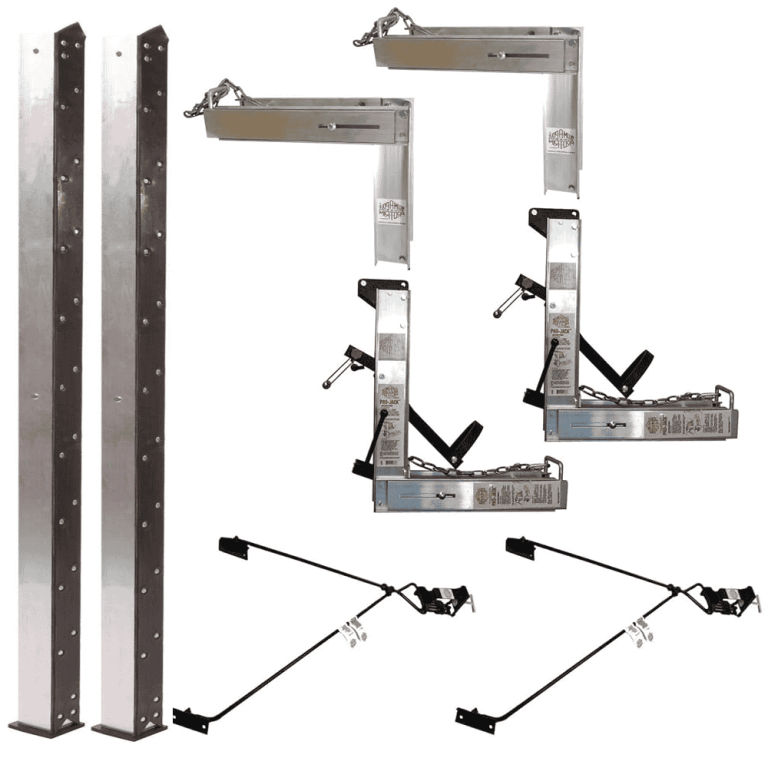
Pump jack scaffolding. The core of Alum-A-Pole scaffolding is the aluminum pole, offered in 6, 12, 18 and 24 foot lengths, with a joint that splices two poles for taller walls. A PROJACK pump jack rides each pole and lifts the platform as you pump the handle, while braces tie the poles back to the building. Alum-A-Pole stages, a workbench that rides the same poles and an end rail system complete the setup, along with the powder-coated Alum-A-Brace and the 22 foot Saf-T-Net, a folding fall protection net. Each part and how they fit together is laid out in Alum-A-Pole pump jack scaffolding.
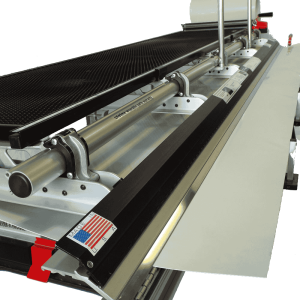
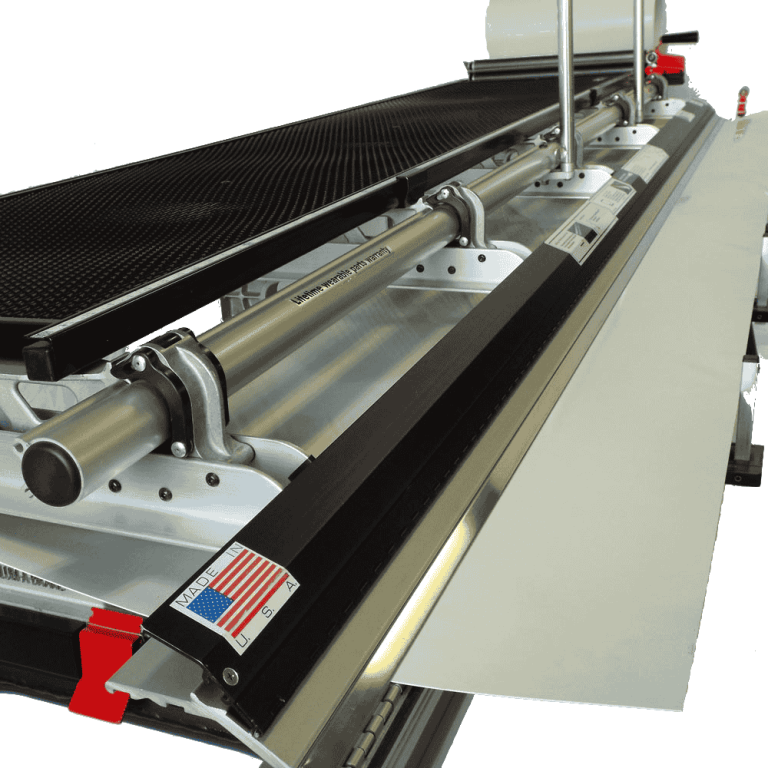
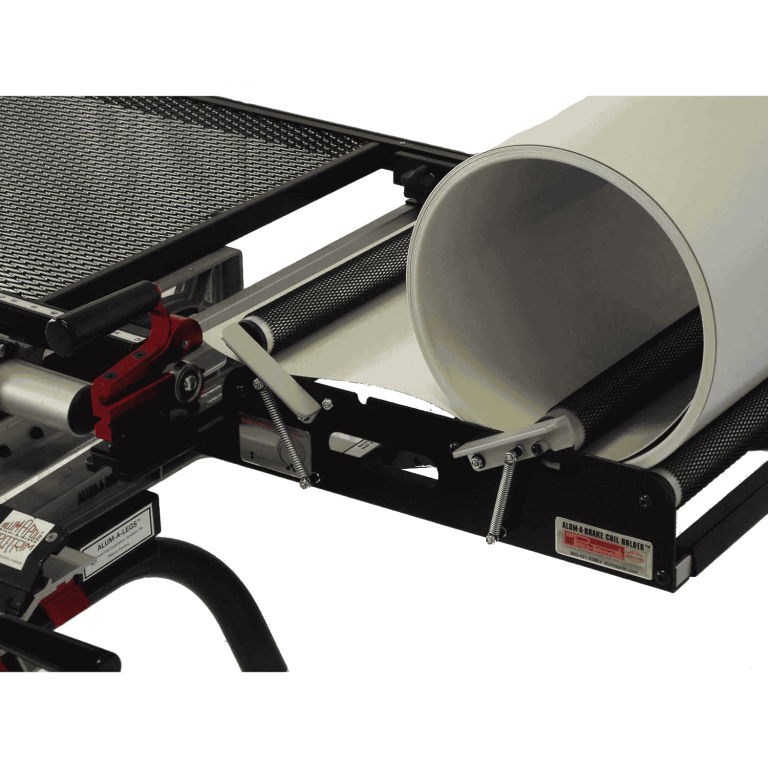
Siding brakes. Alum-A-Brake is the Alum-A-Pole portable bending brake for trim coil, vinyl and light flashing stock. The Ultima Q series comes in three builds, and we carry the APBRAKE-QMS with the coil holder, legs and wheel kit that go with it, detailed under Alum-A-Pole siding brakes.
Tell us the wall heights, the run length and whether you bend your own trim, and our team will match the Alum-A-Pole parts and quantities to that job.

OSHA Requirements and Load Ratings for Alum-A-Pole Scaffolding
Pump jack scaffolds have their own paragraph in the federal construction standard, 29 CFR 1926.452(j). It requires each pump jack bracket to carry two positive gripping mechanisms so it cannot slip, and calls for poles to be secured to the structure with rigid triangular bracing at the bottom, the top and other points as needed. When a jack has to climb past a brace, OSHA asks for an extra brace about 4 feet above the one being passed, and a workbench is never a scaffold platform, though it can serve as a toprail when it meets the guardrail criteria in 1926.451. Under 1926.451, each component has to support its own weight plus at least four times the maximum intended load, a competent person inspects the scaffolding before each work shift, and anyone more than 10 feet above a lower level needs fall protection.
Alum-A-Pole rates its complete scaffolding for two workers and 500 pounds with a 4 to 1 safety ratio, and says its poles are lab rated to 5,000 pounds and its Pro-Jack units to 4,000 pounds, with three separate backup safety systems on every Pro-Jack. Aluminum conducts electricity, so overhead power lines deserve the same distance around this scaffolding as around any metal scaffold.
Our Windham, NH and Worcester, MA showrooms offer free in-person consultations, where our team can go through the braces, rails and footing an Alum-A-Pole setup calls for.
Where Alum-A-Pole Scaffolding Fits Among Ladders and Truck Equipment
Pump jack scaffolding covers the long wall faces, but most exterior crews still carry extension ladders for access and roof work, plus racks on the truck to move poles and stages between jobs. Planning the poles, ladders and rack together keeps 24 foot poles and long stages moving with the crew.
To see the other manufacturers behind that kit, browse our ladder and truck equipment brands hub.
How to Plan Alum-A-Pole Scaffolding Around Wall Height, Run and Crew
Start with wall height. Pole length sets how high you can work from a single pole, and the joint lets you stack sections when the eave sits above what one pole reaches. Alum-A-Pole notes that its approved shoulder working height tops out at 50 feet, so plan around the tallest wall on the job rather than the average one. Next, count the run. Each stage spans between two poles, stages can be linked across as many poles as the wall needs, and Alum-A-Scaff stages come in 14, 20 and 24 inch widths and lengths up to 24 feet. A wider deck leaves more room for coil and tools, while a narrower one is easier to carry and set on tight lots.
Then decide what rides along. An Alum-A-Pole workbench on the same poles keeps materials at waist height, end rails close off the open ends of the stage to reduce walk-off falls, and Alum-A-Pole pole packages group the main parts for a first purchase. Keep the system consistent too, since the manufacturer says parts from other brands will not connect properly to its poles and jacks, so replacement springs, rollers and braces should come from Alum-A-Pole as well.
Our own trucks deliver door to door across New England, with regular weekly deliveries to Maine from New Hampshire, so long poles and stages arrive at the house where you will set them up.

Request Pricing on Alum-A-Pole Scaffolding and Siding Brakes
Whether you are staging a single gable end or outfitting a siding crew for the season, we quote Alum-A-Pole scaffolding and the matching Alum-A-Brake to fit the walls you work on. Send wall heights, run length and crew size through a quote request, call 603-434-6911 in New Hampshire or 508-754-3030 in Massachusetts, or browse the full Alum-A-Pole range in our store.
Alum-A-Pole Scaffolding FAQs
How high can Alum-A-Pole scaffolding go?
Alum-A-Pole says its system is OSHA approved for a 50 foot shoulder working height, reached by joining poles with the Alum-A-Joint. Poles come in 6, 12, 18 and 24 foot lengths.
How much weight can Alum-A-Pole scaffolding carry?
The manufacturer rates the scaffolding for two workers and 500 pounds in total, built around a 4 to 1 safety ratio. Materials on the stage count toward that figure.
Does OSHA require fall protection on pump jack scaffolding?
Yes. Under 29 CFR 1926.451(g), anyone on a scaffold more than 10 feet above a lower level must be protected from falling. Alum-A-Pole end rails help prevent walking off the open end of a stage, but the overall fall protection plan still has to meet the OSHA rule.
Can a pump jack workbench be used as the platform?
No. OSHA 1926.452(j) does not allow a workbench to serve as the scaffold platform. It holds tools and material and, in some setups, can act as a toprail if it meets the guardrail criteria.
Can I mix Alum-A-Pole parts with another brand's pump jacks or poles?
Alum-A-Pole advises against it and says other manufacturers' parts will not connect properly to its system.
Where are Alum-A-Pole products made?
Alum-A-Pole states that its products are manufactured in Scranton, Pennsylvania, where the company is based. It was started by siding contractor Carl Anderson in 1980.
Need help choosing the right Alum-A-Pole equipment?
Talk to the team or send us your list and we will put a quote together.