
Resources
Vertical Lifelines and Rope Grabs, From Poly-Dac Rope and Lanyard Kits to Trailing and Manual Grabs and More
How a hanging line and a sliding fall arrester work together, OSHA strength and one-worker-per-line rules, Werner Poly-Dac lines, self-trailing and manual grabs, anchors and checks.
Vertical lifelines and rope grabs let a worker move up and down a steep roof, scaffold face or structure while a fall arrester travels along with them, which solves the problem of tying off when the work keeps changing height. Nation Wide Ladder helps crews match Werner Poly-Dac vertical lifelines, lifeline and lanyard kits, self-trailing grabs with shock packs or lanyards, and manual grabs for positioning to the anchor and the job.



- Over 50 years serving contractors
- MA, NH, CT, ME, VT & RI
- Weekly Maine deliveries
How Vertical Lifelines and Rope Grabs Stop a Fall
OSHA defines a lifeline as a flexible line connected to an anchorage at one end to hang vertically, and a rope grab as a deceleration device that travels on a lifeline and, by friction, engages the line and locks to arrest a fall. The vertical line hangs from an anchor over the work, the grab rides on it, and a short connector runs from the grab to the back D-ring. As the worker climbs or descends, the grab moves with them, and in a fall it locks onto the line. Vertical lifelines also differ from a self-retracting lifeline, since the line itself does not retract and the grab, not a drum, does the locking.
OSHA sets firm rules for vertical lifelines. Lanyards and vertical lifelines must have a minimum breaking strength of 5,000 pounds, each worker must be attached to a separate vertical lifeline outside a narrow elevator shaft exception, and every lifeline must be protected against cutting or abrasion. In general industry, OSHA also requires a competent or qualified person to inspect each knot in a vertical lifeline before anyone uses it. Roofers on steep pitches, scaffold and staging crews, and maintenance teams working down a structure are the usual buyers of vertical lifelines and rope grabs.
Our team helps you select vertical lifelines and rope grabs from the height of the work and the anchor you have over it.
Werner Poly-Dac Vertical Lifelines and Lanyard Kits
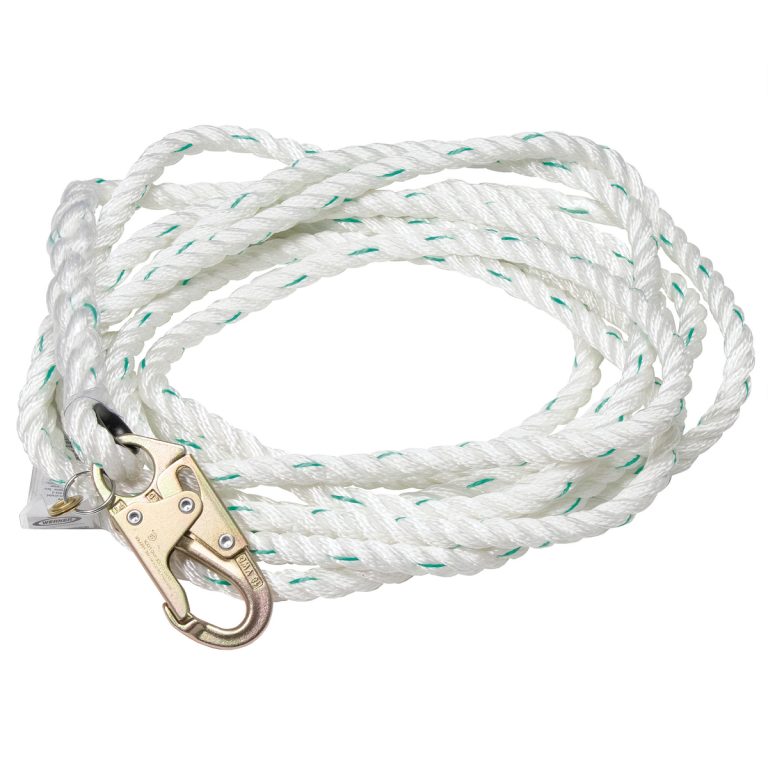
Werner builds its Poly-Dac vertical lifelines from a polyester and polypropylene blend in 5/8 inch, 3-strand rope. Werner describes the line as lightweight, with a comfortable grip and chafe protection for the user. The L201050 is a 50 foot line with a snap hook at one end for the anchor, while the L242050 kit adds a 3 foot lanyard connection with a double snap hook, which puts the connector between grab and harness in the same box as the rope.
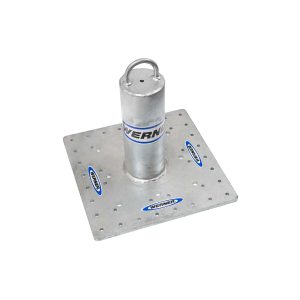
Length is set by the work. The vertical lifeline has to reach from the anchor to the lowest point the worker will stand, with line to spare, and since OSHA calls for one worker per vertical line, a crew of three on a roof face needs three lines and three anchors. Pair each line with an anchor rated for the load from our Werner fall protection anchors range, and keep the line clear of sharp edges as it runs down. Kits with their own lanyard simplify the order for a new crew member, while vertical lifelines bought on their own let an experienced crew reuse connectors it already trusts.
Our own trucks deliver door to door across New England, so vertical lifelines, grabs and anchors for a whole crew arrive as one order.
Trailing and Manual Rope Grabs on Vertical Lifelines
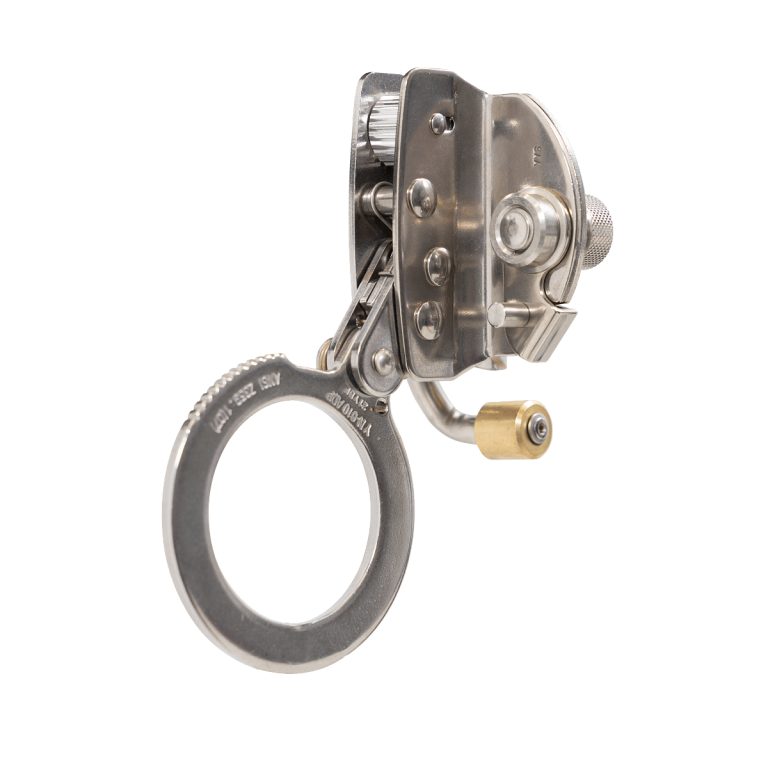
Werner’s rope grabs fall into two working styles. Self-trailing units move freely up and down the line without help from the user, giving continuous protection as the worker climbs. The L240002 is a stainless steel self-trailing grab with an 18 inch shock pack attached for fall arrest, and the L250001 is a steel self-trailing grab with an integral 3 foot shock-absorbing lanyard in 1 inch webbing.
A manual rope grab works differently. The L240000 stainless steel trailing grab is a manual design that can be attached or removed anywhere along the line, which lets the worker fix it in one place for positioning or restraint work. That suits a painter or roofer who wants to hold a set height on the line, while a self-trailing grab suits crews who climb vertical lifelines all day. In both cases, match the grab to the line its instructions approve, inspect it before each use, and take any grab or vertical line that has arrested a fall out of service until a competent person finds it undamaged.
Bring the job details to a free consultation at our Windham NH or Worcester MA showroom and we will set the grabs and vertical lifelines side by side with you.
Vertical Lifelines and Rope Grabs Within the Access Plan
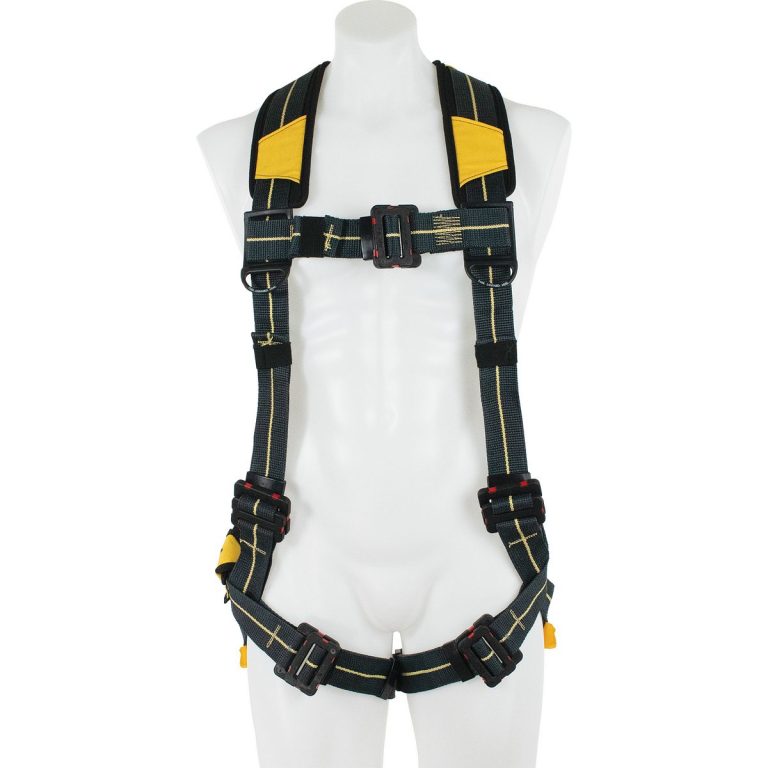
A rope line only helps once someone has climbed up to rig the anchor, so the ladder or staging, the anchor, the fall protection harness and the line are planned as one setup. Steep-roof crews often set the anchor at the ridge before anyone works down the slope, and those pieces usually come from several makers.
To compare the makers behind that access equipment, look through our ladder and truck equipment brands hub.
Order Vertical Lifelines and Rope Grabs With Confidence
Over 50 years of supplying contractors has shown us that vertical lifelines and rope grabs work best when the line, the grab and the anchor are chosen together, and we quote them that way from the Werner vertical lifelines range.
Vertical Lifelines and Rope Grabs FAQs
How do vertical lifelines and rope grabs work together?
The vertical line hangs from an anchor and the grab travels on it. In a fall the grab engages the line by friction and locks, which OSHA describes as its job.
Can two workers share one of these vertical lifelines?
No, outside a narrow elevator shaft exception. OSHA requires each worker to be attached to a separate vertical lifeline.
How strong do vertical lifelines need to be?
OSHA requires lanyards and vertical lifelines to have a minimum breaking strength of 5,000 pounds.
What is the difference between self-trailing and manual rope grabs?
A self-trailing rope grab follows the worker up and down the line on its own. Werner's manual L240000 can be fixed anywhere on the line for positioning or restraint.
What rope are Werner Poly-Dac lifelines made from?
A polyester and polypropylene blend in 5/8 inch, 3-strand rope, with a snap hook at one end on the L201050.
Do knots in a vertical lifeline need inspecting?
Yes. In general industry, OSHA requires a competent or qualified person to inspect each knot before the line is used.
Need help choosing the right ladder or truck equipment?
Talk to the team or send us your list and we will put a quote together.