
Resources
Horizontal Lifelines Explained, With Rope and Cable Systems, Anchor Loads, Stanchions, Connectors and More
What a horizontal line does for a crew that moves along an edge or beam, the forces it puts on end anchors, OSHA design rules, rope and cable kits, stanchions and clearance.
Horizontal lifelines let a crew move along a beam, roof edge or bridge deck while staying tied off, which solves the problem of work that runs too far for a single anchor. Nation Wide Ladder helps contractors choose between temporary rope and cable horizontal lifelines, the D-bolt anchors, cross-arm straps and stanchions that hold them, and the self-retracting lifelines and lanyards that connect each worker.


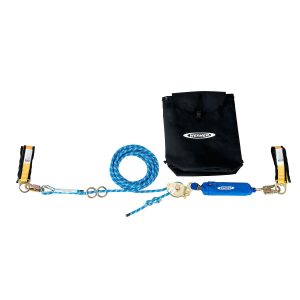

- Over 50 years serving contractors
- MA, NH, CT, ME, VT & RI
- Weekly Maine deliveries
When Horizontal Lifelines Beat a Single Anchor
OSHA defines a lifeline as a flexible line connected to an anchorage at one end to hang vertically, or to anchorages at both ends to stretch horizontally. A single anchor ties a worker to one spot, so a fitter walking a beam or a roofer working along an eave has to keep unclipping and moving. A horizontal line stretched between two end anchors lets that worker travel the length of the span while staying connected. OSHA generally requires each worker on a vertical lifeline to have a separate line, while a horizontal system like Werner’s is built for more than one worker, which is part of its appeal on a shared beam.
Werner’s temporary systems take up to two users. On the L123060 60 foot cable system, each worker connects to the provided O-rings with a self-retracting lifeline or an energy absorbing lanyard, and the rope systems work the same way with an SRL or a shock-absorbing lanyard. A self-retracting lifeline keeps slack out of the connection as the worker moves along the line. Steel erectors, bridge crews, roofers on long eaves and maintenance teams working along a parapet are the usual buyers of horizontal lifelines.
Our team helps you select between a single anchor and horizontal lifelines from the length of the run and the number of workers on it.
Anchor Forces and Qualified Design for Horizontal Lifelines
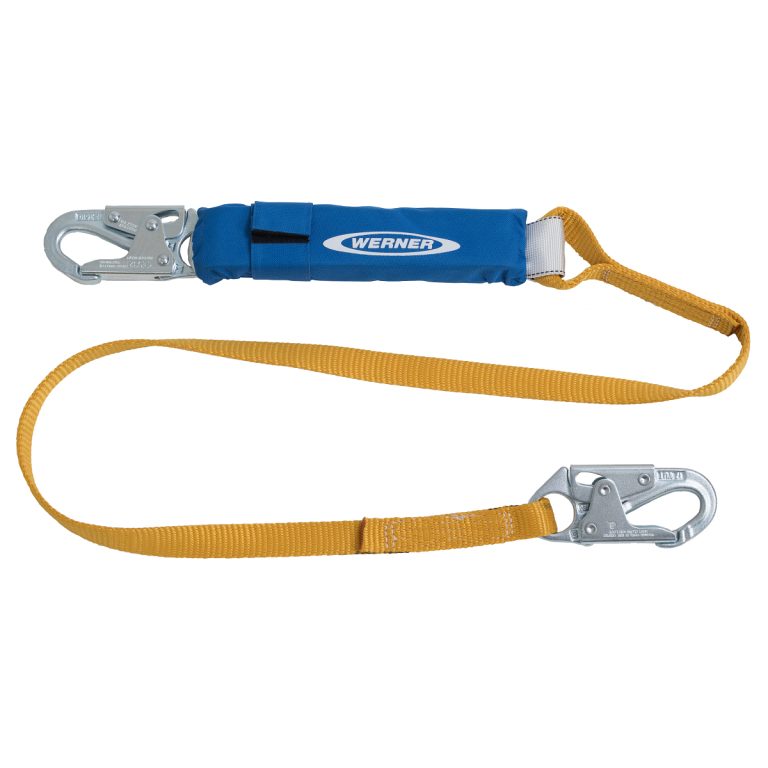
A horizontal line multiplies load. Werner warns that horizontal lifelines can generate forces up to 15 times the fall arrest force at their end anchors, which is why its engineered systems use energy absorbers to limit anchor loads to under 2,500 pounds and stay compatible with standard 5,000 pound anchors. OSHA requires horizontal lifelines to be designed, installed and used under the supervision of a qualified person, as part of a complete personal fall arrest system with a safety factor of at least two.
Connections need care too. OSHA does not allow a snaphook to be engaged directly to a horizontal lifeline unless it is a locking type designed for that connection, and Werner lists a snap hook clipped straight to a horizontal line among its prohibited connections, which is why the kits provide O-rings. Lifelines must be protected against cutting or abrasion, so route the line away from sharp steel and roof edges. On suspended scaffolds or similar platforms where a horizontal line may become vertical, OSHA requires the connecting devices to lock in both directions on the line.
Bring the span length and anchor details to a free consultation at our Windham NH or Worcester MA showroom and we will go through the horizontal lifelines that fit.
Rope and Cable Horizontal Lifelines, Anchors and Stanchions
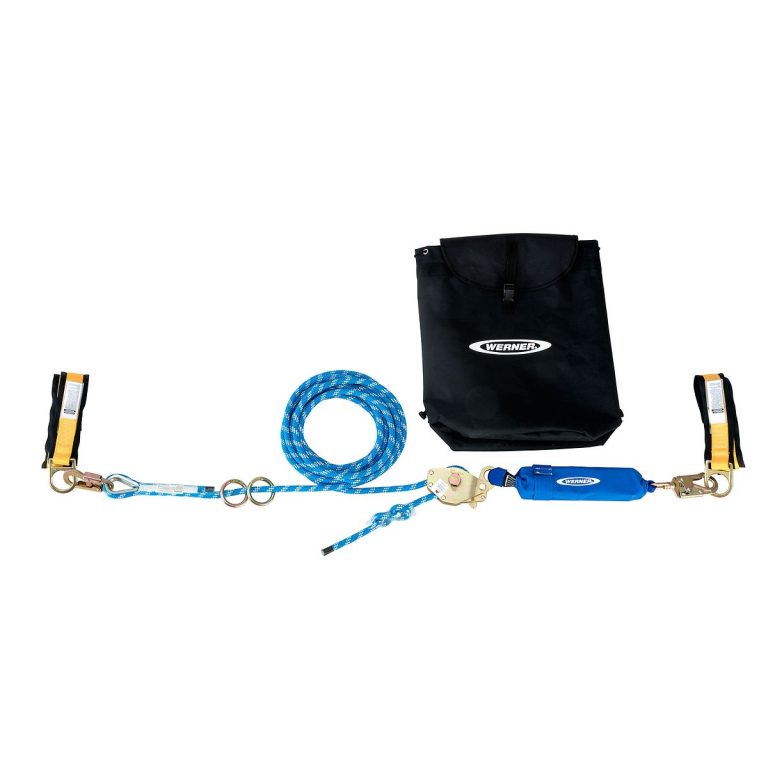
Werner’s rope horizontal lifeline systems use kernmantle synthetic rope with a rope adjuster, a tensioner and an inline energy absorber, packed in a backpack, in 30 and 60 foot kits such as the L100030 and L120060. Its cable horizontal lifeline systems, such as the L123060, add a turnbuckle, fist grips and a tension indicator, with kit options using cross-arm straps, D-bolt anchors or no anchors at all.
Height under the line matters as much as the kit. A horizontal line deflects when it catches a fall, so the clearance figures in the user instructions for each system are the ones to plan from. Werner’s L400001 7.5 foot aluminum end stanchion raises a cable horizontal lifeline above the user, and adding L400003 intermediate stanchions creates multiple spans for low clearance applications. Rope kits suit crews that move a system from job to job, since everything packs into one backpack, while the cable kits carry their own tension indicator so the crew can check line tension at a glance.
We deliver horizontal lifelines, stanchions and anchors on our own trucks door to door across New England, so a full system arrives on site together.
Horizontal Lifelines Within the Job Access Plan
A long span still has to be reached and rigged, often from a lift, a ladder or staging, before anyone ties in. The line, the anchors, the access equipment and the Werner horizontal lifelines range all have to fit the same structure, and they rarely come from one maker. Planning the lift or staging position with the end anchors also keeps the rigging crew tied off while the line goes up.
You can match the access gear makers around your span in our ladder and truck equipment brands hub.
Rig Horizontal Lifelines With Our Help
Send us the span, the structure at each end and the number of workers, or call 603-434-6911 in NH or 508-754-3030 in MA, and we will quote rope or cable horizontal lifelines with the anchors and connectors to match.
Horizontal Lifelines FAQs
How many workers can use Werner horizontal lifelines?
Werner's temporary rope and cable systems are listed for up to two users, each connecting to the provided O-rings.
Why do horizontal lifelines need strong end anchors?
Werner warns a horizontal line can put forces up to 15 times the fall arrest force on its anchors. Its engineered systems use energy absorbers to keep anchor loads under 2,500 pounds.
Who has to design horizontal lifelines?
OSHA requires them to be designed, installed and used under the supervision of a qualified person, with a safety factor of at least two.
Can I clip a snap hook straight onto a horizontal line?
Not unless it is a locking type designed for that connection under OSHA, and Werner lists it as a prohibited connection. Use the O-rings provided.
Should I choose rope or cable horizontal lifelines?
Werner rope systems use kernmantle rope packed in a backpack with a rope adjuster. Cable systems add a turnbuckle, fist grips and a tension indicator, with kits for cross-arm straps or D-bolt anchors.
How do stanchions help horizontal lifelines?
Werner's end stanchion raises a cable line above the user, and intermediate stanchions create multiple spans for low clearance applications.
Need help choosing the right ladder or truck equipment?
Talk to the team or send us your list and we will put a quote together.