Resources
Ladder Hoists for Roofing, Moving Shingles, Plywood and Panels on 200 and 400 Pound Platform Lifts, Tracks and More
OSHA's one-hand climbing rule, how a platform hoist works, 200 and 400 pound capacities and speeds, 28 and 44 foot track packages, carriers for sheet goods and solar panels, and a safe landing at the eave.
Carrying shingle bundles up an extension ladder is slow, tiring and against OSHA's climbing rules, which is why crews turn to ladder hoists for roofing, and Nation Wide Ladder supplies and sets up RGC platform hoists for the roof heights you work. We cover how a powered platform climbs an inclined track, the 200 and 400 pound Classic and Pro hoists, gas and electric drives, 28 and 44 foot track packages, plywood and solar panel carriers, the roller angle guide and the brackets and edge protection where loads arrive.

- Over 50 years serving contractors
- MA, NH, CT, ME, VT & RI
- Weekly Maine deliveries
Why Roofing Crews Send Bundles Up Ladder Hoists
OSHA’s ladder rules make carrying material up a ladder hard to defend. Under 29 CFR 1926.1053, a climber must face the ladder, keep at least one hand on it going up and down, and carry nothing that could throw them off balance. A bundle of shingles on the shoulder breaks all three, and a full roof means dozens of trips. A ladder hoist takes the load off the climber entirely, which is the whole case for one on a roofing job.
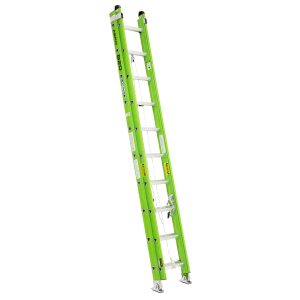
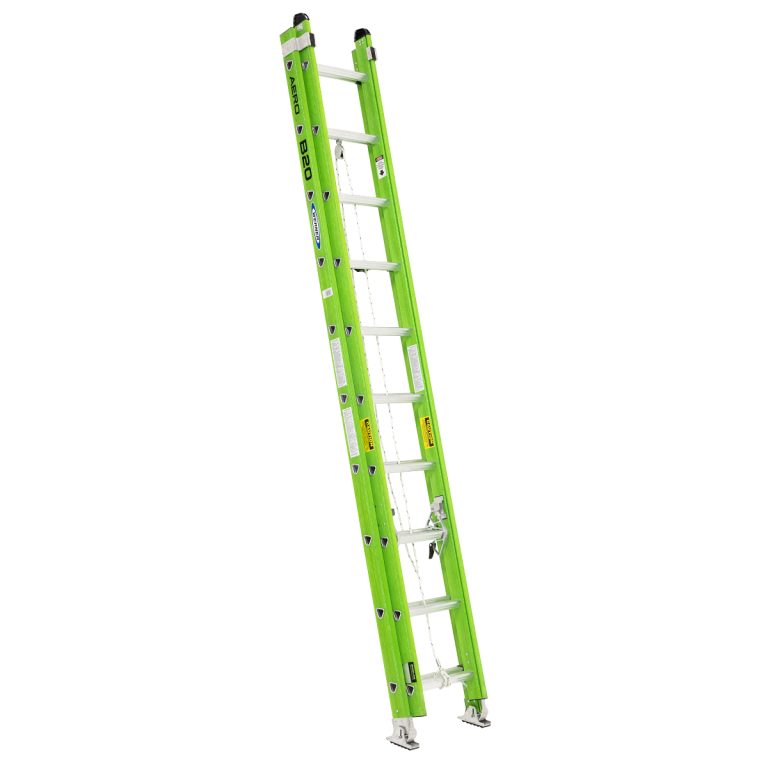
The machine borrows its name from the ladder it resembles. A drive unit near the bottom of an aluminum track winds a wire rope that pulls a small platform up the track to the eave, while the track leans on the building like an extension ladder and sets up on a driveway, lawn or patio. RGC, which also calls these machines laddervators or tranzporters, mounts the drive high enough to clear shrubs, places the controls to one side so the operator works away from the load, and states plainly that the hoist lifts material only and its track is never to be climbed. Crews still need a Werner extension ladder for their own climb, while the RGC platform hoists range moves the material.
Our team helps you select the right hoist for your roofs by checking eave heights, ground conditions and the loads your crew lifts most.
Capacity, Speed and Track Height on Roofing Ladder Hoists
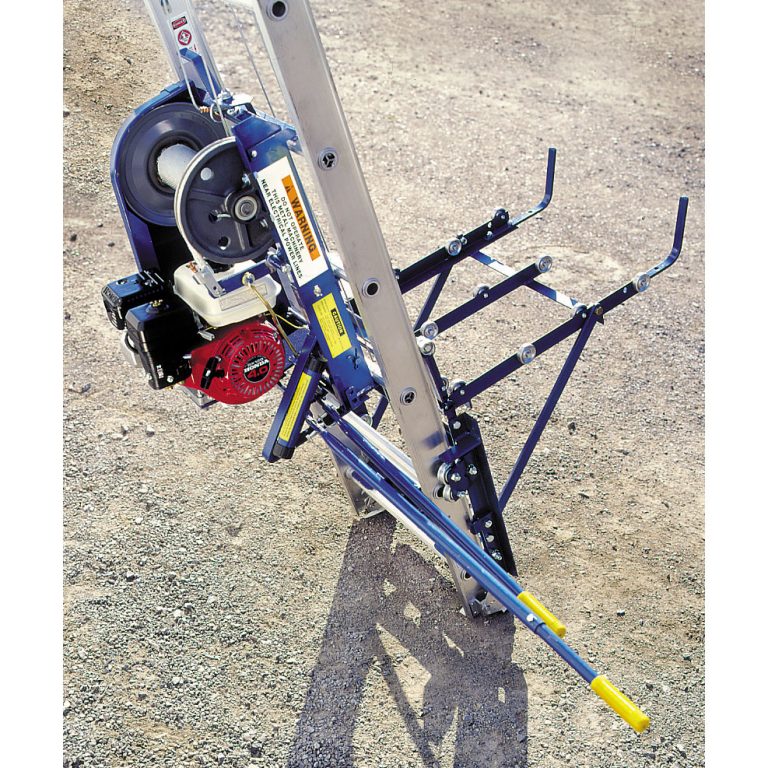
RGC builds its Classic hoists in two capacities. The 200 pound model lifts at 220 feet per minute on a 17 inch wide track with a 17 by 18 inch platform, which suits roofing crews sending shingle bundles quickly. The 400 pound model lifts at 110 feet per minute on a 24 inch track with a 24 by 24 inch platform, trading speed for twice the payload. Each comes with a 4 horsepower Briggs & Stratton or Honda gas engine or a 1.5 horsepower electric motor, and a brake rope gives a controlled descent. We also list Pro hoists in the same capacities and drives.
Height comes from the track. A 28 foot hoist uses an 8 foot base, two 8 foot tracks and one 4 foot track, and a 44 foot hoist uses the base, four 8 foot tracks and a 4 foot track. Any run over 28 feet needs the telescope support, and RGC lists 44 feet as the maximum. Dual anchor points on the 3rd and 5th track sections tie the run to the building, and cast aluminum shoes steady the base on uneven ground. Our RGC ladder hoists page sets out each package.
Call 603-434-6911 in New Hampshire or 508-754-3030 in Massachusetts with your eave heights, and we will quote the capacity, drive and track length for your roofing work.
Carriers and Setup Habits That Keep Ladder Hoists Productive on a Roof
On a roofing job the platform handles bundles and boxes, and carriers widen what one hoist can lift. RGC’s 7 inch plywood carrier holds sheet goods on edge so they ride up the track rather than balancing flat, its solar panel carrier raises and lowers panels for both capacities, and its 6 foot roller angle guide, made for 400 pound hoists, moves material away from the roof edge on shallow inclines. Track and platforms are sized to capacity, so a 200 pound hoist takes only 17 inch track parts. Roofing crews that also sheathe decks get the most from the plywood carrier, and solar installers from the panel carrier. The RGC hoist accessories page lists each part.
A steady routine keeps the hoist working. Set the base on firm ground, fix both anchor points before the first lift, keep everyone clear of the track while the platform moves, stage loads within the rated capacity and follow RGC’s manual for assembly. Plan the landing as carefully as the lift, because the bundles arrive at an edge that OSHA expects to be protected once it sits 6 feet or more above a lower level in residential roofing.
Our trucks make regular weekly deliveries to Maine from New Hampshire, so crews there can add track, a carrier or a telescope support between jobs.
Ladder Hoists for Roofing Next to Brackets and Edge Rails
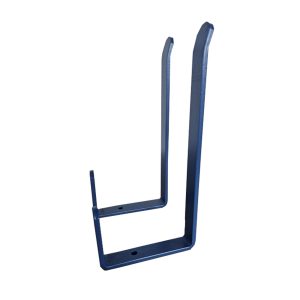
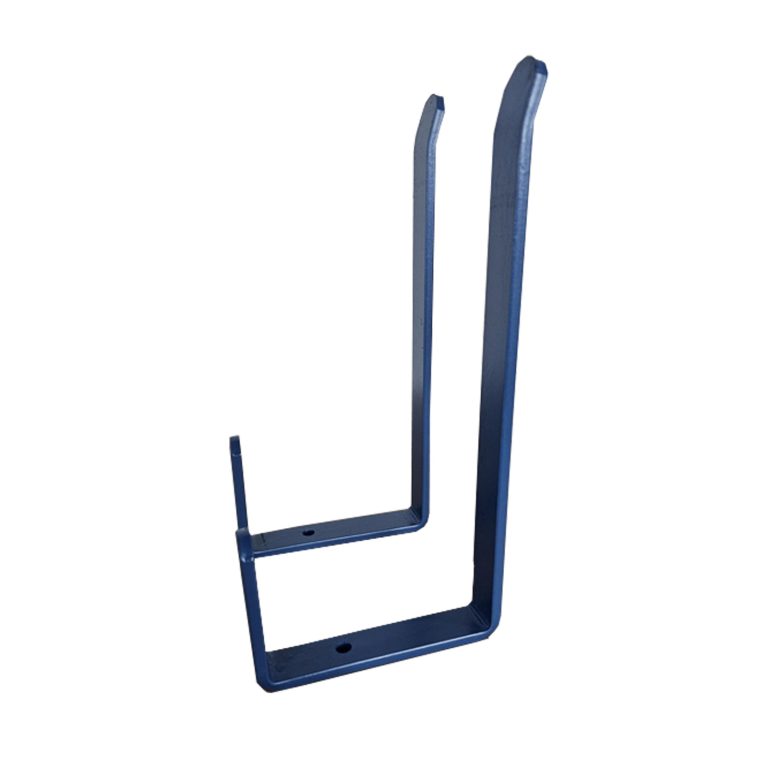
Where the platform stops, a crew needs a plank on roof brackets to receive bundles and edge guardrails at the eave, so the hoist, the footing and the rails work as one landing zone.
To line up the bracket, guardrail and ladder makers that work beside a hoist, look through our ladder and truck equipment brands hub.

Ordering Ladder Hoists for Roofing Through Our Showrooms
Nation Wide Ladder offers free in-person consultations at its Windham, NH and Worcester, MA showrooms, where we size ladder hoists for roofing to your eave heights, your typical loads and the power you have on site, with the track and carriers the job calls for.
Ladder Hoists for Roofing FAQs
Can a worker ride ladder hoists for roofing?
No. RGC states its platform hoists lift material only and the track is not designed for climbing.
Which ladder hoist is faster, 200 or 400 pound?
On RGC's Classic line, the 200 pound hoist lifts at 220 feet per minute, twice the 110 feet per minute of the 400 pound model.
How high do ladder hoists reach?
RGC lists 44 feet as the maximum, and any track longer than 28 feet needs the telescope support.
Can ladder hoists run on electric power?
Yes. RGC's Classic hoists come with a 1.5 horsepower electric motor or a 4 horsepower Briggs & Stratton or Honda gas engine.
Why not carry roofing bundles up the ladder?
OSHA 1926.1053 requires at least one hand on the ladder while climbing and bars carrying loads that could throw the climber off balance.
Can roofing ladder hoists lift plywood?
Yes, with RGC's 7 inch plywood carrier, which holds sheet goods on edge as they ride up the track.
Need help choosing the right ladder or truck equipment?
Talk to the team or send us your list and we will put a quote together.