
Resources
OSHA Ladder Rules for Contractors on Setup Angle, Landings, Step Ladder Tops, Load, Rails, Inspection and More
The 1926.1053 requirements crews meet every day, from the one-quarter angle and the 3 foot rail extension to spreaders, top steps, rated loads, nonconductive rails, inspection and climbing.
OSHA ladder rules for construction sit in 29 CFR 1926.1053, and Nation Wide Ladder helps contractors meet them with Werner and Louisville ladders matched to the work, the load and the site. The rules crews meet daily fall into four groups, how extension ladders are set up and reach a landing, how step ladders are opened and climbed, how load ratings and rail material are chosen, and how ladders are inspected, tagged and climbed.

- Over 50 years serving contractors
- MA, NH, CT, ME, VT & RI
- Weekly Maine deliveries
OSHA Ladder Rules for Setting Up Extension Ladders
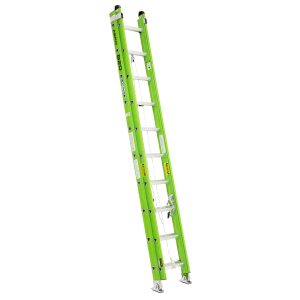
OSHA rules set the angle for anything that leans on a support. Under 1926.1053(b)(5)(i), non-self-supporting ladders are used at an angle where the horizontal distance from the top support to the foot is approximately one-quarter of the working length, measured along the rails between the foot and the top support. OSHA also wants the top placed with both rails supported equally, unless it has a single support attachment.
Landings carry their own OSHA requirement. When a portable ladder gives access to an upper landing surface, paragraph (b)(1) calls for the side rails to extend at least 3 feet above that surface, and where the ladder is too short for that, OSHA requires it to be secured at the top to a rigid support that will not deflect, with a grasping device such as a grabrail. Werner advises an extension ladder 7 to 10 feet longer than the highest point it rests against, which leaves room for that extension. OSHA adds that ladders go only on stable, level surfaces unless secured, that ladders in doorways, passageways or driveways are secured or barricaded, and that ladders are never moved, shifted or extended while occupied. Our ladders by height pages give reach figures for each size, and Werner extension ladders lists the series we carry.
Our team helps you select the extension length from the landing height you measure, so what we quote can clear the OSHA 3 foot extension.
Step Ladder Rules OSHA Applies to Tops, Spreaders and Bracing
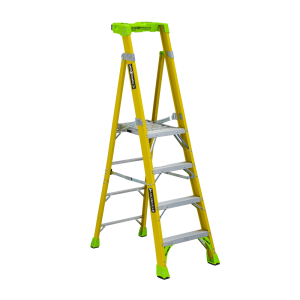
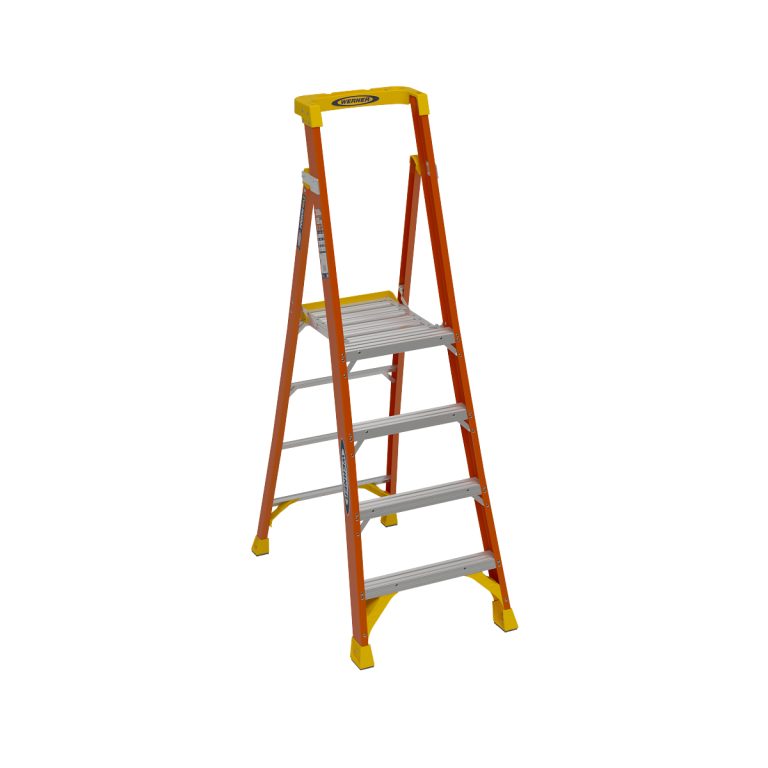
Step ladders have three OSHA rules of their own. Paragraph (a)(8) requires a metal spreader or locking device on each stepladder to hold the front and back sections open while it is in use. Paragraph (b)(13) says the top or top step of a stepladder shall not be used as a step, and Werner sets the highest standing level two steps down from the top. Paragraph (b)(14) bars climbing the cross-bracing on the rear section unless it is designed with steps on both the front and rear sections, which is what a twin step ladder provides.
OSHA also fixes the spacing of the climb. Rungs, cleats and steps on portable ladders are spaced not less than 10 inches and not more than 14 inches apart, measured between center lines, and step stools run 8 to 12 inches. The minimum clear distance between side rails on portable ladders is 11 1/2 inches. Werner says it builds its products to ANSI and OSHA requirements, so a crew’s job is to open the spreaders fully, stay off the top and climb only the side built for it. The Werner step ladders page covers single and twin models.
Our Windham, NH and Worcester, MA showrooms offer free in-person consultations, where you can open a twin and a single step ladder side by side before choosing.
OSHA Load and Rail Rules Behind Ladder Duty Ratings
OSHA ties use to the rating on the label. Paragraph (b)(3) says ladders shall not be loaded beyond the maximum intended load for which they were built, nor beyond the manufacturer’s rated capacity, and (b)(4) limits ladders to the purpose they were designed for. Duty ratings put a number on that capacity, from Type III at 200 pounds through Type II at 225, Type I at 250 and Type IA at 300 to Type IAA at 375, and the load counts the climber, clothing, tools and materials together. For strength, OSHA requires portable ladders to support at least four times the maximum intended load, or 3.3 times for extra-heavy-duty type 1A metal or plastic ladders.
Rail material has its own OSHA rule. Under (b)(12), ladders need nonconductive siderails where the employee or the ladder could contact exposed energized electrical equipment, which is why electricians and utility crews standardize on fiberglass. Werner ladders and Louisville ladders both offer fiberglass series across step and extension styles.
We grade the ladders we sell into our own Apprentice, Journeyman and Master classes, which helps you match build quality to the load a crew puts on a ladder each day.
Inspection, Tagging and Climbing Rules Under OSHA
OSHA rules expect ladders to be checked as a routine. Paragraph (b)(15) calls for inspection by a competent person for visible defects on a periodic basis and after any occurrence that could affect safe use. Under (b)(16), portable ladders with structural defects, such as broken or missing rungs, cleats or steps, broken or split rails or corroded components, are immediately marked as defective or tagged “Do Not Use” and withdrawn from service until repaired, and (b)(18) requires any repair to restore the original design criteria. Ladders must also be kept free of oil, grease and other slipping hazards.
The climbing rules are short. The user faces the ladder going up or down, uses at least one hand to grasp it, and carries no object or load that could cause a loss of balance. OSHA also bars single-rail ladders outright, and it prohibits tying or fastening ladders together to make a longer section unless they are designed for it. A tool bucket or a hoist keeps hands free for the climb.
Over 50 years of supplying homeowners and contractors means we can replace a tagged-out ladder with one suited to the same work.
OSHA Ladder Rules Where Fixed Ladders and Fall Protection Meet
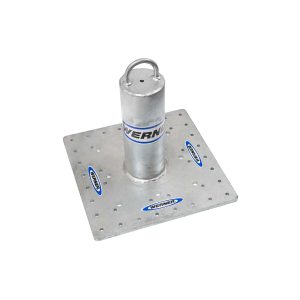
Fixed ladders carry further OSHA requirements. Where the total climb on a fixed ladder reaches 24 feet or more, paragraph (a)(19) calls for ladder safety devices, or self-retracting lifelines with rest platforms at intervals of no more than 150 feet, or a cage or well with ladder sections no longer than 50 feet.
For the lifelines, harnesses and access equipment that go with that work, you can browse every maker we stock in our ladder and truck equipment brands hub.
Ladders That Meet OSHA Rules, Quoted by Our Team
A ladder long enough to clear the landing, rated for the full load, built with the right rails and inspected on schedule covers most of what OSHA asks of a crew. Send us the heights, loads and trades you work with, or call 603-434-6911 in New Hampshire or 508-754-3030 in Massachusetts, and we will quote ladders that suit the OSHA ladder rules on your sites.
OSHA Ladder Rules FAQs
Where are the OSHA ladder rules for construction?
In 29 CFR 1926.1053, part of Subpart X of the OSHA construction standards.
What angle do OSHA ladder rules require for an extension ladder?
OSHA rules set the horizontal distance from the top support to the foot at approximately one-quarter of the working length.
How far must a ladder extend past a roof edge under OSHA?
At least 3 feet above the upper landing surface. Where that is not possible, OSHA requires the top to be secured to a rigid support with a grasping device such as a grabrail.
Can I stand on the top of a step ladder under OSHA rules?
No. OSHA says the top or top step of a stepladder shall not be used as a step.
When do OSHA rules call for a fiberglass ladder?
OSHA requires nonconductive siderails where the worker or the ladder could contact exposed energized electrical equipment, and fiberglass rails meet that need.
How often do OSHA ladder rules require inspection?
A competent person inspects ladders for visible defects on a periodic basis and after any occurrence that could affect safe use.
Need help choosing the right ladder or truck equipment?
Talk to the team or send us your list and we will put a quote together.