
Resources
Ladder Angle Rule for Extension and Single Ladders, From the 4 to 1 Setback to Footing, Top Support and More
The 4 to 1 setback, OSHA's quarter-length rule, the arm test at the base, 3 feet of rail above a roof edge, and how levelers and standoffs change where you measure from.
The ladder angle rule puts the foot of an extension or single ladder one foot out from the support for every four feet of height to the point where the top rests, and a setback that strays from it is how a ladder slides out at the base. Nation Wide Ladder helps crews get that angle right with ladders long enough to meet it and the accessories that keep it steady, from the 4 to 1 setback and OSHA's quarter-length rule to the arm test, roof-edge extension, levelers for sloped ground and standoff stabilizers.


- Over 50 years serving contractors
- MA, NH, CT, ME, VT & RI
- Weekly Maine deliveries
How the Ladder Angle Rule Works on Extension and Single Ladders
Werner calls the 4 to 1 rule a setup guideline for extension and straight ladders, with the base placed 1 foot from the wall for every 4 feet of vertical height to the point where the ladder rests. A 16 foot rise to a gutter therefore puts the feet 4 feet out. Cal/OSHA gives the same proportion and ties it to keeping an extension ladder from slipping, so the angle rule applies whenever a ladder leans on something rather than standing on its own, as with Werner extension ladders and the fixed-length models among our Werner single and manhole ladders.
OSHA writes its version of the angle into 1926.1053 for any ladder that is not self-supporting. The horizontal distance from the top support to the foot should be approximately one quarter of the working length, which OSHA measures along the ladder between the foot and the top support. Werner counts vertical height while OSHA counts length along the rails, so the two rules differ slightly on paper while aiming at the same steep lean, and OSHA tests the strength of these ladders at 75 1/2 degrees from the horizontal. Wood job-made ladders with spliced side rails follow their own rule of one eighth of the working length.
Our team checks the length on each quote against the support height you give us, so the rails still reach the work once the angle rule sets the base.
Measuring the Ladder Angle With a Tape or the Arm Test
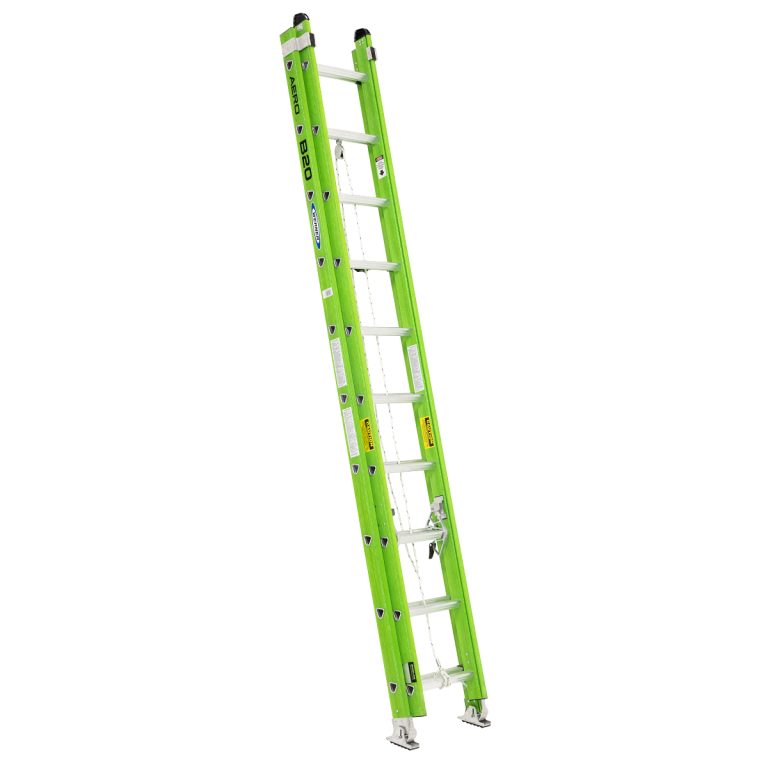
The tape method starts at the top. Measure the height to the point where the rails will rest, divide it by four and set the feet that far from the wall. Cal/OSHA adds a field check for when no tape is handy, which is to stand with your feet at the base of the ladder and hold one arm straight out. If your hand reaches the nearest part of the ladder without bending the arm or leaning forward, the angle is right, and if not, the ladder needs moving.
Length comes first, since the angle rule only works when the ladder is long enough. Werner advises an extension ladder 7 to 10 feet longer than the highest support or contact point, and our ladders by height section sets the sizes side by side. When the ladder gives access to a roof or other upper landing, OSHA requires the side rails to extend at least 3 feet above it, or the top must be secured to a rigid support with a grab rail provided. Werner sets the highest standing level four rungs down from the top, and OSHA wants both rails supported equally at the top unless the ladder has a single support attachment.
Free in-person consultations at our Windham, NH and Worcester, MA showrooms let you talk through eave heights and setback with our team before you settle on a length.
Ground Conditions, Levelers and Standoffs That Keep the Ladder Angle Rule Workable
A correct angle means little if one foot sinks or slides. OSHA allows ladders only on stable, level surfaces unless they are secured against displacement, and on slippery surfaces they must be secured or fitted with slip-resistant feet, which OSHA says are no substitute for care in placing, lashing or holding the ladder. Cal/OSHA rules out raising a ladder on boxes, barrels, bricks or blocks and points to leg levelers or mudsills where one foot sits low. On ice or snow it calls for spike or spur-type safety shoes, checked for grip before anyone climbs.
Levelers keep the rungs level without changing the setback. Werner lists its PK80-2 leg levelers for all lengths of several series, including the D6200, D7100, D1200, D1300 and D500, and the LeveLok quick connect leveler extends in 3/16 inch steps up to 10 inches. A standoff stabilizer moves the support point to where its arms meet the wall, so measure the angle rule from there. The Werner AC78 holds the rails 10 inches off the wall and the adjustable 97P sets 12 or 29.5 inches, both in our Werner ladder stabilizers range. Once the ladder is set, OSHA bars moving, shifting or extending it while anyone is on it.
Our own trucks deliver across New England, so levelers and stabilizers can arrive on the same delivery as the ladder they fit.
Where the Ladder Angle Rule Meets Staging, Racks and Fall Protection
The same setback carries into larger setups. Ladder jack staging starts with two ladders set at the proper angle and matching heights, and roof work starts with rails that clear the eave by 3 feet, which is often where harness and anchor decisions begin. Long ladders also need a rack to reach the job, and the Louisville extension ladder lineup adds another set of lengths and ratings to plan around.
When the job reaches past ladders into racks, staging or anchors, you can compare every maker we carry in our ladder and truck equipment brands hub.

Ladders Quoted to Suit the Angle Rule on Your Buildings
A ladder long enough for the setback, the 3 foot roof extension and a standing level four rungs from the top makes the ladder angle rule easy to follow on each climb. Send us your support heights as a list, or call 603-434-6911 or 508-754-3030, and we will quote extension and single ladders sized around the ladder angle rule.
Ladder Angle Rule FAQs
What is the ladder angle rule for extension ladders?
Werner's 4 to 1 rule places the base 1 foot from the wall for every 4 feet of vertical height to the point where the ladder rests.
How does OSHA state the ladder angle rule?
OSHA 1926.1053 asks for a horizontal distance from the top support to the foot of approximately one quarter of the working length, measured along the ladder.
How can I check the ladder angle without a tape?
Cal/OSHA's arm test has you stand with your feet at the base and hold an arm straight out. If you can touch the nearest part of the ladder without bending the arm or leaning forward, the angle is correct.
Does the angle rule apply to step ladders?
No. Werner describes the 4 to 1 rule as a guideline for extension and straight ladders. A stepladder supports itself and must be fully opened with its spreaders locked.
Where do I measure the angle rule from when a stabilizer is fitted?
From the point where the stabilizer arms meet the wall, since that becomes the upper support point.
How far past a roof edge should the ladder extend?
OSHA requires the side rails to extend at least 3 feet above the upper landing. If that is not possible, the top must be secured to a rigid support and a grab rail provided.
Need help choosing the right ladder or truck equipment?
Talk to the team or send us your list and we will put a quote together.