Resources
Choosing a Fall Protection Harness by Trade, From Standard and Construction to Positioning, Climbing, Arc Flash and More
D-ring layouts for roofing, framing, steel, rebar, climbing, electrical and roadside work, OSHA attachment and positioning rules, fit, relief handles and the checks before each shift.
Picking a fall protection harness by trade starts with where the D-rings sit and what else the job asks of the worker, because a roofer, an ironworker and a lineman each load their gear differently. Nation Wide Ladder helps crews choose across standard back D-ring, construction, positioning, climbing, arc flash and high-visibility Werner models, matching the fall protection harness to the tie-off, the tools carried and how many people share it.


- Over 50 years serving contractors
- MA, NH, CT, ME, VT & RI
- Weekly Maine deliveries
The Fall Protection Harness for Roofing, Framing and General Construction
Every fall arrest setup starts at the back. OSHA puts the body harness attachment point at the center of the wearer’s back near shoulder level, or above the head, and it has not accepted a body belt as part of a personal fall arrest system since January 1, 1998. A full-body design spreads arrest forces over the thighs, pelvis, waist, chest and shoulders, which is why a roofer or framer tying off for fall arrest wears one rather than a belt, and why sizing it to the worker matters as much as the D-ring layout.
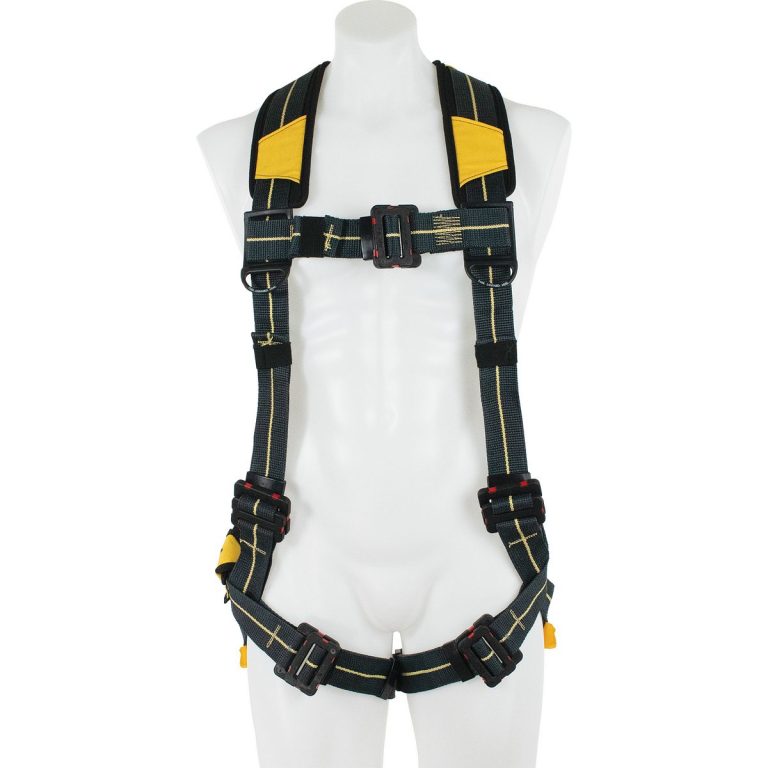
For many crews a standard harness with a single back D-ring covers the work. The Werner Blue Armor H112004 pairs that forged alloy steel D-ring with a Quick Connect chest buckle and tongue buckle legs, which Werner calls ideal when more than one worker could share the same fall protection gear. Carpenters and general contractors who also carry tools often step up to a construction model. Werner builds its LiteFit H332104XB for general construction with tool carrying and a removable body belt, plus hip D-rings, and the Blue Armor H133104 adds waist D-rings to the back D-ring for three in total.
Our team helps you select a fall protection harness for each role on the crew, so the tool carrier and the occasional climber each get fall protection built for the role.
Positioning and Climbing Fall Protection for Steel, Rebar and Tower Trades
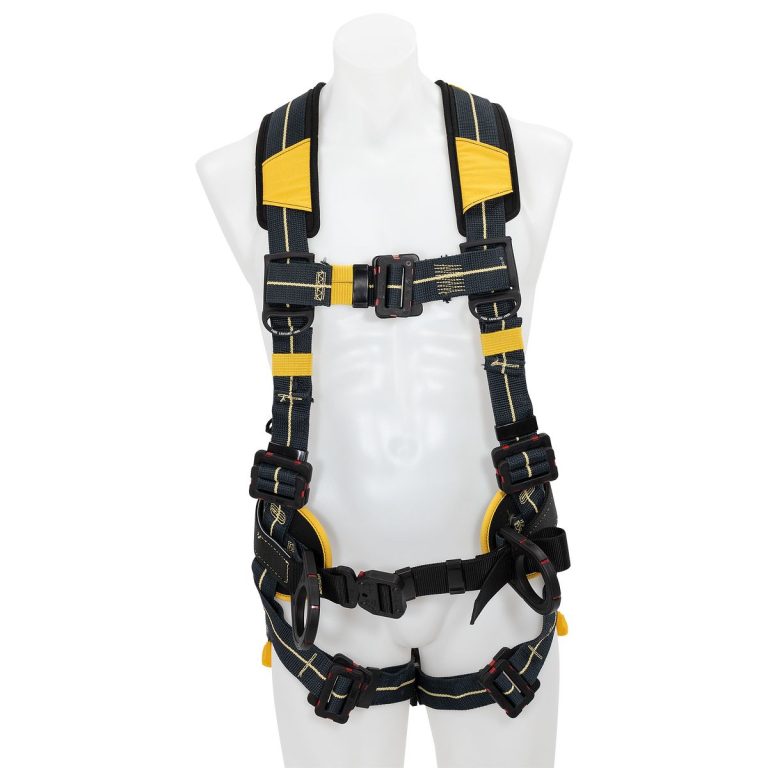
Ironworkers, rebar tiers and form crews often need both hands free while leaning against a wall or a column. OSHA calls that a positioning device system, rigged so the worker cannot free fall more than 2 feet and secured to an anchorage that holds at least twice the potential impact load or 3,000 pounds, whichever is greater. A positioning model adds hip D-rings for that job, as on the Werner Blue Armor H231004, whose slotted pass-through buckles fasten without twisting, while the back D-ring stays for fall arrest. Rebar crews also clip positioning lanyards between those hip rings and the steel, which is separate fall protection from the arrest connector at the back.
Climbers want a different layout. Werner’s climbing models, such as the Blue Armor H122004, add a front D-ring alongside the back D-ring for workers who spend the day going up and down structures. Whatever the layout, the back D-ring remains the fall arrest connection under the OSHA rule, and the side or front rings serve the other tasks. If a worker both climbs and positions, Werner’s climbing and positioning models carry back, hip and front rings on one build, so a single piece of fall protection covers the whole shift.
Our own trucks deliver door to door across New England, so a steel or rebar crew can have positioning and climbing fall protection brought to the yard together.

Electrical, Roadside and Fit Choices in a Fall Protection Harness
Electrical and utility trades face a hazard that ordinary webbing is not built for. The Werner Arc Flash H914004 uses Kevlar webbing, shoulder padding and dielectric hardware to meet ASTM F887 for arc flash along with ANSI Z359.11, and Werner groups those models in its arc flash harnesses. Roadside, bridge and busy site crews may lean toward Hi-Viz harnesses, where the H132004XHV pairs green webbing with load indicators that make inspection easier, and the Blue Armor range also uses bright colors for worker visibility on the jobsite.
Fit and rescue apply to every trade. Werner’s Blue Armor and LiteFit models use 5-point adjustment, and their Relief Handles help a suspended worker reach the Gravity Override position, reducing the potential hazards of suspension trauma while rescue is on the way. Werner recommends inspecting every fall protection harness before each use and walking it down to understand its fit and how it will perform in a fall, and OSHA requires defective fall protection components to come out of service.
Bring the crew to a free consultation at our Windham NH or Worcester MA showroom and try each fall protection harness on before choosing sizes.
A Fall Protection Harness Within the Wider Job Kit
The harness connects everything else on the job, from the lanyard or self-retracting lifeline to the anchor and the ladder, lift or staging that gets the worker up. Each trade mixes those pieces differently, and they often come from different makers.
When you want to compare the makers behind that access gear, browse our ladder and truck equipment brands hub.
Fit Each Trade With the Right Fall Protection Harness
Over 50 years of supplying contractors has shown us that a fall protection harness works best when it matches the trade, and we will walk through D-rings, buckles, sizes and connectors with you across the Werner fall protection harnesses range.
Fall Protection Harness FAQs
Which fall protection harness does a roofer need?
For straightforward fall arrest, a standard model with a back D-ring is the usual starting point. OSHA places the harness attachment point at the center of the back near shoulder level.
When does a fall protection harness need hip D-rings?
When the worker uses a positioning system, leaning into a wall or column with both hands free. OSHA limits positioning free fall to 2 feet.
Can a body belt replace a harness for fall arrest?
No. OSHA has not accepted body belts in personal fall arrest systems since January 1, 1998, although a body belt may still be used for positioning.
What makes an arc flash fall protection harness different?
Werner arc flash models use Kevlar webbing and dielectric hardware to meet ASTM F887 for arc flash as well as ANSI Z359.11.
Can several workers share one fall protection harness?
Werner describes its tongue buckle leg straps as ideal when more than one worker could use the same one. Each wearer should adjust it and inspect it before use.
What are relief handles on a harness for?
Werner Relief Handles help a suspended worker reach the Gravity Override position, reducing the potential hazards of suspension trauma while waiting for rescue.
Need help choosing the right ladder or truck equipment?
Talk to the team or send us your list and we will put a quote together.