Best Sellers
Scaffolding in Frame, Interior Rolling and Pump Jack Systems, With Planks, Guardrails, Accessories and More
Mason style and light duty frame towers, baker style interior units, aluminum pump jack poles, hook-on and laminated planks, guardrail sets, access and leveling parts, and the OSHA rules behind every supported system.
Scaffolding comes in several systems, and choosing one starts with the job, whether that is a masonry wall, a ceiling, a run of siding or a chimney. Nation Wide Ladder lists frame, interior and pump jack scaffolding from the makers and house lines contractors order most, and our team plans each setup to the walls and loads you describe, covering mason style and light duty frames, baker style rolling units, Alum-A-Pole pump jacks and the ReechCraft Bronco tripod, plus planks, guardrails and accessories.


- Over 50 years serving contractors
- MA, NH, CT, ME, VT & RI
- Weekly Maine deliveries
Shop Scaffolding by Type
 Scaffold FramesMason style and light duty scaffold frames from 24 to 76 inches tall, the walk-thru frame, matching cross…
- Interior ScaffoldingBaker style interior scaffolding in aluminum and steel, from the one-person Werner ATS-72 to stackable steel units, with…
- Scaffold PlanksAluminum hook-on decks, Werner 5500 series decks, plywood staging planks and 16 foot laminated scaffold planks, with the…
- Scaffold GuardrailsPosts, rails, toeboards and interside panels for frame towers, with OSHA toprail heights and loads and the roof…
- Scaffold AccessoriesBase plates, leveling jacks, casters, outriggers, braces, pins, access ladders, stairways, hoisting gear and roof brackets for frame…
- Pump Jack ScaffoldingAlum-A-Pole pump jack scaffolding from poles and joints to Pro-Jack pump jacks, stages, end rails, nets and packages,…
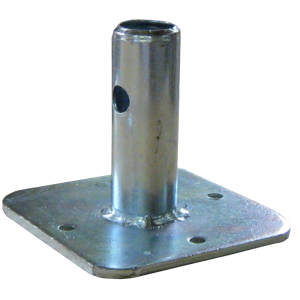
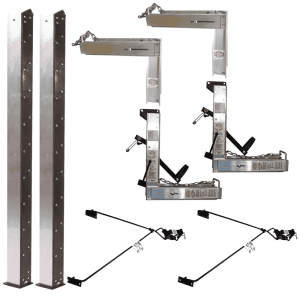
Frame Scaffolding Towers for Masonry, Siding and Repair Work
Frame scaffolding is the stacked tower most people picture, built from welded steel end frames joined by cross braces and coupling pins, then planked and railed. We list Standard Vanguard® style mason frames in 1.69 inch steel tube, 60 inches wide in heights from 24 to 76 inches and 24 inches wide for tight spots, plus light duty frames 48 inches wide in a slimmer 1.25 inch tube. A walk-thru frame lets workers pass along a run of towers at deck level. Grades, heights and the brace each frame takes are set out on our scaffold frames page.
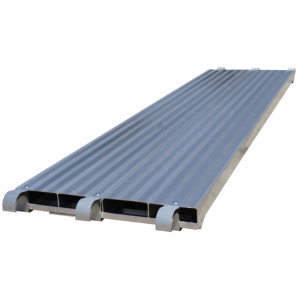
Frames carry planks across each bay. The hook-on choices include aluminum decks rated at 75 pounds per square foot, the Werner 5500 series aluminum deck with a 250 pound limit and 7 foot plywood staging planks, with 16 foot laminated boards for longer spans, all compared on our scaffold planks page. Frame scaffolding makes the most sense when a crew and its material share one deck for days or weeks, as on masonry, chimney work and commercial repairs, since moving the work height means moving planks to the next lift.
Our team helps you select frames, braces and planks as one tower, so every piece of the scaffolding fits the next.
Interior and Rolling Scaffolding for Ceilings and Finish Trades
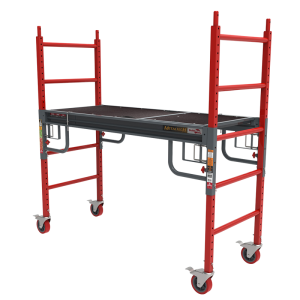
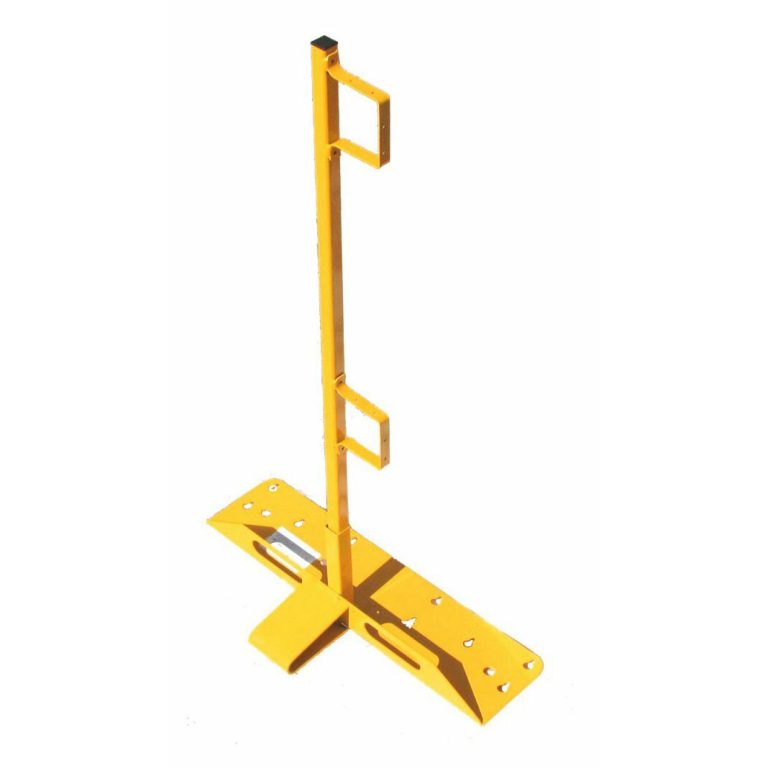
Inside a building, scaffolding has to roll and lock rather than stack and tie, and baker style units are the usual answer. The Werner ATS-72 telescoping aluminum unit carries one person and 500 pounds across five deck heights, the steel NWL MPISU square tube unit lists a 1,000 pound capacity on a 6 foot platform, and the Metaltech Buildman stacks three 6 foot frames to 24 feet with a 1,500 pound capacity. A 4 foot mini mobile unit covers lower reaches, and the MP square tube line adds an upper section, a guardrail assembly, outriggers and casters. Our interior scaffolding page compares them by load and height.
Frame towers can roll as well, once casters and outriggers go on the legs. OSHA’s mobile scaffolding rules in 29 CFR 1926.452(w) require locked casters while the tower is in use, a push applied no more than 5 feet above the floor and strict conditions before anyone rides a moving tower, including a floor within 3 degrees of level and a height no more than twice the base width. Drywall, electrical, painting and ceiling crews favor rolling scaffolding because one unit serves room after room.
Free in-person consultations at our Windham, NH and Worcester, MA showrooms let you compare interior scaffolding units with our team before you choose.
Pump Jack Scaffolding for Long Exterior Walls
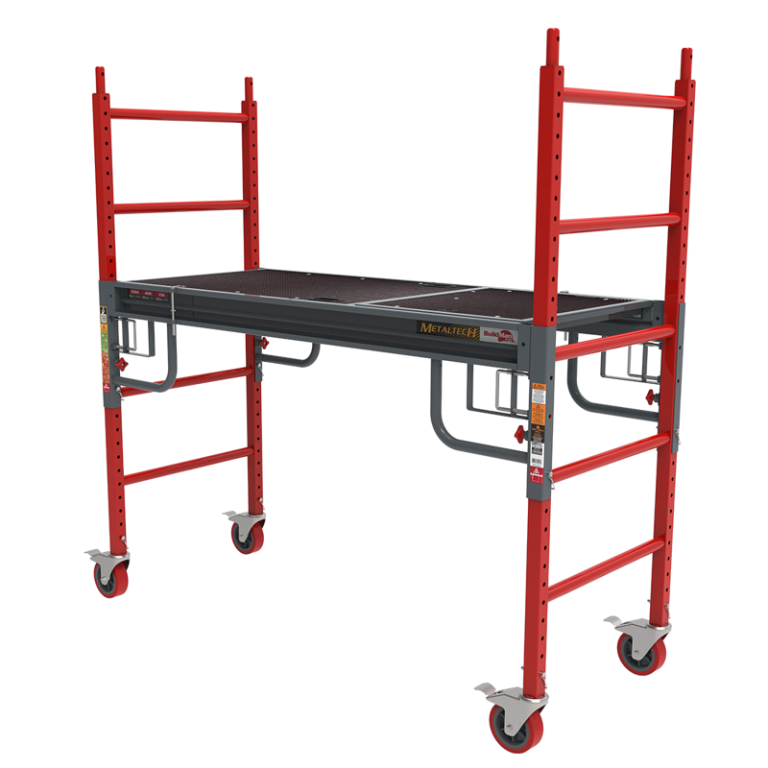
Pump jack scaffolding is the lighter exterior option. Aluminum poles stand against the wall and brace back to it, a pump jack on each pole lifts the stage a few inches at a time, and the deck follows siding courses or paint up the house. We list the Alum-A-Pole system, with poles from 6 to 24 feet, the Pro-Jack, stages rated for two people and 500 pounds, end rails, folding braces, safety nets and starter pole packages, all compared on our pump jack scaffolding page. OSHA sets its own pump jack rules, including two positive gripping mechanisms on every bracket and triangular bracing at the top and bottom of each pole.
The same store category holds the ReechCraft Bronco, a 16 pound aluminum tripod that sets a plank level on sloped ground, rated by ReechCraft at 300 pounds per tripod. Pump jack and tripod scaffolding suit houses and low-rise walls where the platform moves often, while frame towers suit heavy material and long stays. Platforms on pump jacks may be as narrow as 12 inches under OSHA, against 18 inches for most supported scaffolding.
Our own trucks deliver door to door across New England, which matters when a scaffolding order includes 24 foot poles and stages.

Guardrails, Access and Accessories That Finish Any Scaffolding
A tower needs guardrails, a safe way up and solid footing before work starts. OSHA 29 CFR 1926.451 requires fall protection for anyone more than 10 feet above a lower level, a toprail between 38 and 45 inches on supported scaffolds placed in service since 2000, and proper access such as a ladder or stairway once a platform sits more than 2 feet higher or lower than the point of entry. Our guardrail sets pair NWGRP posts with NWGR rails in six lengths and galvanized NWTB toeboards, compared with the Acro and Tie Down roof systems on our scaffold guardrails page.
Accessories handle everything else. Base plates and leveling jacks set the footing, casters and outriggers make a tower mobile, straddle, diagonal and tie braces hold it square and anchored, and pins lock each joint. For access we list a stairway for 6 foot 4 inch frames, internal access ladders and external climbing ladders, and for lifting a hoist arm, wheel and manila rope, alongside chimney brackets and carpenter wall brackets. Each is matched to frame grade on our scaffold accessories page.
Send us your tower count and heights at 603-434-6911 in NH or 508-754-3030 in MA, and we quote the scaffolding guardrails and accessories to match.
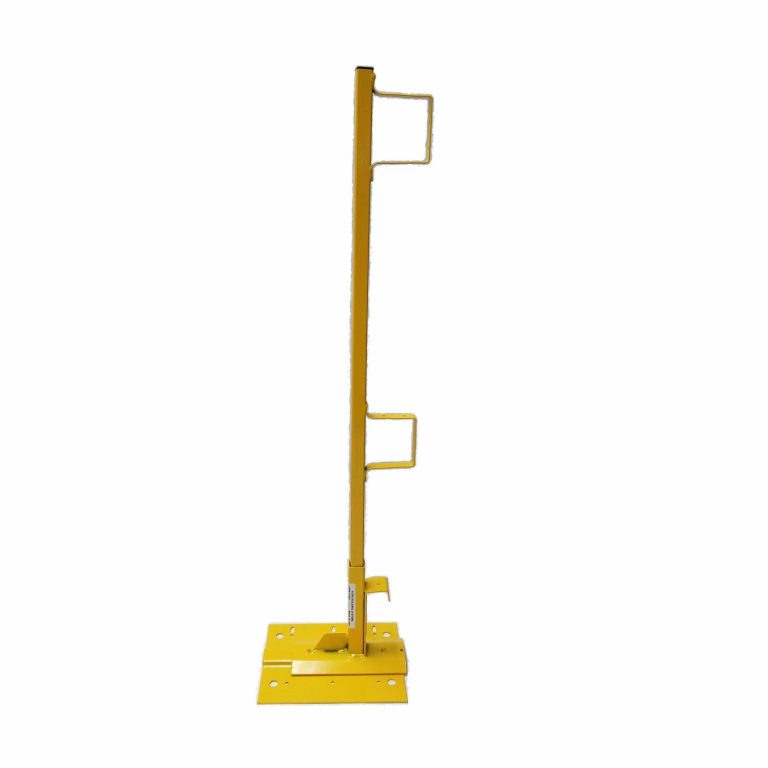
Scaffolding Within the Wider Exterior Kit
Scaffolding rarely works alone on a job. Extension ladders get crews onto the roof and set the first braces, fall protection covers erectors and anyone outside the rails, and a truck or van rack has to carry poles, planks and frames between sites. Our best sellers overview groups ladders, racks, truck boxes and safety gear beside scaffolding.
Find the makers behind each of those categories in our ladder and truck equipment brands hub.

Planning Scaffolding With Our Team
Nation Wide Ladder has supplied homeowners and contractors for over 50 years, and we plan scaffolding around the job in front of you, whether that is a frame tower for masonry, a rolling unit for ceilings or pump jacks for a run of siding, then deliver it across New Hampshire, Massachusetts, Connecticut, Rhode Island, Vermont and Maine.
Scaffolding FAQs
Which type of scaffolding suits siding work?
Pump jack scaffolding usually fits long siding runs, since the stage rises a few inches at a time with the courses, while frame scaffolding suits work that stays put with heavy material on the deck.
What is the difference between frame and interior scaffolding?
Frame scaffolding stacks steel end frames into towers for exterior work, while interior baker style units roll on casters and lock in place under a ceiling.
When does scaffolding need guardrails?
OSHA requires fall protection for anyone more than 10 feet above a lower level, and on most supported scaffolding that means guardrails along all open sides and ends.
How wide must a scaffolding platform be?
Most supported scaffold platforms must be at least 18 inches wide under OSHA 1926.451, while pump jack and ladder jack platforms may be 12 inches.
Who inspects scaffolding before each shift?
OSHA calls for a competent person to inspect the scaffold and its components for visible defects before each work shift.
Is the ReechCraft Bronco a type of scaffolding?
It is a folding aluminum tripod that holds a plank level on uneven ground, and the store files it with the pump jack scaffolding systems.
Need help choosing the right ladder or truck equipment?
Talk to the team or send us your list and we will put a quote together.