Best Sellers
Wall Jacks in 16, 20 and 23 Foot Telescoping Masts, With Adjustable Braces, Cables, Winches, Stops and More
Telescoping mast lengths, lift ranges and per-jack ratings, adjustable braces, replacement cables and winches, and the frame weight and spacing math behind planning a raise.
Wall jacks raise a framed wall off the deck by winch, so two or three people can stand a long, sheathed frame that would otherwise need a full crew, and Nation Wide Ladder supplies the Proctor models framers rely on with the braces and spare parts to match, quoted to the height and weight of each wall. Our best sellers cover the Proctor PWJ-16, PWJ-20 and PWJ-23, adjustable wall braces, and replacement cables, winches, lifting brackets, wall stops and shackles.


- Over 50 years serving contractors
- MA, NH, CT, ME, VT & RI
- Weekly Maine deliveries
Wall Jacks by Mast Length, Lift Range and Rated Load
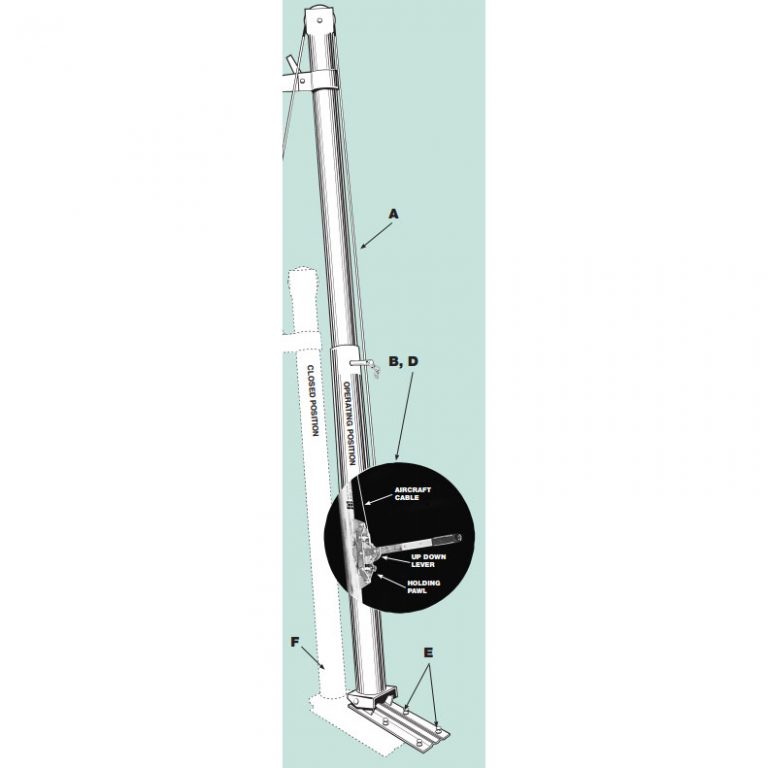
Each of the wall jacks we list is a Proctor round steel mast that telescopes, so it rides short in the truck and extends on the deck. The Proctor PWJ-16 closes to 9 ft 6 in, reaches 16 ft and covers a lift of 7 ft to 10 ft 6 in, rated at 1,000 pounds per jack. The PWJ-20 closes to 11 ft 6 in, reaches 20 ft and lifts a wall from 8 ft to 13 ft 6 in. The PWJ-23 closes to 12 ft 6 in, reaches 23 ft and lifts from 9 ft to 15 ft 6 in. Proctor finishes the 16 and 20 foot masts as electro plated round tubing.
Capacity is the detail that shapes the order. Proctor rates both longer masts at 500 pounds each, half what the 16 foot model carries, which means a wall that needs the long masts also needs more of them along its length. A standard single storey wall usually falls inside the PWJ-16 lift range. The 20 and 23 foot wall jacks earn their place on gable ends, tall great rooms and any wall framed on a raised deck, where the plate starts higher and the top plate ends taller. Lift range, not mast length alone, is the number to match against the wall.
Our team works out jack length and quantity from your wall heights and frame weight before we quote, so the masts on site cover the whole lift.
Braces, Cables and Winches That Keep Wall Jacks in Service
A raised wall still has to be held plumb until it is tied in, which is the job of an adjustable brace. We list braces that set from 10 ft 6 in to 11 ft 6 in in two versions on the adjustable wall braces listing, the Proctor PWB in cadmium plated steel and our own NWWB in zinc plated, powder coated steel. The bottom plate needs securing too. The center of gravity moves as the wall rises, so framers who use Proctor equipment fasten the plate with blocks scabbed to the rim joist or with metal straps. One Fine Homebuilding contributor recalled an unsecured wall sliding off the foundation mid-lift, which bent the poles so the tubes no longer telescoped.
Wear parts keep a set of wall jacks working season after season. The Proctor wall jack parts we carry include 16, 20 and 23 ft cables with shackles, winches with handles, wall stops, lifting brackets and loose shackles, so a frayed cable or a tired winch can be replaced on its own while the mast stays in use. Inspect each cable and shackle before a raise and replace any that show fraying.
Our own trucks deliver jacks, braces and spare cables door to door across New England, so a replacement part can reach the deck before the next wall goes up.

Planning a Wall Raise With Jacks, From Frame Weight to Spacing
Weight comes first. Framers often sheathe a wall and hang windows, trim, siding and soffit while it lies flat, and every item fastened on the deck adds load, so total it before choosing how many wall jacks to set. A 1994 Journal of Light Construction piece described exactly that approach, using two 16 foot Proctor jacks rated at 1,000 pounds each for raising walls and setting beams. Add up the per-jack ratings and keep the sum above the weight of the finished wall, remembering the 500 pound figure on the longer masts.
Spacing follows from that total, with jacks shared along the wall so no single mast carries more than its rating. Proctor jacks are winch operated, which lets the operator stay in one spot through the lift, and the telescoping masts collapse again for the drive between jobs. A long wall with heavy sheathing and windows can need several masts even at the 16 foot length, and a tall gable wall on the 500 pound masts needs more again.
Call 603-434-6911 or 508-754-3030 with your wall heights and frame weight, and we will quote the jacks, braces and spare parts as one list.

Wall Jacks Ahead of Ladders, Staging and Trim Work
Standing the frame is the first stage of a build that moves straight on to ladders, pump jack staging and on-site trim. Planning the jacks with that access gear means the next stage is ready once the frame is braced, and the same exterior crews often bend their own trim on siding brakes. Our Proctor wall jacks page carries every model and part in more detail.
To see the ladder, staging and truck equipment makers that follow a framing crew, browse our ladder and truck equipment brands hub.

Quotes on Wall Jacks, Braces and Parts
With more than 50 years serving contractors and homeowners, Nation Wide Ladder quotes wall jacks, braces and replacement parts to the wall you are raising, as part of our best-selling ladder and framing equipment. Our own trucks deliver across Connecticut, Rhode Island, Massachusetts, New Hampshire, Vermont and Maine, and we ship anywhere in the US.
Wall Jacks FAQs
Which wall jacks suit a single storey wall?
The Proctor PWJ-16 covers a lift of 7 ft to 10 ft 6 in and is rated at 1,000 pounds per jack, which fits most standard single storey walls.
Do longer wall jacks carry less weight?
Yes. Proctor rates the PWJ-20 and PWJ-23 at 500 pounds per jack, half the 1,000 pound rating of the PWJ-16, so tall walls need more masts.
How many wall jacks does a wall need?
Add the per-jack ratings until the total exceeds the weight of the wall with everything fastened to it, and spread the masts along its length.
What braces go with wall jacks?
Adjustable braces that set from 10 ft 6 in to 11 ft 6 in, either the Proctor PWB in cadmium plated steel or our NWWB in zinc plated, powder coated steel.
Which replacement parts keep wall jacks working?
We carry 16, 20 and 23 ft cables with shackles, winches with handles, wall stops, lifting brackets and loose shackles.
How is the bottom plate secured before using wall jacks?
Framers fasten it with blocks scabbed to the rim joist or with metal straps, because the wall's center of gravity shifts as it tips up.
Need help choosing the right ladder or truck equipment?
Talk to the team or send us your list and we will put a quote together.