Best Sellers
Fall Protection Equipment With Harnesses, Lanyards, Self-Retracting Lifelines, Rope Grabs, Anchors, Hard Hats and More
Anchors, body support and connectors chosen as one system, OSHA arrest limits, Class 1 and Class 2 retractables, head and hand protection, and the inspection habits that decide when gear retires.
Buying fall protection equipment for a crew means choosing an anchor, a body harness and a connector that work together, and Nation Wide Ladder helps you build that system from the Werner, Global Glove and ERB products we list. Our fall range covers full-body harnesses, shock-absorbing, positioning and twin leg lanyards, self-retracting lifelines, rope grabs and vertical and horizontal lifelines, roof, post and beam anchors, plus hard hats, climbing helmets and work gloves.


- Over 50 years serving contractors
- MA, NH, CT, ME, VT & RI
- Weekly Maine deliveries
Shop Fall Protection by Type
 Safety HarnessesWerner LiteFit, Blue Armor and ProForm F3 safety harnesses compared by D-ring layout, buckles, fit and rating, from…
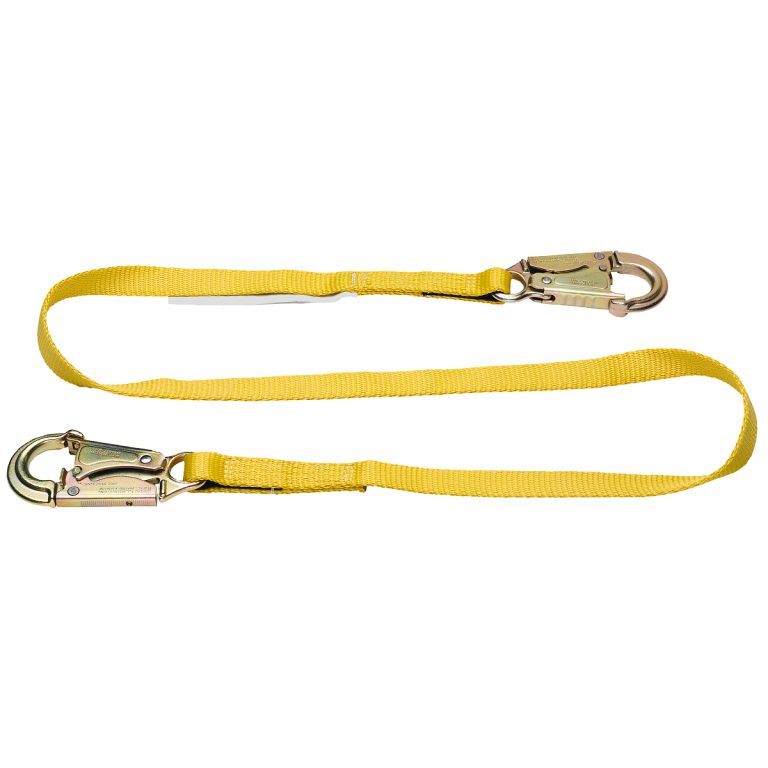
- Safety LanyardsWerner shock-absorbing, twin leg, positioning, cable, leading edge and arc flash safety lanyards compared by job, length, hooks…
- Self-Retracting LifelinesWerner self-retracting lifelines from 6 foot Bantam units to 65 foot Max Patrol lines, with leading edge models,…
- Hard HatsERB Omega II cap style hard hats and the Bullhead climbing style helmet compared by type, class, suspension…
How Fall Protection Equipment Works as One Anchor, Harness and Connector Chain
Every personal fall arrest system has three working parts, the anchor it ties to, the full-body harness the worker wears and the connector between them. Werner teaches the subject as anchorage, body support, connectors, descent and rescue, and education, and it puts the trigger height at 6 feet for construction and 4 feet for general industry. A missing or mismatched link defeats the rest, which is why we treat fall protection equipment as a set rather than a shopping list.
OSHA 1926.502 sets the numbers each fall arrest system has to meet. The anchorage must hold 5,000 pounds for each attached worker unless a qualified person designs it with a safety factor of at least two, and with a body harness the system must keep arresting force to 1,800 pounds, free fall to 6 feet and deceleration distance to 3.5 feet. Body belts have been off the list for fall arrest since January 1, 1998, so our safety harnesses carry the arrest connection at the back. Werner also says components tested as a system are not interchangeable with other makers’ parts, so fall arrest equipment from one maker usually stays together.
Over 50 years of quoting for contractors has taught us to ask about the anchor first, because the rest of the fall protection system follows from it.
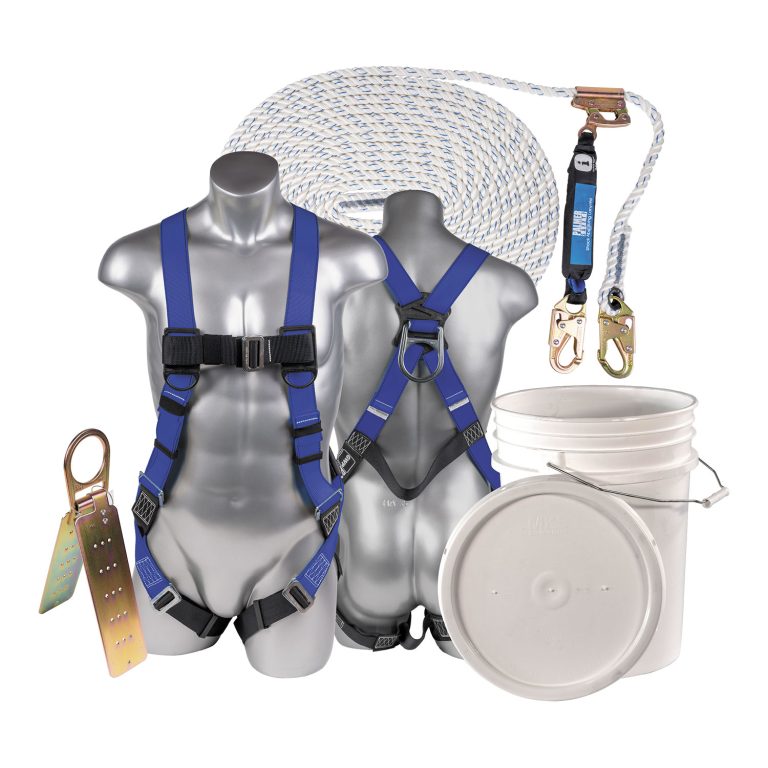
Lanyards or Retractables, Picking the Connector in Fall Protection Equipment
The connector decides how far a worker drops. Our safety lanyards give a fixed reach of up to 6 feet with a shock pack that tears in a controlled way, which suits a worker close to one overhead anchor or moving between anchors on a twin leg model. Positioning lanyards carry no energy absorber, so Werner limits them to positioning and restraint.
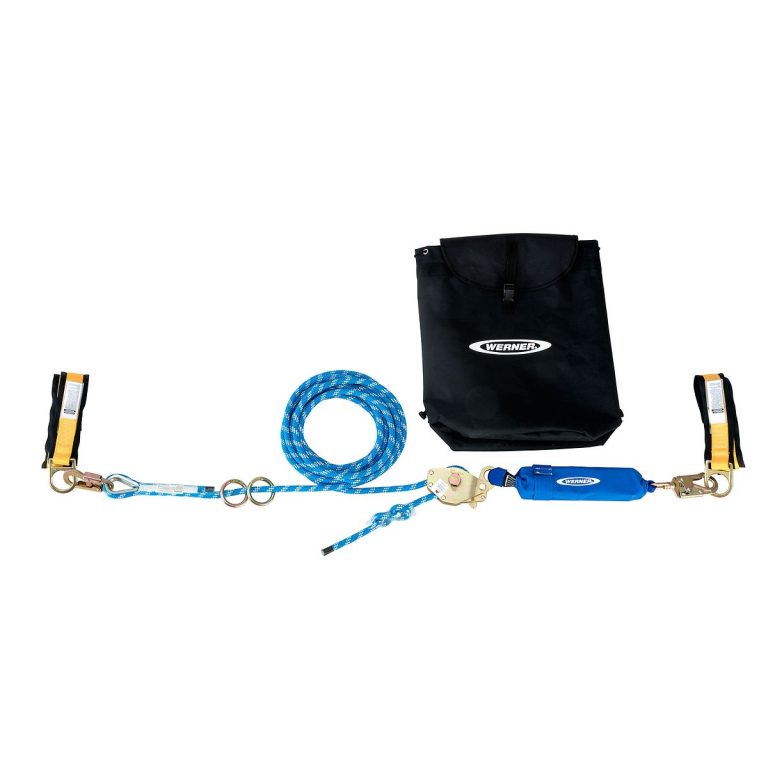
A retractable keeps its line snug instead. Our self-retracting lifelines pay out and take up line as the worker moves, then lock when a fall starts, and with an overhead anchor a Werner Bantam stops a fall inside 24 inches. Under ANSI Z359.14-2021, Class 1 units are for anchorage above the back D-ring and Class 2 units are tested for leading edge and foot-level tie-off. For climbs and long spans, Werner rope grabs ride 5/8 inch vertical lines and its temporary horizontal systems come as two-person lines in 30, 60 and 100 foot lengths.
Lanyards, retractables and lines can share one delivery on our own trucks, landing at the yard with the rest of your fall protection equipment.
Anchors, Hard Hats and Gloves That Round Out Fall Protection Equipment
Anchors are easy to improvise badly, and OSHA bars tying a fall arrest system to a guardrail system. The Werner A525400 post anchor is a permanent galvanized steel anchor on a 16 by 16 inch base plate, loadable through 360 degrees and rated for a minimum breaking strength of 5,000 pounds, and Werner lists it to ANSI Z359.18-2017. The 550030 I-beam slider gives a tie-off point on structural steel, the A230400 knock-down roof anchor serves roof work, and our Werner fall protection anchors page sets the three side by side. For utility crews, Werner also packages an L210240P utility lifeline kit.
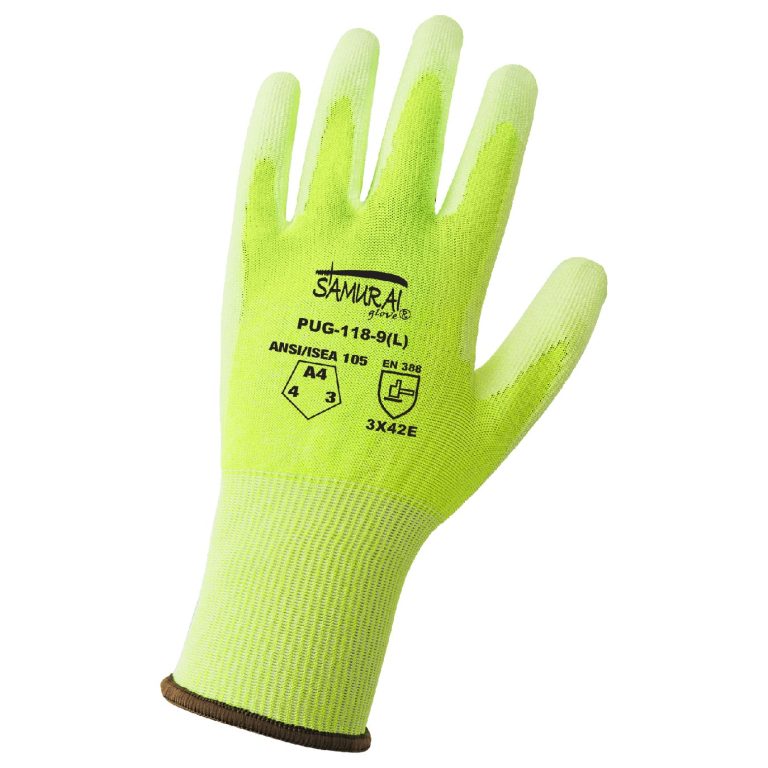
Head and hand protection travels with the harness. Our hard hats range from the ERB Omega II cap to the Bullhead Safety HH-CH2-CB, a Type 2 climbing style helmet with a four point chin strap that stays on when the wearer looks up or hangs in a harness. Global Glove adds Samurai and Ice Gripster cut resistant gloves graded to ANSI/ISEA 105-2016, from A3 on the 380INT to A5 on the CR318INT.
At our Windham and Worcester showrooms you can set an anchor, a harness and a helmet side by side at a free consultation before you order.
Inspecting Fall Protection Equipment and Knowing When to Retire It
Equipment only protects while it passes inspection. The wearer looks the gear over at the start of every use, as OSHA requires, and once a year someone who is not the wearer, a competent person in Werner’s terms, goes over it again. Age alone retires nothing, since Werner sets no five-year cutoff on its fall protection products. Indicators make the daily look quicker, from WebAlert inspectable webbing on Blue Armor harnesses and Max Patrol web units to the load indicators on Hi-Viz models and the impact indicator built into SoftCoil lanyards.
Some findings retire fall arrest equipment at once. Anything that has taken an impact load is pulled under OSHA until a competent person clears it, and Werner’s position is that equipment which has stopped a fall stays retired. Between jobs, Werner advises cleaning with a damp sponge and mild soap, drying in shade and keeping equipment out of washing machines and dryers. Its Fall Protection Safety 101 course gives a crew a documented starting point for those checks.
Both of our locations open on Saturday mornings, so a foreman can swap retired equipment before Monday.
Fall Protection Equipment Beside Ladders, Staging and Racks
Protection is only half of working at height, because the crew still has to reach the anchor. Roof anchors go in from an extension ladder, siding crews tie off from staging, and the truck carries all of it on a rack. Our equipment best sellers gather those categories in one place, so the climb and the tie-off can be planned together.
To weigh fall protection makers against ladder, rack and staging makers, browse our ladder and truck equipment brands hub.

Fall Protection Quotes for Contractors and Facility Crews
Nation Wide Ladder quotes fall protection equipment as a matched system, anchor, harness, connector and helmet together, from showrooms in Windham, New Hampshire and Worcester, Massachusetts. Send your list or call 603-434-6911 or 508-754-3030, and the order rides our own trucks to job sites in Maine, Vermont, Rhode Island, Connecticut and both home states, or ships to any other state.
Fall Protection FAQs
What fall protection equipment does a basic tie-off system need?
An anchor rated for the load, a full-body harness and a connector such as a shock-absorbing lanyard or a self-retracting lifeline. OSHA requires 5,000 pounds of anchorage strength for each attached worker unless a qualified person designs the system.
At what height is fall protection required?
Werner gives 6 feet as the trigger height for fall protection on construction sites and 4 feet in general industry.
Can fall protection equipment from different makers be mixed?
Werner advises against it, since its tested systems are not meant to swap parts with other brands. Read the instructions for every connection before combining makers.
Should I choose a lanyard or a self-retracting lifeline?
A lanyard gives a fixed reach of up to 6 feet. A self-retracting lifeline keeps its line snug and, on Werner Bantam, Baseline and Max Patrol units anchored overhead, stops a fall within 24 inches, which helps where clearance is short.
How often should fall protection equipment be inspected?
Each wearer checks the gear at every use, and a competent person who is not the wearer reviews it at least yearly. Anything that has arrested a fall is retired.
Does fall protection gear expire after five years?
Werner does not mandate a fixed five-year service life. Inspection findings, an arrested fall or a deployed indicator decide when gear retires.
Need help choosing the right ladder or truck equipment?
Talk to the team or send us your list and we will put a quote together.