Roofing Equipment
Roof Guardrails for Pitched, Flat and Parapet Edges, With Bracket Posts, Base Plates, Warning Lines and More
Acro steep pitch, open edge, flat roof, parapet and vertical systems, Tie Down universal rails and clamp bases, warning line sets, and the OSHA top rail, load and low-slope rules they are built around.
Roof guardrails protect everyone working inside them at once, and the challenge is choosing a system that mounts to the edge in front of you, which is where Nation Wide Ladder helps crews lay out each run. We supply Acro steep pitch and open edge brackets for pitched roofs, flat roof, parapet and vertical systems for commercial edges, Tie Down universal guardrails with clamp bases, and the warning line sets used on low-slope roofs.


- Over 50 years serving contractors
- MA, NH, CT, ME, VT & RI
- Weekly Maine deliveries
Roof Guardrails for Pitched Residential Eaves and Rakes
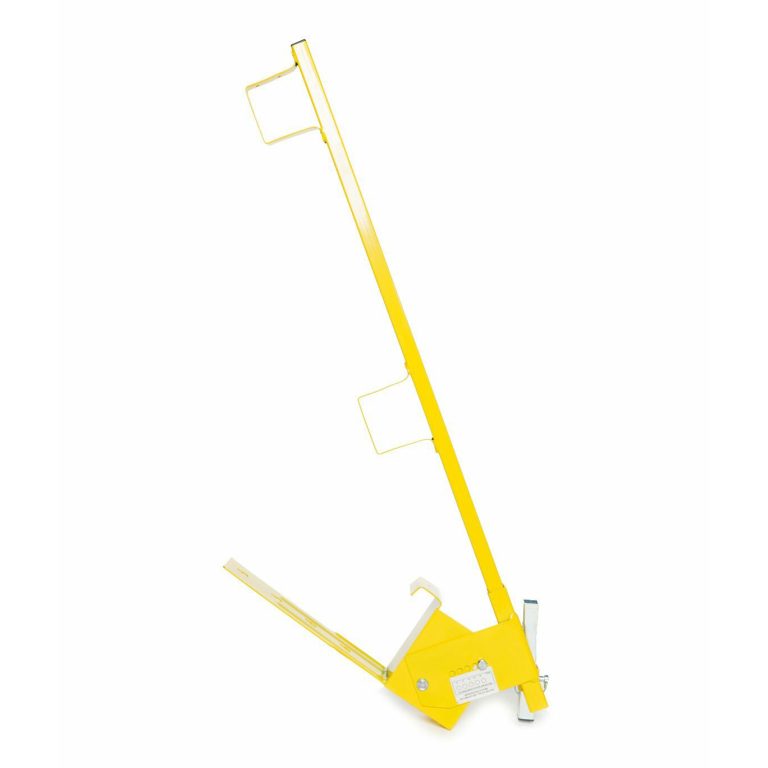
On a shingled roof, roof guardrails can go on much like roof brackets. Acro’s 12070 steep pitch guardrail system pairs a roof bracket with a post holder and a removable post, so one part supplies the toeboard, the slide guard and the fall protection. It nails on, interleaves with the shingles, positions for pitches from 4/12 to 16/12 and comes off like a bracket when the job is done. The Acro 12075 open edge system pairs with it, handling pitches up to 16/12 and covering rakes at any slope and eaves under 4/12, so the two together protect a complete house.
Both systems carry ordinary construction grade 2x4s as the rails, with posts no more than 8 feet apart, and Acro says the brackets were lab tested to OSHA’s 2011 regulations. Overlap the boards at least 6 inches inside a post bracket so both can be nailed, and keep the lumber brackets facing inside, away from the open edge. Acro also sells the guardrail post with holder separately, so a crew with brackets on hand can add posts as a run grows. OSHA asks for toeboards with guardrails on steep roofs, those sloped more than 4 in 12, which is why the bracket carries one.
Our team counts brackets, posts and lumber from your edge lengths, so the roof guardrails on the order cover every eave and rake.
Flat, Parapet and Wall-Mounted Roof Guardrails on Commercial Jobs
Flat and commercial roofs need roof guardrails that bolt, clamp or sit in place instead of nailing through shingles. On an open flat deck, Acro’s 12060 system sets its post in an 11 pound plate that is screwed, bolted or welded to the structure, and the plate may stay in place after the crew leaves. Where a parapet runs along the edge, the 12090 clamps walls 4 to 24 inches wide from the inboard side, with a post that adjusts in height. The 12045 vertical system instead fastens to the face of a parapet wall, header beam, floor joist, stud or truss, whether lumber or masonry. Acro’s 12055 posts interchange across its systems.
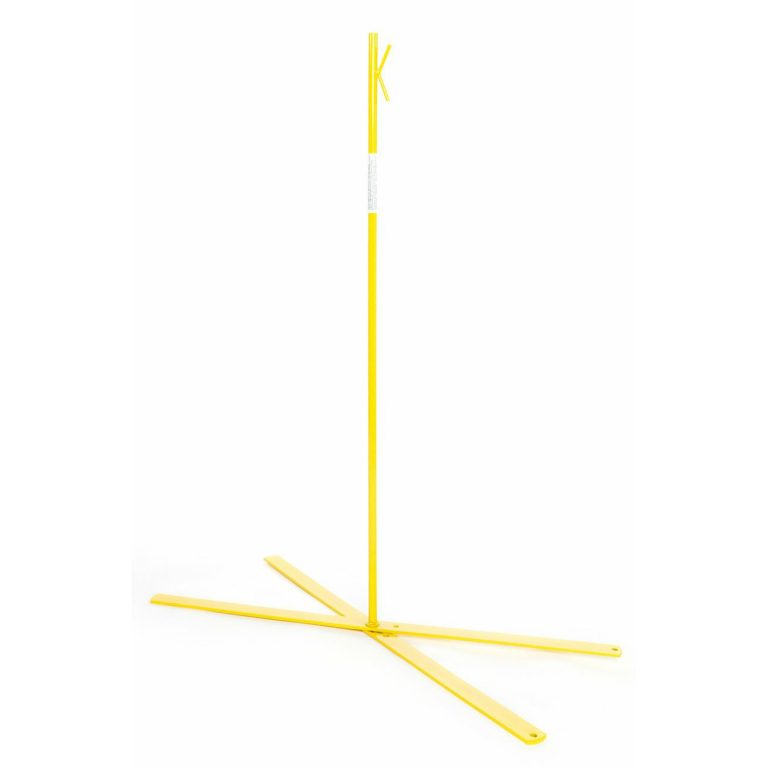
Tie Down takes a freestanding route. The 70758 universal guardrail is a 10 foot safety yellow rail with a multi-pin slot that Tie Down says fits more than 95 percent of competitor bases, and the Tie Down 71762 stack rack kit pairs 11 rails with 12 Universal Compression Clamp bases for 110 linear feet of edge. The bases tighten with an impact gun, take 1.66 and 1.90 inch OD tubes and stack three high, and Tie Down rates the kit for roofs up to a 2/12 pitch. Our Tie Down page covers the full range.
Our own trucks carry long rails and stacked bases door to door across New England, so a 110 foot run arrives at the job in one load.

OSHA Rail Heights, Loads and Warning Lines Behind Roof Guardrails
OSHA 1926.502 sets the numbers every system must meet. The top rail sits 42 inches above the walking surface, plus or minus 3 inches, and the system must withstand at least 200 pounds applied within 2 inches of the top edge in any outward or downward direction without the top edge deflecting lower than 39 inches. Midrails go midway between the top rail and the surface wherever no wall or parapet at least 21 inches high takes their place, and they must hold at least 150 pounds. Roof guardrails or another approved method become required once an unprotected edge sits 6 feet or more above a lower level in residential construction, steep roof work or low-slope roofing.
Low-slope roofs, at 4 in 12 or less, also allow a warning line combined with another method. The line stands at least 6 feet from the edge, with its lowest point no less than 34 inches and its highest point no more than 39 inches above the surface, flagged at least every 6 feet. Acro’s 21000 X warning line set has four 42 inch posts and 100 feet of flags, and its heavy duty set comes pre-weighted in safety yellow powder coat. Our Acro guardrail systems page lists every model.
At our Windham, NH and Worcester, MA showrooms, a free consultation walks through which edges need rails and where a warning line can serve instead.
Roof Guardrails Working With Brackets, Anchors and Hoists
Rails guard the perimeter, but the crew still needs footing on the slope and anchors for work outside the rails at a skylight or ridge, and a hoist lands its loads right at the guarded edge. Our roofing equipment section sets guardrails beside the hoists and brackets that share the eave.
You can see the fall protection and ladder makers that pair with a guardrail run in our brands we stock for roofing and access hub.

Roof Guardrails Quoted by Edge Length and Deck Type
Builders and roofers have turned to Nation Wide Ladder for over 50 years, served from Windham, New Hampshire and Worcester, Massachusetts with delivery across Connecticut, Rhode Island, Massachusetts, New Hampshire, Vermont and Maine. We quote roof guardrails by edge length, pitch and wall type, with the posts, bases and warning lines that complete each run.
Roof Guardrails FAQs
What top rail height do roof guardrails need?
OSHA 1926.502 sets the top rail at 42 inches above the walking surface, plus or minus 3 inches, and it may not deflect lower than 39 inches under a 200 pound load.
Which roof guardrails suit a shingled pitched roof?
Acro's 12070 steep pitch and 12075 open edge systems, which nail on like roof brackets, interleave with shingles and carry 2x4 rails and a toeboard.
Can roof guardrails be left on a flat roof after the job?
Yes, with the Acro 12060. Its base plate fastens by screws, bolts or welds and can stay on the roof once the job is over.
Do Tie Down roof guardrails fit other brands of base?
Tie Down says its 70758 universal guardrail fits more than 95 percent of competitor bases through a multi-pin slot.
Where do warning lines fit alongside roof guardrails?
On low-slope roofing, OSHA allows a warning line combined with a guardrail, safety net, personal fall arrest or safety monitoring system, and on roofs 50 feet or less wide a safety monitoring system alone.
Need help choosing the right ladder or truck equipment?
Talk to the team or send us your list and we will put a quote together.