
Roofing Equipment
Ladder Hoists for Roof Material in Classic, Pro and PHD Drives, With 200 and 400 Pound Platforms, Track and More
Powered platforms that ride an inclined track to the eave, compared on capacity, lift speed, drive weight, gas or electric power, 28 and 44 foot track, carriers, pivoting sections and safe setup.
Ladder hoists take shingle bundles, sheet goods and panels off a climber's shoulder and send them up a track to the eave, and Nation Wide Ladder sizes RGC ladder hoists to the roof heights and loads each crew handles. We cover the Classic and Pro models in 200 and 400 pound capacities, RGC's newer PHD drive, gas and electric power, 28 and 44 foot track, plywood and solar panel carriers, the roller angle guide and pivoting track.

- Over 50 years serving contractors
- MA, NH, CT, ME, VT & RI
- Weekly Maine deliveries
How Ladder Hoists Carry Material Up an Inclined Track
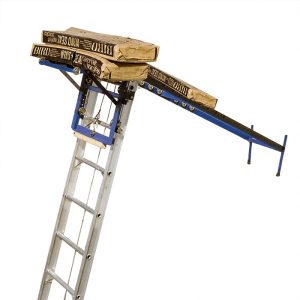
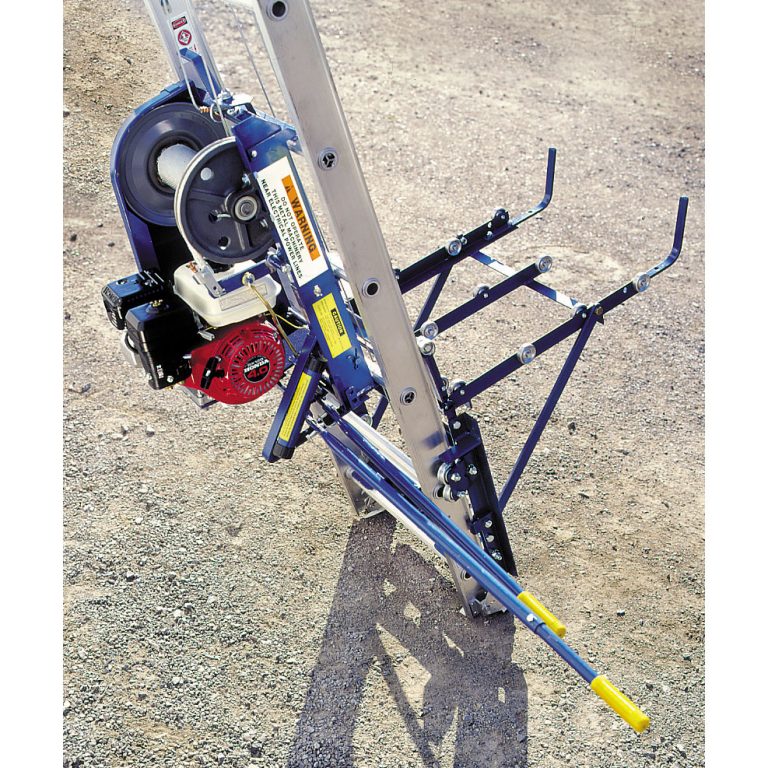
OSHA’s ladder rule, 29 CFR 1926.1053, requires a climber to face the ladder, keep at least one hand on it and carry nothing that could cause a loss of balance, which rules out shouldering a bundle of shingles. Ladder hoists solve that by separating the climb from the load. A drive unit near the foot of an aluminum track winds a wire rope, and the rope pulls a small platform up the track to the roof edge while the crew climbs a separate ladder. RGC, the trademark of Reimann & Georger Corp., calls the machines laddervators or tranzporters, and it builds the ladder hoists we list.
The track leans on the building the way an extension ladder does, so ladder hoists set up on a driveway, lawn or patio without scaffolding. RGC mounts its drives up off the ground for clearance over shrubs and places the control handle at the side, so the operator never works a foot pedal beneath the load. Dual anchor points tie the track to the building, cast aluminum shoes steady the base, and RGC states that the track carries material only and must never be climbed. Roofers are the main buyers, and RGC also lists solar, HVAC and skylight work among the jobs its ladder hoists serve.
Tell our team your roof heights and the heaviest loads you send up, and we match the capacity and drive before anything ships.
Classic, Pro and PHD Ladder Hoists Compared on Capacity and Drive
Capacity is the first choice. The RGC Classic 200 lifts 200 pounds at 220 feet per minute on a 17 inch track with a 17 by 18 inch platform, which suits shingle bundles sent up quickly. Its sibling, the Classic 400, doubles the payload to 400 pounds but halves the speed to 110 feet per minute, riding a 24 inch track under a 24 by 24 inch platform. Both Classic models use dual handle controls with a Briggs & Stratton or Honda gas engine or an electric motor, and RGC lists the Classic gas drive at 125 pounds.
We also list the RGC Pro platform hoist in 200 and 400 pound capacities, in the same 28 and 44 foot setups with gas or electric drives. RGC’s current range adds the PHD drive in 250 and 400 pound models, with single handle operation, Honda or Briggs & Stratton gas power and a 75 pound gas drive that speeds transport and setup. Every RGC model tops out at 44 feet. Crews needing electric power stay with the Classic, since RGC lists the PHD with gas engines only, and our RGC ladder hoists page details each package.
Phone 603-434-6911 or 508-754-3030 with your heaviest loads and roof heights, and we price the drive and platform size to match.

Track, Carriers and Pivoting Sections That Extend Ladder Hoists
Track length sets the reach. RGC builds a 28 foot setup from an 8 foot base, two 8 foot sections and one 4 foot section, and a 44 foot setup from the base, four 8 foot sections and a 4 foot section, with the telescope support required on any run over 28 feet. Track width follows capacity, at 17 inches for 200 pound ladder hoists and 24 inches for 400 pound models, so sections never cross between the two.
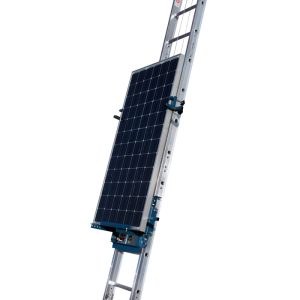
Carriers change what the platform can take. The RGC 7 inch plywood carrier holds sheet goods on edge for the ride up, the solar panel carrier raises and lowers panels on both capacities, and the 6 foot roller angle guide moves loads away from the edge on shallow roofs, for 400 pound models only. For steep or awkward roofs, RGC also builds pivoting ladder hoists whose top section adjusts from 35 to 70 degrees to place material onto the roof clear of its edge, lifting up to 400 pounds as high as 44 feet. Our RGC hoist accessories page lists each part by number.
Both of our locations open Saturday mornings, so an extra 4 foot section or a carrier can be collected before Monday’s roof.
Ladder Hoists Where Planks, Brackets and Rails Meet the Eave
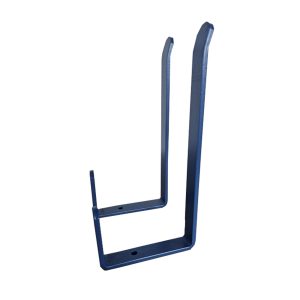
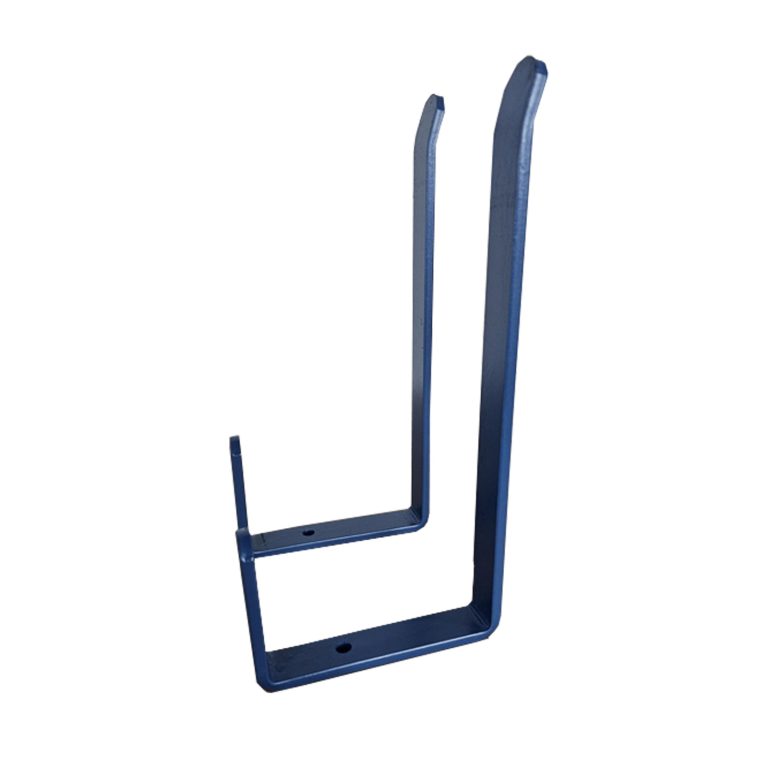
A hoist ends its run at the roof edge, so the landing needs footing and protection of its own. Bundles arrive onto planks set on roof brackets, and the edge where the platform stops still falls under OSHA’s 6 foot rule for residential and steep roof work. Our roofing equipment section lays out the hoists, brackets and guardrails that share that eave.
To compare the ladder and fall protection makers that work around a hoist, look through our hoist, ladder and safety equipment brands hub.

Ladder Hoists Sized to Your Eaves and Loads
Roofers have sourced hoists from Nation Wide Ladder for over 50 years. From Windham, New Hampshire and Worcester, Massachusetts, our trucks reach Connecticut, Rhode Island, Massachusetts, New Hampshire, Vermont and Maine, and we quote ladder hoists by eave height, load and power source, with the track and carriers each roof needs.
Ladder Hoists FAQs
Are ladder hoists rated to carry people?
No. RGC states its ladder hoists lift material only, and the track must never be climbed or ridden.
What is the difference between Classic and PHD ladder hoists?
Classic drives use dual handle controls and run on gas or electric power, with a 125 pound gas drive. PHD drives use single handle operation, run on gas only and weigh 75 pounds, in 250 and 400 pound capacities.
What is the tallest setup for ladder hoists?
Every RGC platform model stops at 44 feet, and a telescope support becomes mandatory once the track passes 28 feet.
Do 200 pound ladder hoists lift faster than 400 pound models?
Yes. RGC rates the Classic 200 at 220 feet per minute against 110 for the Classic 400, so the lighter model climbs at double the speed.
Can ladder hoists place material onto a steep roof?
RGC builds pivoting hoists with a top section adjustable from 35 to 70 degrees that places material onto the roof clear of the edge. The roller angle guide does a similar job on shallow roofs for 400 pound models.
Need help choosing the right ladder or truck equipment?
Talk to the team or send us your list and we will put a quote together.