
Werner range
Werner Fall Protection Anchors Including Post Anchors, I-Beam Sliders, Knock-Down Roof Anchors and Others
The A525400 post anchor, 550030 I-beam slider and A230400 knock-down roof anchor, with OSHA anchorage strength rules, anchor height for SRL classes, clearance and installation checks.
Werner fall protection anchors provide the tie-off point that every personal fall arrest system starts from, and the challenge is choosing an anchor that suits the structure, the number of workers and the fall clearance under the work. Nation Wide Ladder helps you make that choice across three Werner anchors, the A525400 post anchor, the 550030 I-beam slider and the A230400 knock-down roof anchor, for roofs, structural steel and decks.



- Over 50 years serving contractors
- MA, NH, CT, ME, VT & RI
- Weekly Maine deliveries
Werner Fall Protection Anchors Product Lines
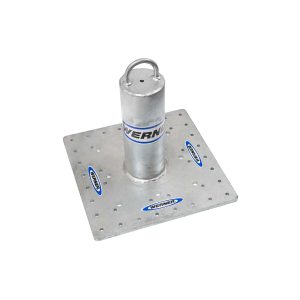
 Werner Post AnchorsThe Werner A525400 permanent galvanized steel post for repeat roof tie-off, 5,000 lb MBS.
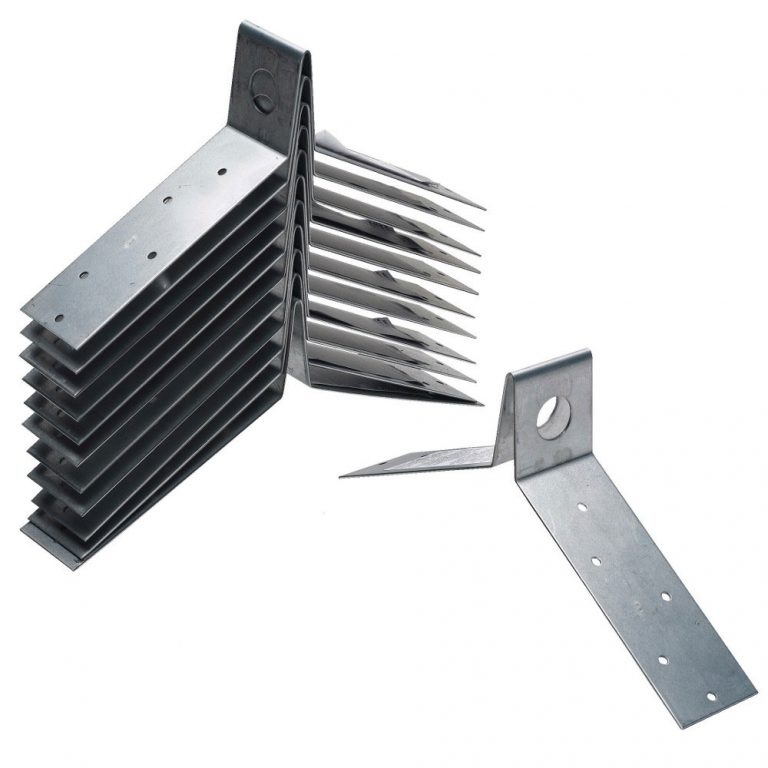
- Werner Roof AnchorsWerner A230400 disposable knock-down roof anchors, 12 to a pack, for shingle roofs of any pitch.
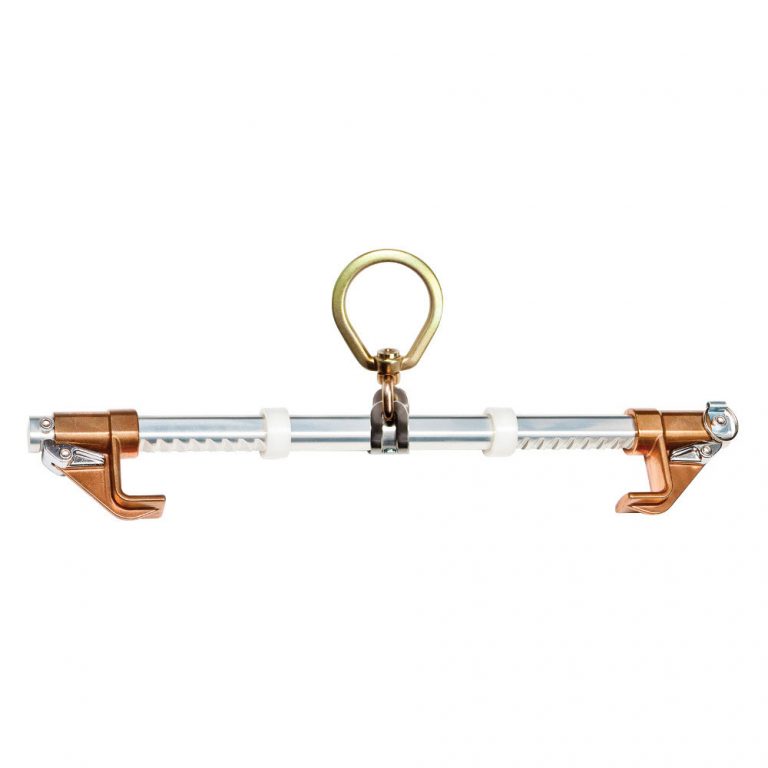
- Werner D-Bolt and Beam AnchorsWerner D-bolt rings, a 30 inch sliding beam anchor, D-bolt stanchions and lifeline kits for steel work.
Why Anchorage Comes First in Werner Fall Protection
Werner teaches fall protection as anchorage, body support, connectors, descent and rescue, and education, and anchorage comes first for a reason. A harness and lifeline can only perform if the point they tie to holds, so the anchor is the first piece of fall protection to settle when planning a job. Roofers, steel erectors, general contractors and facility maintenance crews all need a dependable anchor before anyone clips in.
Werner anchorage products fall into two broad groups. Permanent models, such as the A525400 post anchor, stay fixed to the structure for repeat use by maintenance crews and later trades. Job-site models, such as the 550030 I-beam slider or the Werner R3 concrete anchor, go on for a project. The Werner cast-in-place Straight Loop Insert with its Mega Swivel connector covers another case, since it is set before a concrete pour where drilling afterward is not an option, and the swivel turns through 360 degrees.
Some structures are off limits. OSHA bars attaching a personal fall arrest system to a guardrail system or, outside the cases other subparts allow, to a hoist, so an anchor has to be planned in rather than improvised.
Over 50 years of supplying contractors means we can help you plan fall protection anchors into a job before the first worker reaches the roof.
The Werner Fall Protection Anchors We Supply and What Each Offers
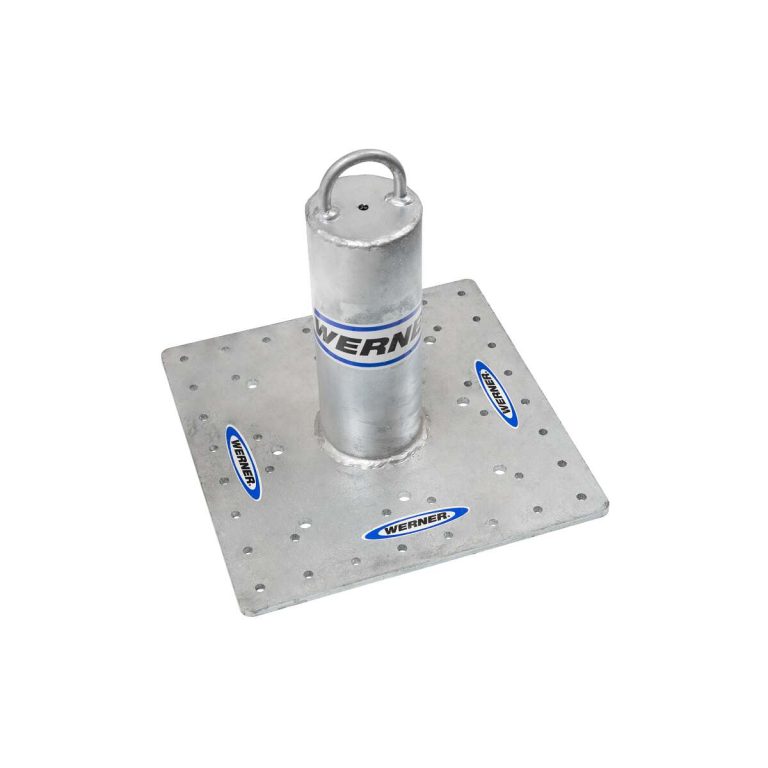
The Werner A525400 post anchor sits on a 16 by 16 inch base plate, 3/8 inch thick, and can be loaded from any direction through 360 degrees. Werner builds it from corrosion-resistant galvanized steel as a permanent anchor for roof work, rated for a minimum breaking strength of 5,000 pounds. Its base plate is drilled for fastening to wood, concrete or an I-beam, although an I-beam mount requires the separate A525405 part. Werner lists it as meeting ANSI Z359.18-2017 for anchorage connectors along with OSHA 1910.140 and 1926.502.
The Werner 550030 30 inch I-beam slider gives a tie-off point on structural steel for steel and building trades. The Werner A230400 knock-down roof anchor rounds out the range for roof work. The wider Werner anchorage family also includes the R3 concrete anchor, which Werner says is cycle tested to 5,000 uses, and removable bolt, D-bolt, toggle bolt and I-beam anchors. For crews new to beam anchors, Werner offers a self-paced online course, Sliding I-Beam Anchors 101.
Our team checks each anchor against the structure you describe, so the fall protection on your quote fits the roof, deck or steel you will tie off to.
Werner Fall Protection Anchors and the Route to the Roof
An anchor only helps once the crew can reach it safely, so access and fall protection are planned together. A roofer climbs an extension ladder to set a roof anchor, a steel crew reaches a beam by lift or staging before sliding an anchor into place, and a maintenance team uses a fixed route to a permanent post. Ladders, staging and the racks that carry them all play a part, and they often come from several manufacturers. Matching the access equipment to where each anchor sits keeps the climb and the tie-off in step.
For the ladders, staging and racks on the way up, you can look across every manufacturer we carry in our ladder and truck equipment brands hub.

OSHA Anchorage Strength Rules for Werner Fall Protection
OSHA 1926.502 requires an anchorage for personal fall arrest to support at least 5,000 pounds for each worker attached, unless a qualified person designs it as part of a complete system with a safety factor of at least two. Fall arrest anchorages also have to be independent of any anchorage that supports a platform. Positioning systems follow a separate rule, needing twice the potential impact load or 3,000 pounds, whichever is greater.
Horizontal lifelines change the math. Werner warns that a horizontal line can put forces up to 15 times the arrest force on its end anchors, which is why it builds energy absorbers into its systems to hold anchor loads under 2,500 pounds and keep them compatible with standard 5,000 pound anchors. A qualified person has to design and supervise every horizontal lifeline. Werner adds that anchor requirements rise with span length, line tension and the number of workers attached, which is why it recommends engineered systems over makeshift lines. OSHA also requires lifelines to be protected against cutting and abrasion, which affects where an anchor sits relative to sharp edges.
At our Windham and Worcester showrooms you can see the base plates and hardware in person and talk through fall protection strength rules for your site.
Choosing Werner Anchors by Structure, Height and Fall Clearance
Pick the anchor from the structure you have, since fall protection starts there. A post anchor suits a flat surface or deck, an I-beam slider suits steel framing, and a roof anchor suits roof work. Then consider anchor height. Werner guidance under ANSI Z359.14-2021 treats anchorage over the back D-ring as Class 1 territory and anchorage at or under the D-ring, including foot level, as Class 2, so an anchor placed low needs a leading edge rated connector from our Werner self-retracting lifelines or Werner lanyards ranges.
Count the workers who will tie off at once, since OSHA’s 5,000 pound figure applies for each person attached. An anchor directly overhead shortens the fall, while one set low or off to the side adds distance, and Werner publishes clearance charts for offset and setback situations. On pitched roofs, Werner roofing kits pair an anchor mounted at the peak with a harness, a rope lifeline and adjuster, and an energy-absorbing lanyard, and Werner notes that a long roof may need more than one anchor.
Send us the structure and the number of workers as a list, or call 603-434-6911 or 508-754-3030, and we will quote Werner fall protection anchors to match.
Installing and Inspecting Werner Fall Protection Anchorage
Follow Werner installation instructions for each anchor exactly, including fastener count and type. Inspect every anchor before each use and at least once a year by a competent person other than the user. Remove any anchor that has arrested a fall until a competent person confirms it is undamaged, as OSHA requires after impact loading, and keep a rescue plan ready, since Werner treats rescue planning as required.
Werner offers Fall Protection Safety 101, an online Fall Protection Core course and instructor-led sessions at the worksite, and anchor selection and installation are a core part of that training. Crews who install fall protection anchors themselves benefit most from a documented course before the first roof or steel job.
An anchor pulled from service late in the week can be replaced on a Saturday morning, when both of our locations are open.
Why Crews Get Werner Fall Protection Anchors From Us
See current models in our anchor category or return to the Werner brand page. We quote Werner fall protection anchors for the structure and crew you describe, and our own trucks deliver them door to door across New England.
Werner Fall Protection Anchors FAQs
How strong do Werner fall protection anchors need to be?
OSHA requires 5,000 pounds per attached worker, unless a qualified person designs the anchorage into a system with a safety factor of at least two.
Can I use a guardrail or platform support as a fall protection anchor?
OSHA requires fall arrest anchorages to be independent of any anchorage used to support or suspend platforms, and it bars attaching a personal fall arrest system to a guardrail system.
Does anchor height affect which Werner fall protection connector I need?
Yes. Under ANSI Z359.14-2021, overhead anchorage suits Class 1 SRLs, while anchorage at or under the back D-ring calls for a Class 2 unit.
What should happen to fall protection anchors after a fall?
Take the anchor out of service until a competent person confirms it is undamaged and fit for use, as OSHA requires after impact loading.
Which standards does the Werner A525400 post anchor meet?
Werner lists it as meeting ANSI Z359.18-2017 for anchorage connectors along with OSHA 1910.140 and 1926.502, with a 5,000 pound minimum breaking strength.
Need help choosing the right Werner equipment?
Talk to the team or send us your list and we will put a quote together.