Werner range
Werner Lanyards in Shock-Absorbing, Twin Leg, Positioning, Cable, Leading Edge and Arc Flash Styles
DeCoil, DeCoil Stretch and SoftCoil energy absorbers, web, cable and chain positioning connectors, Kevlar arc flash models, fall clearance and the rules for safe connections.
Werner lanyards connect a worker's harness to an anchor, either to arrest a fall or to hold the worker in a working position, and the challenge is choosing a connector whose absorber, length and hooks suit the task and the fall clearance under the work. Nation Wide Ladder helps you make that choice across single leg and twin leg shock-absorbing models, web, cable and chain positioning connectors, leading edge models and Kevlar arc flash designs.



- Over 50 years serving contractors
- MA, NH, CT, ME, VT & RI
- Weekly Maine deliveries
Shop Werner Lanyards by Type
 Werner Shock-Absorbing LanyardsWerner DeCoil, Stretch, tie-back and 12 foot free fall lanyards with DCELL shock packs.
- Werner Twin-Leg LanyardsWerner twinleg lanyards in DeCoil, Stretch, SoftCoil, cable and Kevlar arc flash builds for 100% tie-off.
- Werner Positioning LanyardsWerner web, cable and chain positioning lanyards for rebar, forming and pole work, from 18 inches to 6…
- Werner Cable LanyardsWerner 1/4 inch vinyl-coated cable lanyards for positioning, fall arrest and leading edge work.
Werner Lanyards Product Lines
- Werner DeCoil LanyardsShock-absorbing Werner DeCoil lanyards in single leg, twin leg, stretch, cable and tie-back versions.
- Werner Rebar Positioning LanyardsChain and web Werner rebar positioning lanyards, plus shock-absorbing rebar hook models for fall arrest.
- Werner Arc Flash LanyardsNine Kevlar Werner arc flash lanyards in single and twin leg layouts for electrical work at height.


What Werner Lanyards Do Between Harness and Anchor
A lanyard is the connector in the anchorage, body support and connector chain. Roofers, ironworkers, rebar crews, lift operators, tower climbers and electrical workers all use Werner connectors, and the right type depends on whether the job needs fall arrest, work positioning or restraint.
A fall arrest model has a shock pack or energy-absorbing core to slow the worker after a fall, and Werner notes that shock-absorbing models can also serve for restraint, since a worker held back from the edge cannot generate enough force to load the absorber. Positioning and restraint connectors have no energy absorber, so Werner rules them out for fall arrest, and OSHA limits a positioning system to 2 feet of free fall.
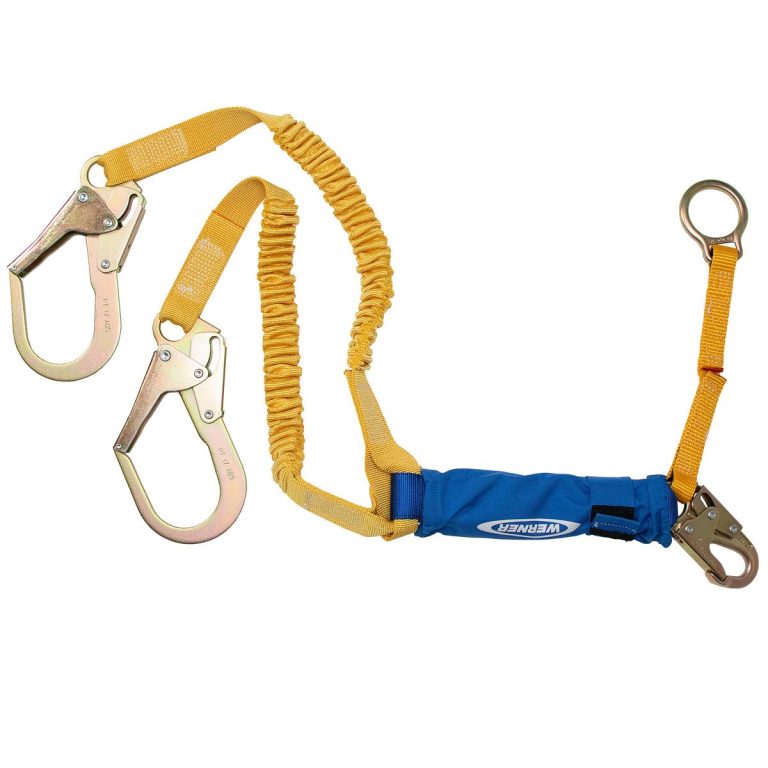
Twin leg lanyards let a worker clip the second leg to a new anchor before releasing the first, keeping 100 percent tie-off while moving along steel or scaffolding. Vinyl-coated 1/4 inch cable is built to resist heat and abrasion, while stretch webbing keeps slack off the deck. Werner approves only its tie-back models for wrapping around a structure and hooking back onto their own webbing.
Over 50 years of supplying contractors means we can sort arrest, positioning and restraint needs on a crew before we quote a single connector.
Lanyards in the Werner Range, From DeCoil Packs to Arc Flash Kevlar
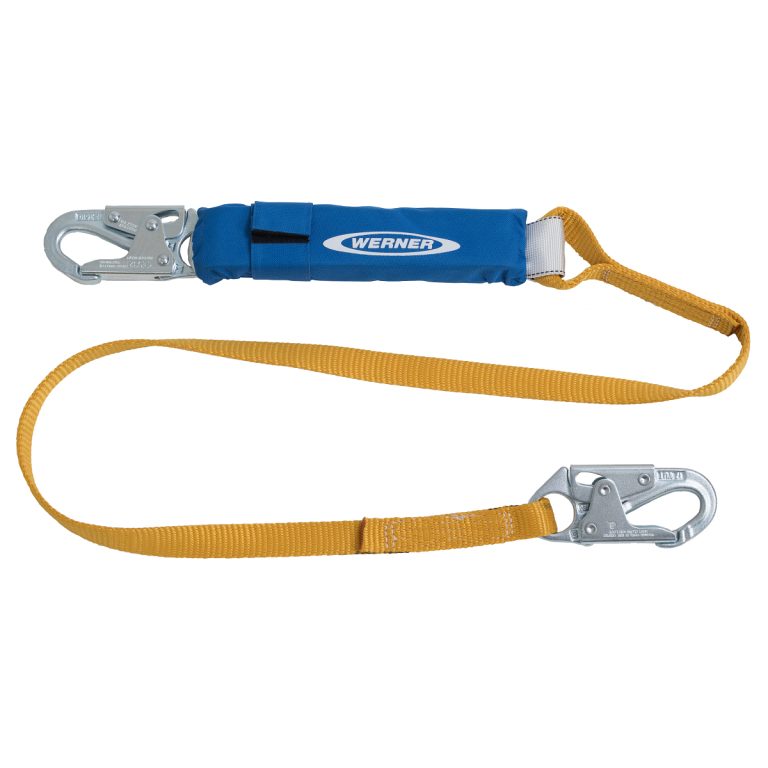
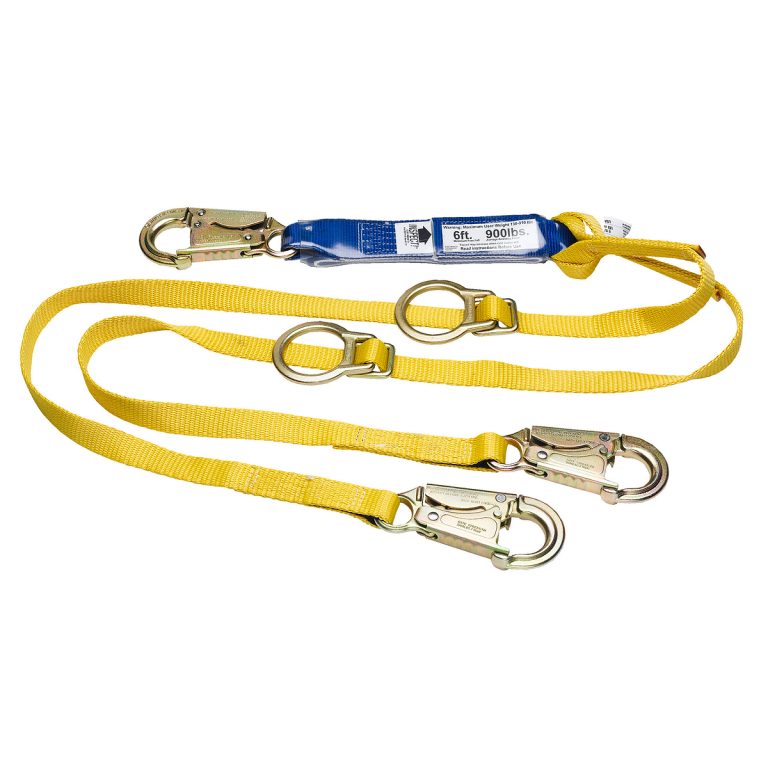
Werner shock-absorbing lanyards include the Werner C311100 DeCoil lanyard, whose DCELL pack tears in a controlled way to cut arrest force. DeCoil Stretch models such as the C341100 shorten from 6 feet to 4 feet to reduce tripping, while SoftCoil models such as the C351100 absorb energy through a full-length inner core and include an impact indicator. Werner twin leg lanyards in the C411 and C441 ranges let a worker move between anchors.
The C311120 12 foot free fall lanyard has an extra-thick DeCoil pack for a foot-level tie-off with up to 12 feet of free fall for a 310 pound worker, or 6 feet for a worker up to 400 pounds. The Werner C461120LE twin leg cable model is approved for leading edge use over steel beam, precast concrete and B-deck.
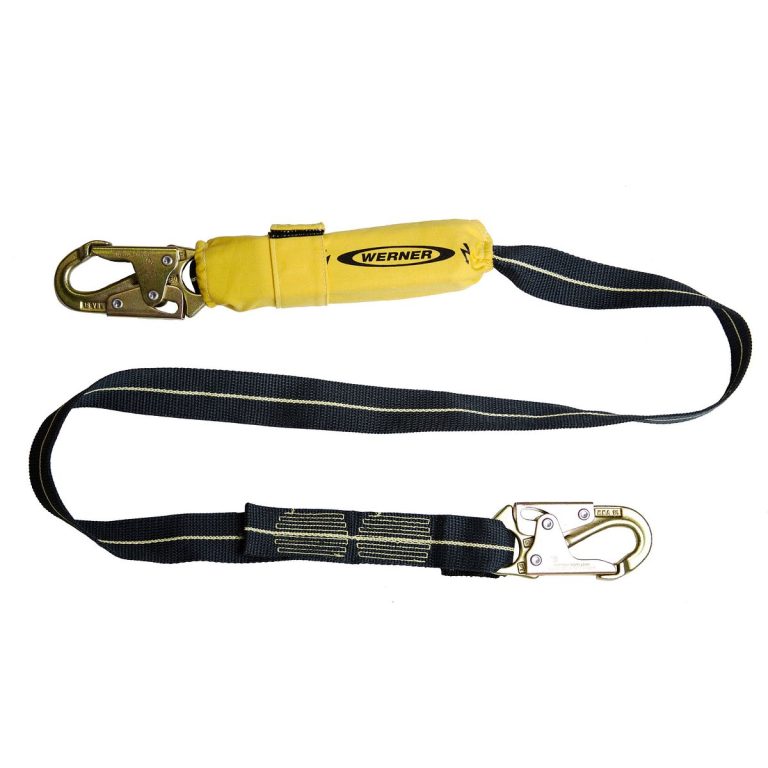
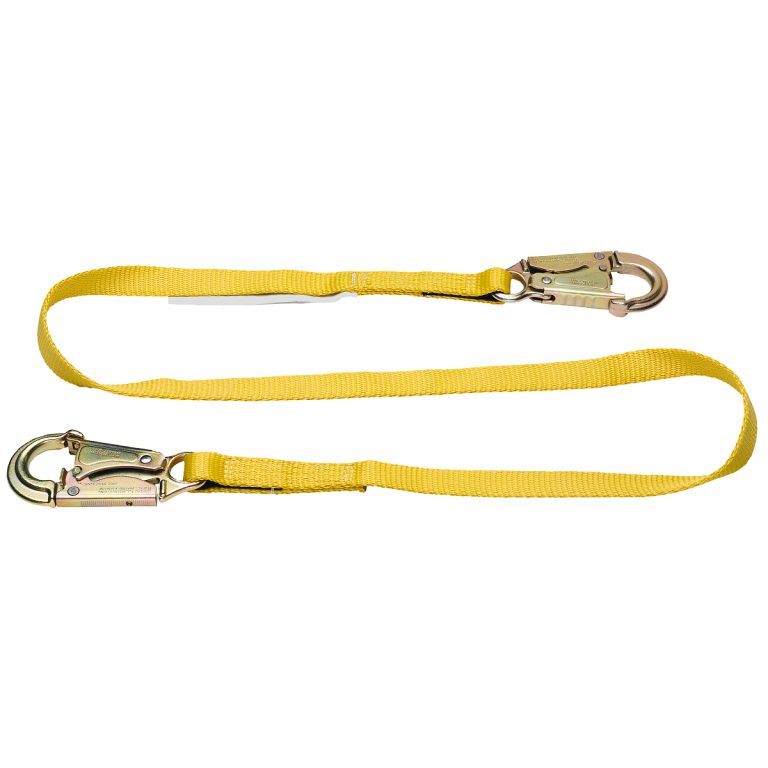
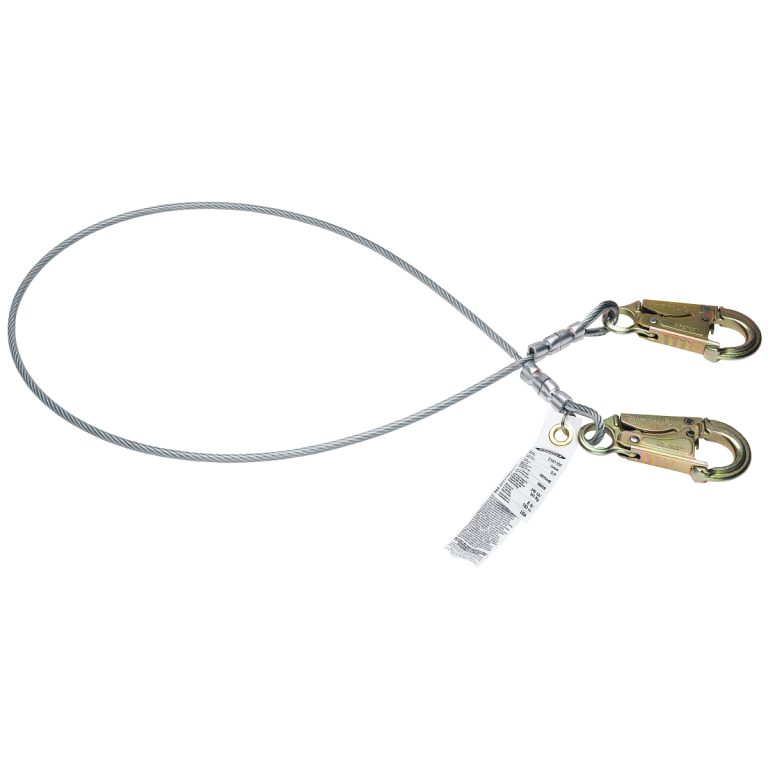
Werner positioning lanyards in the C111 web range and the C191204 Grade 80 chain rebar model have no energy absorber. Werner cable lanyards in the C161 range suit hot or abrasive work, and arc flash models such as the C811100 use Kevlar webbing.
Our team checks each type against the anchor and task you describe, so the lanyards on your quote suit the work.
How Werner Lanyards Fit the Wider Work-at-Height Setup
Lanyards are only as useful as the anchor above them and the harness behind them, and crews usually choose all three together. Roofers often move from a shock-absorbing connector to a self-retracting lifeline as working distance grows, while steel and rebar crews pair twin leg or positioning models with beam anchors. Getting the crew and that gear up to the work involves ladders, staging and the racks that carry them, which come from several manufacturers. Planning the connector with the whole setup keeps clearance, ratings and hardware consistent from the truck to the tie-off point.
For the ladders, staging and racks around your fall protection, you can explore every manufacturer we carry in our ladder and truck equipment brands hub.
Lanyards, Snap Hooks and OSHA Strength Rules Across the Werner Line
Werner arc flash models cite ASTM F887, ANSI Z359.13 and OSHA 1926 and 1910. OSHA 1926.502 requires a minimum breaking strength of 5,000 pounds and locking snap hooks. Positioning systems must limit free fall to 2 feet and use anchorages rated for twice the potential impact load or 3,000 pounds, whichever is greater.
OSHA expects tearing and deforming connectors, the category that covers shock packs like DCELL, to hold a 5,000 pound tensile load when fully extended. Unless a hook is designed for the connection, it must not be clipped directly to webbing, rope or wire rope, to another snap hook, to a D-ring that already holds a connector, or to a horizontal lifeline. A complete arrest system used with a body harness must also keep maximum arresting force on the worker to 1,800 pounds.
Werner adds its own limit on mixing parts. Components sold and tested as a system are not interchangeable with other makers’ parts, so check lanyards against the harness and anchor connector they will join before the first tie-off.
At our Windham and Worcester showrooms you can compare hooks, packs and webbing in person before you settle on a connector.
Choosing Werner Lanyards for Length, Clearance and Lift Work
Werner offers shock-absorbing models in 3, 4, 5 and 6 foot lengths, and 6 feet is the maximum. Pick the shortest length that lets the work get done, and check fall clearance before tying off at foot level. Use only connectors marked for leading edge work at an unprotected edge. Werner warns never to attach a lanyard to a self-retracting lifeline, and to avoid clipping two snap hooks into one D-ring, a snap hook onto a horizontal lifeline, or a snap hook onto a webbing loop, since each can cause rollout.
OSHA caps free fall at 6 feet and deceleration distance at 3.5 feet, and Werner recommends working out total fall clearance from its charts. On aerial lifts, Werner points out that booms and articulating lifts carry different requirements than scissor lifts. For rebar and forming work, models such as the C446200 combine stretch webbing with a rebar hook that opens 2.5 inches and an 18 inch D-ring extender. If you need more working length, step up to one of our Werner self-retracting lifelines instead.
Send us the tasks and anchor setups as a list, or call 603-434-6911 or 508-754-3030, and we will quote lanyards to match.
Inspecting and Retiring Werner Lanyards After Use or Impact
Inspect your lanyards before every use, and have a competent person other than the user inspect them at least once a year, as Werner advises. Look for torn or frayed webbing, a deployed shock pack or impact indicator, kinked or frayed cable, and hooks that do not close and lock. OSHA requires equipment subjected to impact loading to leave service immediately until a competent person confirms it is undamaged, and Werner calls for equipment that has arrested a fall to come out of service. Confirm too that each connector still suits the harness and anchor it joins, since Werner does not treat system components as interchangeable with other makers’ parts.
Werner offers Fall Protection Safety 101 with a recognized certificate, an online Fall Protection Core course for trades, supervisors and facility managers, and instructor-led training at the worksite, which gives crews a consistent way to run those checks.
A connector pulled from service late in the week can be replaced on a Saturday morning, when both of our locations are open.
Why Crews Order Werner Lanyards Through Our Team
Compare models in our lanyard category or return to the Werner brand page. We quote Werner lanyards for the work and anchor setup you describe, and our own trucks deliver them door to door across New England.
Werner Lanyards FAQs
Can Werner positioning lanyards be used for fall arrest?
No. Werner positioning models have no energy absorber and are for positioning and restraint only, and non-shock-absorbing connectors may not be used for fall arrest.
What lengths do Werner shock-absorbing lanyards come in?
Werner lists 3, 4, 5 and 6 foot lengths, with 6 feet as the maximum.
Can I connect lanyards to a Werner self-retracting lifeline?
No. Werner says a lanyard cannot be attached to an SRL. Use a longer SRL if you need more working length.
What does Werner DeCoil Stretch do differently?
Its elastic webbing contracts from 6 feet to 4 feet when slack, which reduces tripping and snagging.
Which Werner lanyards are approved for leading edge work?
Leading edge models such as the Werner C461120LE, which are tested and approved over steel beam, precast concrete and B-deck.
How often should lanyards from Werner be inspected?
Before every use, plus at least once a year by a competent person other than the user. Remove any connector that has arrested a fall.
Need help choosing the right Werner equipment?
Talk to the team or send us your list and we will put a quote together.