Werner Lanyards
Werner Twin Leg Lanyards in DeCoil, Stretch, SoftCoil, Cable, Heavy Duty, Kevlar Arc Flash Builds and More
Twinleg builds for 100 percent tie-off across steel, rebar and scaffold, with snap hook, rebar hook and carabiner ends, 400 pound models, transfer technique and connection rules.
Werner twin leg lanyards give a worker two connecting legs joined at the harness end, so one stays on an anchor while the other moves to the next. Every unclip on a single-leg lanyard is a moment untied, and Nation Wide Ladder helps crews close that gap with DeCoil, DeCoil Stretch, SoftCoil, cable, heavy duty 12 foot free fall and Kevlar arc flash twin designs, with snap hook, rebar hook and carabiner ends.



- Over 50 years serving contractors
- MA, NH, CT, ME, VT & RI
- Weekly Maine deliveries
Why Crews Choose Werner Twin Leg Lanyards for 100 Percent Tie-Off
A single-leg lanyard leaves a gap every time the worker moves past an obstruction. They unclip, step and clip again, and for that moment they are not tied off. Werner designs its twin leg models for 100 percent tie-off, so the worker clips the free side to the next anchor before releasing the first and stays connected the whole way. That matters most where anchors are spread along the work, which is why ironworkers walking a beam, rebar crews climbing a mat, scaffold erectors and tower climbers rely on twin leg lanyards. Werner’s C413100, for example, ends in a web loop intended for the harness back D-ring or web loop.
The connection rules still apply to both legs. Werner warns against putting two snap hooks into one D-ring because it can cause rollout, and OSHA bars a snap hook from a D-ring that already holds another connector unless the hook is designed for it. Werner also says a lanyard must never be attached to a self-retracting lifeline, and the instructions supplied with each lanyard show where Werner wants the idle side kept.
Our team walks through the anchor spacing on your structure with you and points to the Werner twin layout that keeps the crew connected.
Werner Twin Leg Models From DeCoil to SoftCoil and Cable
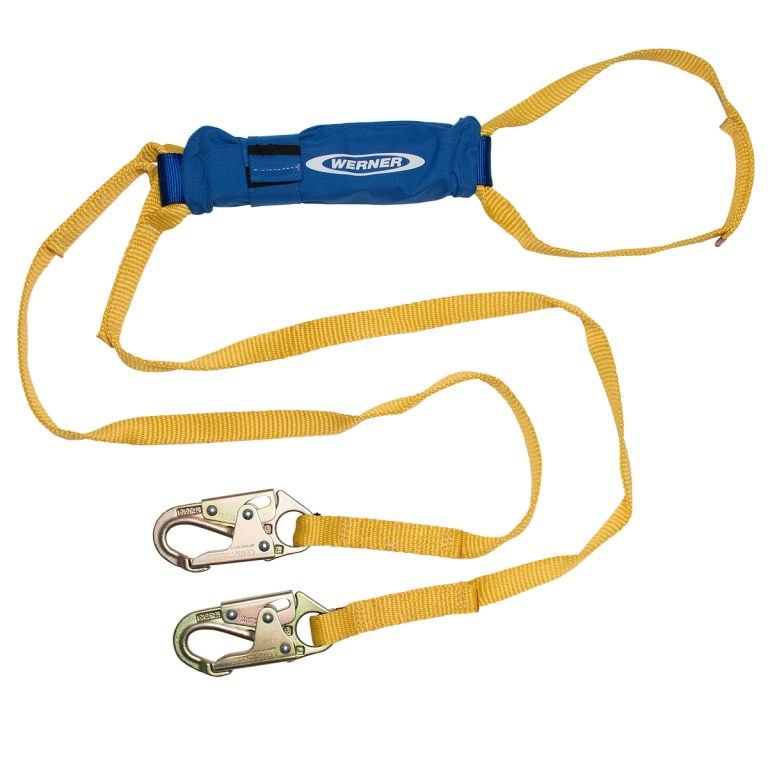
DeCoil twin leg lanyards use the DCELL shock pack with 1 inch wear-indicating webbing. The C411102 adds adjustment, the C411101 and C411201 add tie-back capability, the C411103 combines both, and the C411701 pairs tie-back webbing with a tie-back hook. Hook ends include rebar hooks on the C411200 and C411202, a standard carabiner on the C411302 and a large carabiner on the C411400. DeCoil Stretch versions, including the C441100, C441200 and C441400, pull in from 6 feet to 4 feet so the legs do not drag, and the C446200 DeCoil Stretch twinleg lanyard adds an 18 inch D-ring extender and rebar hooks with a 2.5 inch gate.
SoftCoil models, the C451100, C451200 and C453100, use an energy-absorbing inner core along the full length plus an integrated impact indicator. For heavier workers, the C411120 12 foot free fall twinleg lanyard and the C411220 carry an extra-thick DeCoil pack. Cable twin leg lanyards in the C461 range use vinyl-coated 1/4 inch cable, and the Werner arc flash C911100, C911200, C911800, C913100 and C913200 use Kevlar webbing.
Bring the hook and webbing questions to a free consultation in our Windham NH or Worcester MA showroom and compare the Werner twin options in person.
OSHA Limits and Ratings for Werner Twin Leg Lanyards
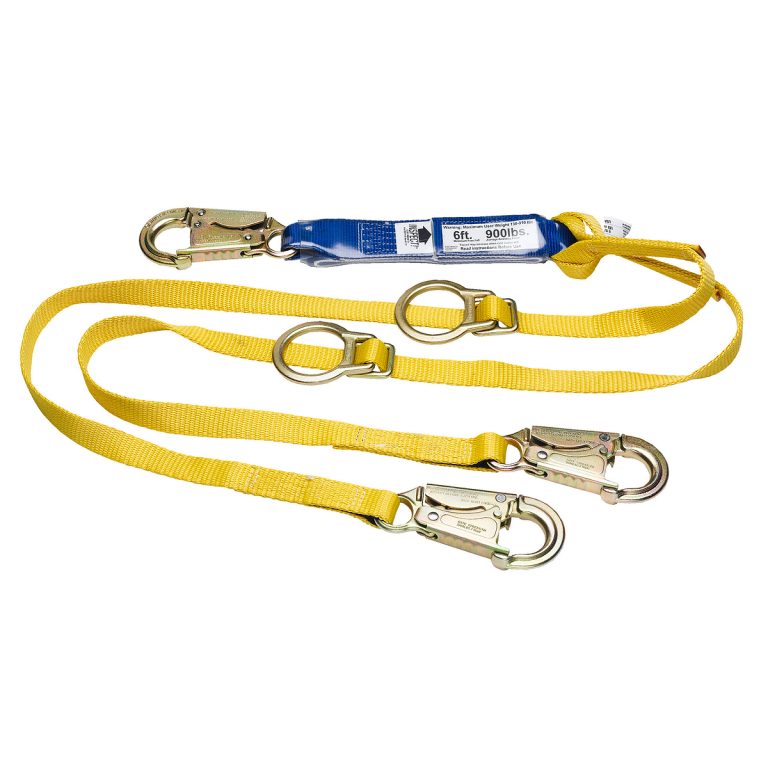
Werner rates its Kevlar arc flash twin leg lanyards to ANSI Z359.13 and to ASTM F887, along with OSHA 1926 and 1910. Every twin leg model has to fit inside OSHA’s arrest limits once connected to a harness, which means no more than 1,800 pounds of arresting force, no more than 6 feet of free fall and a stop within 3.5 feet of deceleration. OSHA also requires lanyards with a minimum breaking strength of 5,000 pounds, locking snap hooks, and D-rings and snap hooks proof tested to 3,600 pounds. Unless designed for it, a snap hook may not be engaged to webbing, rope, another snap hook or a D-ring that already holds a connector.
The heavy duty models show why the label matters. Werner designs the extra-thick pack on the C411120 for a foot-level tie-off with up to 12 feet of free fall for a 310 pound worker, and for workers up to 400 pounds when free fall is limited to 6 feet. Standard and heavy duty packs carry different limits, so read the capacity and free fall figures on each of the Werner twin leg lanyards before it is handed out.
Send us the worker weights and tie-off heights as a list, or call 603-434-6911 in NH or 508-754-3030 in MA, and we will quote the right Werner pack for each worker.
Picking and Inspecting Werner Twin Leg Hooks and Webbing
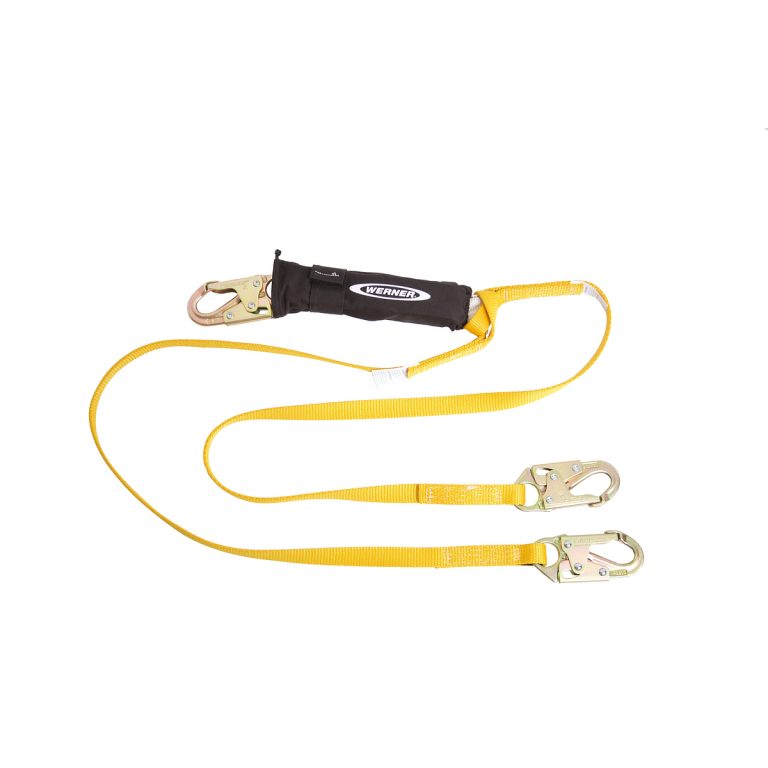
Start at the anchor end. Snap hooks fit D-ring anchors, beam anchors and slings, rebar hooks open wide enough for bar, pipe and structural steel, and carabiner versions such as the C411302 suit anchors where a snap hook does not seat cleanly. The 4 inch rebar hook on the C911800 and the 2.5 inch gate on the C446200 show how much openings vary. Stretch webbing suits rebar and forming crews who climb with the legs hanging, SoftCoil suits users who want the impact indicator built in, and cable suits heat and abrasion.
Twin leg lanyards have twice the webbing and twice the hooks, so the inspection needs twice the attention. Werner calls for a pre-use check every time and a yearly inspection by a competent person other than the wearer. Check both legs for cuts, fraying, burns, chemical damage and stiffness, confirm each hook closes and locks on its own, and look at the DCELL cover or the SoftCoil impact indicator for signs of an arrested fall. OSHA pulls any lanyard that has taken an impact load, and Werner allows hand washing in mild soap with air drying out of direct sun.
Replacement Werner twin leg lanyards travel on our own trucks door to door across New England, and we ship anywhere in the US.
Werner Twin Leg Lanyards Within the Wider Fall Protection Kit
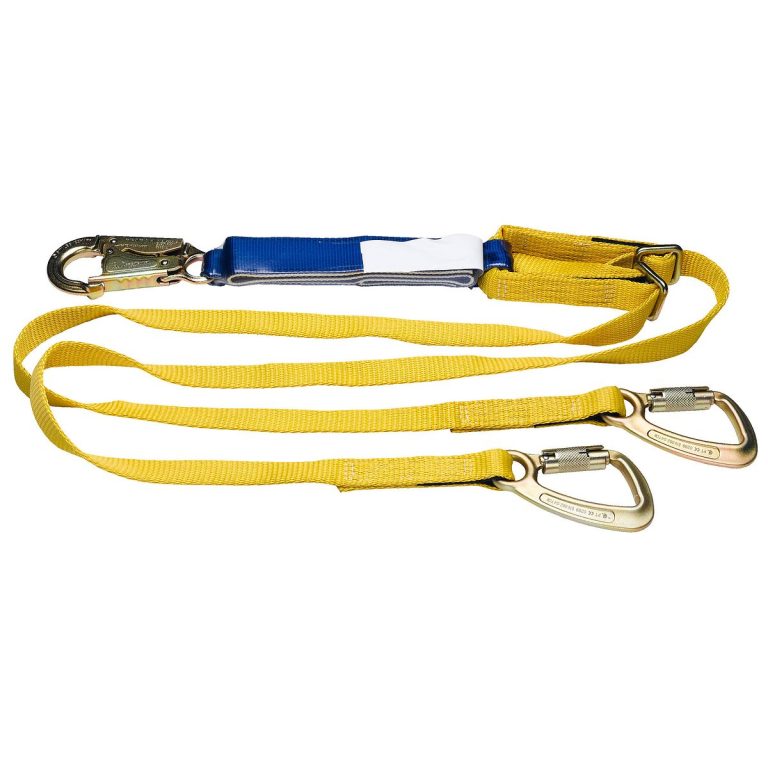
A twin design is only as good as the harness and anchors around it. Electrical crews pair the Kevlar models with our Werner arc flash harnesses, and the whole kit can be checked against our Werner lanyard overview. Steel and scaffold contractors often buy that gear alongside ladders and truck equipment from several manufacturers.
If your list runs past Werner, you can browse every manufacturer we carry in our ladder and truck equipment brands hub.
Why Steel and Scaffold Crews Source Werner Twin Leg Lanyards From Us
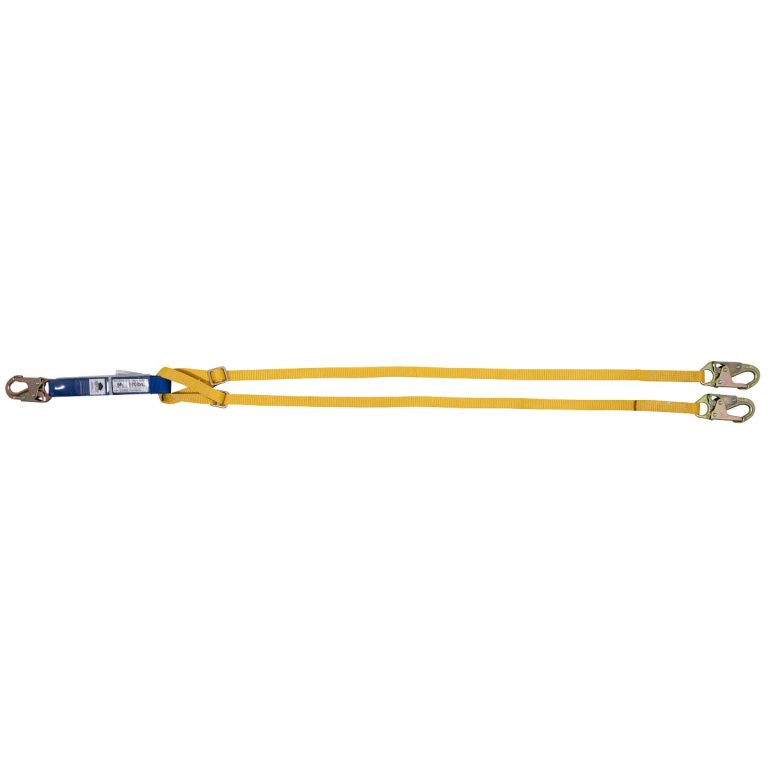
We have served homeowners and contractors for over 50 years, with Saturday morning hours at both locations for crews that work all week. Compare models in our lanyard category or the Werner brand page, then tell Nation Wide Ladder the structure, anchor spacing and worker weights, and we will quote Werner twin leg lanyards for the job.
Werner Twin Leg Lanyards FAQs
What does 100 percent tie-off mean with Werner twin leg lanyards?
The worker clips the free side to the next anchor before releasing the first, so they are never disconnected while moving.
Can both twin legs clip into the same D-ring on the harness?
Werner warns against putting two snap hooks into one D-ring, because it can cause rollout.
How does Werner SoftCoil differ from DeCoil?
DeCoil uses a DCELL shock pack that tears to absorb a fall. SoftCoil uses an energy-absorbing inner core along the whole lanyard plus an integrated impact indicator.
Which Werner twin leg lanyards suit workers up to 400 pounds?
The C411120 and C411220, which Werner rates for workers up to 400 pounds when free fall is limited to 6 feet.
Are there Werner twin models for work near energized equipment?
Yes. The arc flash C911100, C911200, C911800, C913100 and C913200 use Kevlar webbing and cite ASTM F887.
Can a Werner twin leg lanyard attach to an SRL?
No. Werner says a lanyard must never be attached to a self-retracting lifeline.
Need help choosing the right Werner equipment?
Talk to the team or send us your list and we will put a quote together.