Werner Lanyards
Werner Arc Flash Lanyards in Single Leg and Twin Leg Kevlar Webbing With Snap Hook, Loop and Rebar Hook Ends and More
Nine Kevlar web connectors for electrical and utility work at height, their leg and hook layouts, ASTM F887, ANSI Z359.13 and OSHA 1910.269 requirements, and inspection after arc exposure.
Werner arc flash lanyards are Kevlar web connectors for electricians, line crews and plant maintenance teams who work at height where an electric arc could reach the fall protection, and the challenge is keeping every link of the system intact after an arc. Nation Wide Ladder helps electrical crews choose among single leg and twin leg models with snap hook, web loop and rebar hook ends, including a twin leg with a 4 inch rebar hook.



- Over 50 years serving contractors
- MA, NH, CT, ME, VT & RI
- Weekly Maine deliveries
Where Werner Arc Flash Lanyards Belong on Electrical Work at Height
An electrical fault can release intense heat in a fraction of a second, and ordinary polyester webbing is not made to come through that and still catch a fall. Werner designs these connectors for jobs with potential exposure to an electric arc, using Kevlar webbing in place of polyester. They suit bucket truck and aerial lift crews, line workers on poles and towers, and facility electricians servicing switchgear or cable trays from a lift.
OSHA 1910.269 shows why the connector matters as much as the clothing. On power generation, transmission and distribution work, fall arrest equipment used by employees exposed to flames or electric arcs must be able to pass a drop test after exposure to an arc with a heat energy of 40 calories per square centimeter, plus or minus 5. The same standard requires a travel restraint or personal fall arrest system for each employee working from an aerial lift, and fall protection for employees more than 4 feet up on poles, towers or similar structures.
A Werner Kevlar lanyard only keeps that protection if the harness and anchor connector on either side are suitable for the same exposure, so Werner gear is chosen as a set.
Our team helps you check the arc exposure and access method on each job before you settle on Werner arc flash lanyards.
Nine Werner Arc Flash Lanyards Sorted by Legs, Ends and Hooks
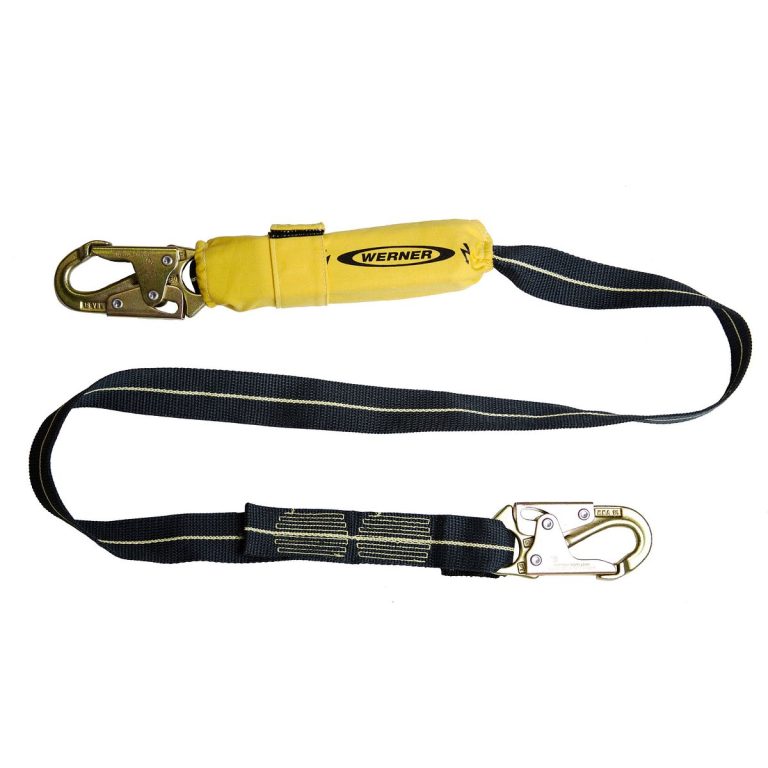
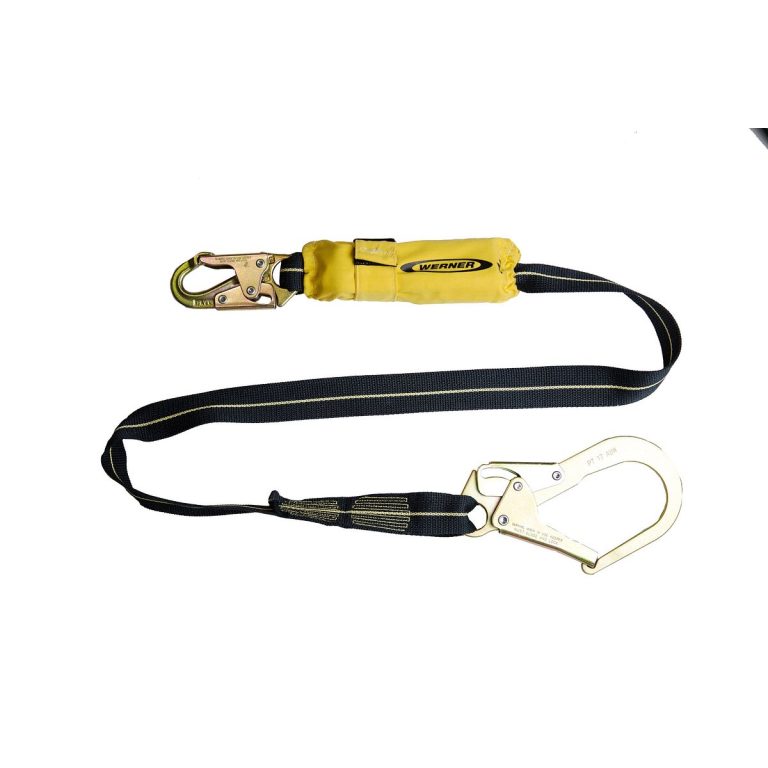
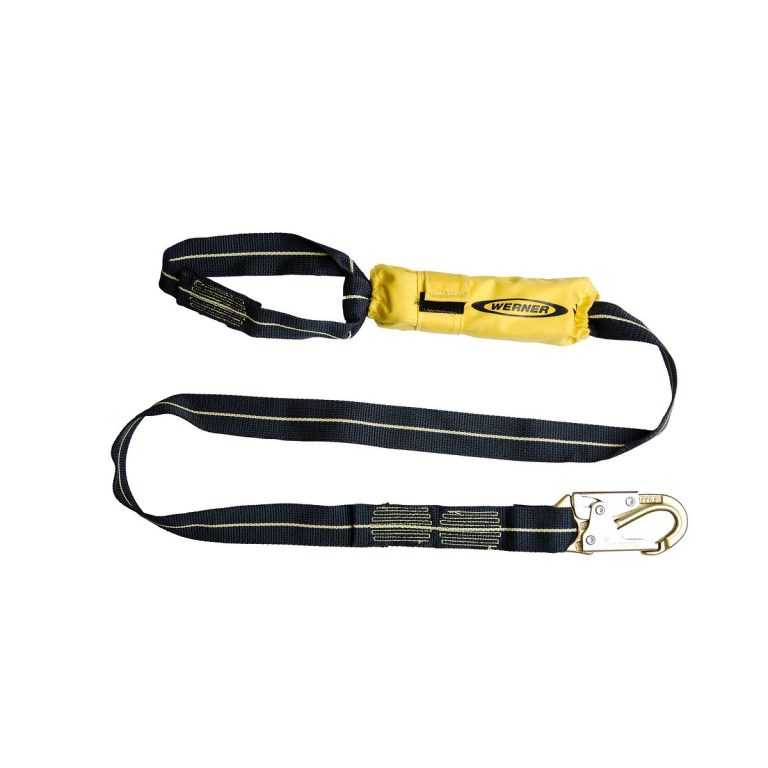
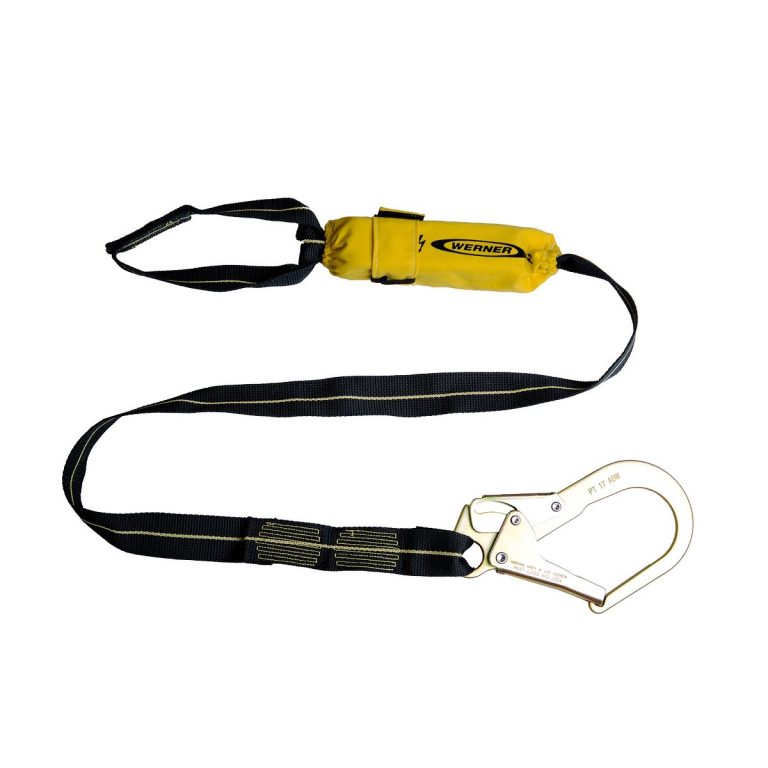
Werner’s single leg models start with the Werner C811100 single leg lanyard, which has snap hooks at both ends, and the C811200, which keeps the snap hook at the harness and puts a rebar hook at the anchor. The C813100 and C813200 replace the harness snap hook with a web loop, ending in a snap hook or a rebar hook. Single leg models suit a worker who stays at one tie-off point, such as a lineman in a bucket.
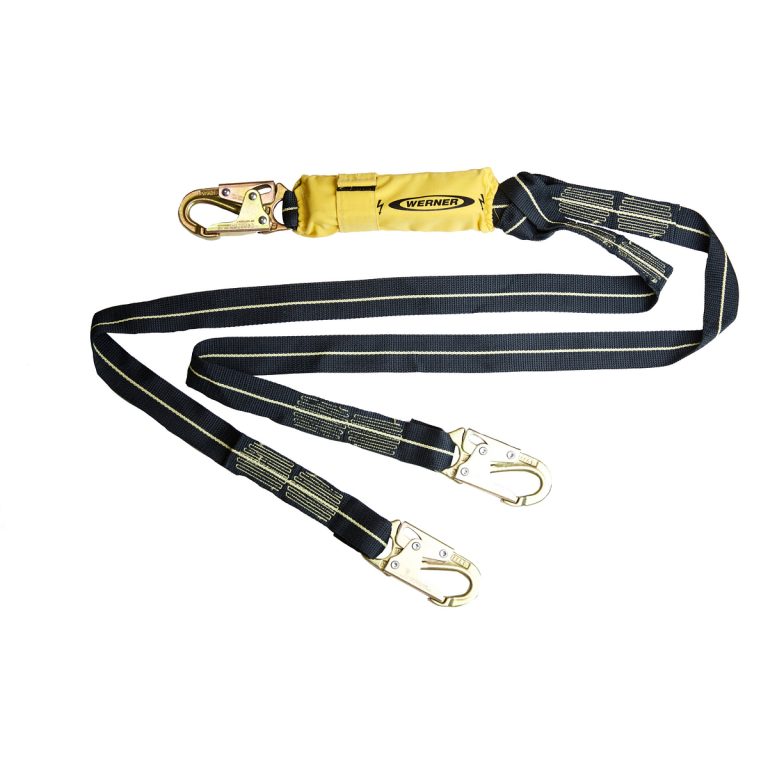
The twin leg models let a worker clip the second leg to a new anchor before releasing the first while moving across a structure. The C911100 carries snap hooks throughout, the Werner C911200 twin leg adds rebar hooks at the anchor ends, and the C911800 uses a larger 4 inch rebar hook for wider members. The Werner C913100 loop end twin leg and the C913200 attach to the harness by web loop, ending in snap hooks or rebar hooks.
That makes nine models from four single leg and five twin leg versions, so the choice comes down to how the worker moves and what the anchor is.
Send us the access method and anchor types on the job, or call 603-434-6911 in NH or 508-754-3030 in MA, and we will quote the matching arc flash models.
ASTM F887, ANSI Z359.13 and OSHA Rules Behind Werner Arc Lanyards
Werner states that the Kevlar web construction of each model satisfies ASTM F887 for arc flash, along with ANSI Z359.13 and the OSHA 1926 and 1910 fall protection requirements. That pairing reflects the two jobs the connector has to do, surviving the arc and then arresting a fall like any other lanyard.
The ordinary arrest limits still apply. OSHA 1926.502 holds arresting force to 1,800 pounds with a body harness, free fall to 6 feet and deceleration distance to 3.5 feet, and it requires snap hooks and D-rings with a minimum tensile strength of 5,000 pounds. Werner caps its shock-absorbing lanyard length at 6 feet, and it warns against clipping two snap hooks into one D-ring or hooking onto a webbing loop unless the hook is designed for it. Components sold as a system are not interchangeable with other brands, so pair Werner arc flash lanyards with arc-rated Werner harnesses rather than mixing makers. Arc-rated gear does not replace the employer’s electrical safety program, approach boundaries or arc-rated clothing.
At our Windham NH and Worcester MA showrooms you can compare Kevlar connectors and hardware in person before an energized job.
Inspecting Kevlar Webbing on Werner Arc Flash Lanyards
Werner calls for a check before each use and an inspection at least once a year by a competent person other than the user. Kevlar does not wear like polyester, so look closely along each leg for cuts, burns, glazed or discolored spots and broken stitching, and examine every snap hook and rebar hook for cracks, bends and a gate that fails to close and lock on its own. Werner says equipment showing a load indicator warning or any other defect must not be used.
Treat Werner arc flash lanyards exposed to an arc event as suspect until a competent person has examined them, and retire one that has arrested a fall. Clean the webbing by hand in a mild soap solution, rinse it, wipe it dry and hang it in a shaded, dry place, never in a washer or dryer. Mark inspection records on the label rather than the web. Store Werner Kevlar gear apart from general fall protection so a polyester lanyard never ends up on an energized job by mistake.
Both our showrooms keep Saturday morning hours, so a line crew can replace a suspect Kevlar lanyard without losing a weekday.
Werner Arc Flash Lanyards Within an Electrical Crew’s Full Kit
Kevlar connectors are one layer of an arc-rated system that also includes Werner arc flash harnesses with dielectric hardware, while the other Werner lanyards cover general work away from energized equipment. Electrical contractors often equip a truck with fiberglass ladders and racks from several manufacturers alongside this gear.
Whichever other makers are on that list, you can find them in our ladder and truck equipment brands hub.
Quoting Werner Arc Flash Lanyards for Utility and Electrical Crews
We have supplied contractors for over 50 years, and our own trucks deliver door to door across New England with shipping anywhere in the US. Visit the Werner brand page or the Werner store, then tell Nation Wide Ladder the electrical work, access method and crew size, and we will quote Werner arc flash lanyards with matching arc-rated harnesses.
Werner Arc Flash Lanyards FAQs
What standards do Werner arc flash lanyards meet?
Werner cites ASTM F887 for arc flash, ANSI Z359.13, and the OSHA 1926 and 1910 fall protection requirements.
Why do Werner arc flash lanyards use Kevlar webbing?
Werner designs them for work with potential exposure to an electric arc, and the Kevlar web is what lets the construction meet ASTM F887.
What does OSHA 1910.269 require of arc-exposed fall arrest gear?
It must pass a drop test after exposure to an electric arc with a heat energy of 40 calories per square centimeter, plus or minus 5.
Which Werner arc flash lanyard has the largest rebar hook?
The C911800 twin leg uses a 4 inch rebar hook at the anchor ends.
Single leg or twin leg Werner lanyards for bucket work?
A single leg model suits a worker who stays at one tie-off point, while twin leg models keep 100 percent tie-off when moving between anchors.
Can an arc flash lanyard be reused after an arc event?
Treat it as suspect until a competent person examines it, and retire any lanyard that has arrested a fall.
Need help choosing the right Werner equipment?
Talk to the team or send us your list and we will put a quote together.