
Werner Lanyards
Werner DeCoil Lanyards in Single Leg, Twin Leg, Stretch, Cable, Tie-Back and Adjustable Versions and More
The DCELL shock pack, C311 to C461 catalog families, hook ends, OSHA arrest and clearance limits, connection rules, and the inspection and cleaning steps that decide when a lanyard retires.
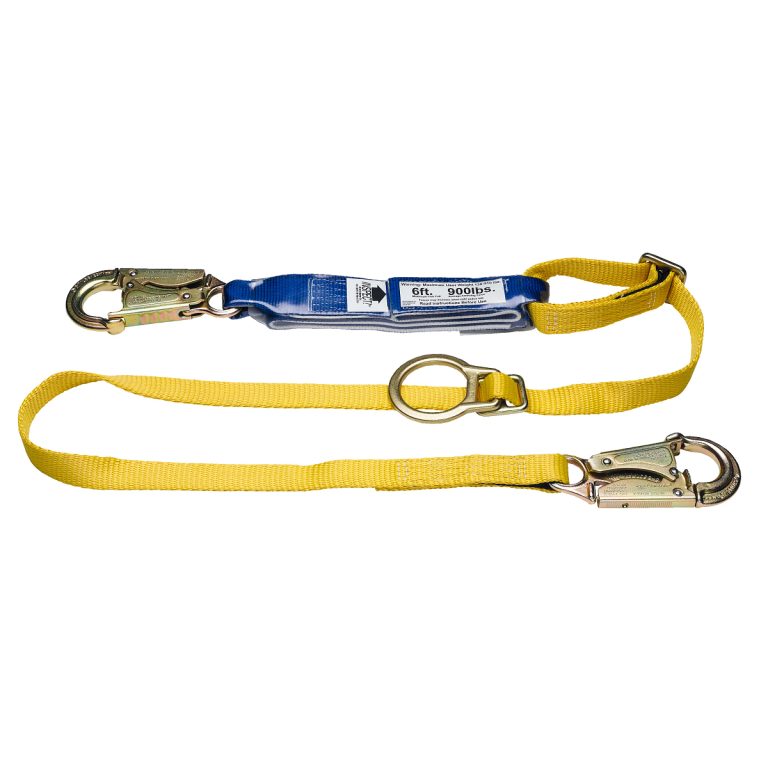
Werner DeCoil lanyards give roofers, framers and steel crews a shock-absorbing link between harness and anchor, and the hard part is choosing among about thirty variants that differ by leg count, webbing and hook. Nation Wide Ladder narrows that choice with you across single leg, twin leg, tie-back, adjustable, DeCoil Stretch and DeCoil cable models, with snap hook, rebar hook, carabiner and tie-back hook ends.



- Over 50 years serving contractors
- MA, NH, CT, ME, VT & RI
- Weekly Maine deliveries
What Sets Werner DeCoil Lanyards Apart at the Tie-Off Point
Every model in the range carries the DCELL shock pack, which Werner designs to tear in a controlled way during a fall so the force reaching the worker drops as the pack opens. That shared core is what separates Werner DeCoil lanyards from positioning straps and chain assemblies, which have no energy absorber and so cannot be used for fall arrest. Werner adds that a shock-absorbing lanyard can also do restraint duty, because a worker held back from an edge never loads the pack hard enough to deploy it.
Standard versions use 1 inch polyester webbing with wear indicating fibers, so damage shows during a visual check, while the tie-back versions move to an extra heavy duty web meant for harsh sites. Werner designs the snap hooks across the DeCoil range to resist false engagement. Six feet is the usual length, and the C311104 offers 3 feet where a shorter connection keeps free fall down.
DeCoil lanyards suit crews who tie off overhead to a beam, a roof anchor or a lift anchor point. When the work needs more reach than a 6 foot connector allows, Werner points users to a longer self-retracting lifeline rather than joining a lanyard to one.
Over 50 years of supplying contractors lets us match Werner DeCoil lanyards to the anchors your crew really ties off to.
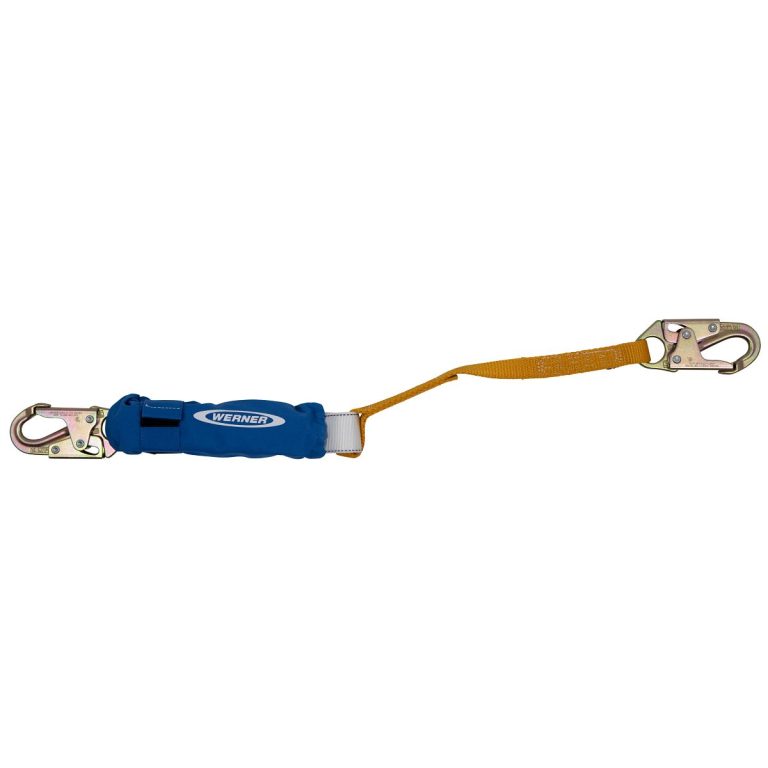
Werner DeCoil Lanyards by Leg Count, Webbing Type and Hook End
The catalog number tells you most of what you need. C311 models are single leg lanyards on 1 inch web, such as the Werner C311100 DeCoil lanyard with a snap hook at each end, and the C313100 swaps the harness end for a web loop. The C341100 DeCoil Stretch lanyard and its C341 siblings use elastic webbing that draws the 6 foot length back to 4 feet, which cuts tripping, dragging and snagging. C361 versions trade webbing for 1/4 inch vinyl coated cable, which Werner builds to resist heat and abrasion.
The C411 family repeats those choices as twin leg designs, so a worker can clip one leg to the next anchor before unhooking the other and keep 100 percent tie-off while moving. C441 Stretch and C461 cable twin legs follow the same pattern. Suffixes change the details within each family. Tie-back models such as the C311101 can wrap a beam and hook back onto their own web, adjustable models such as the C411102 adjustable twin leg shorten to suit the task, and hook ends run from snap and rebar hooks to standard or large carabiners and the dedicated tie-back hook on the C311701 and C411701. The C446200 adds an 18 inch D-ring extender to a stretch twin leg.
Send us a list of the tie-off points on your job, or call 603-434-6911 in NH or 508-754-3030 in MA, and we will quote the matching DeCoil variants.
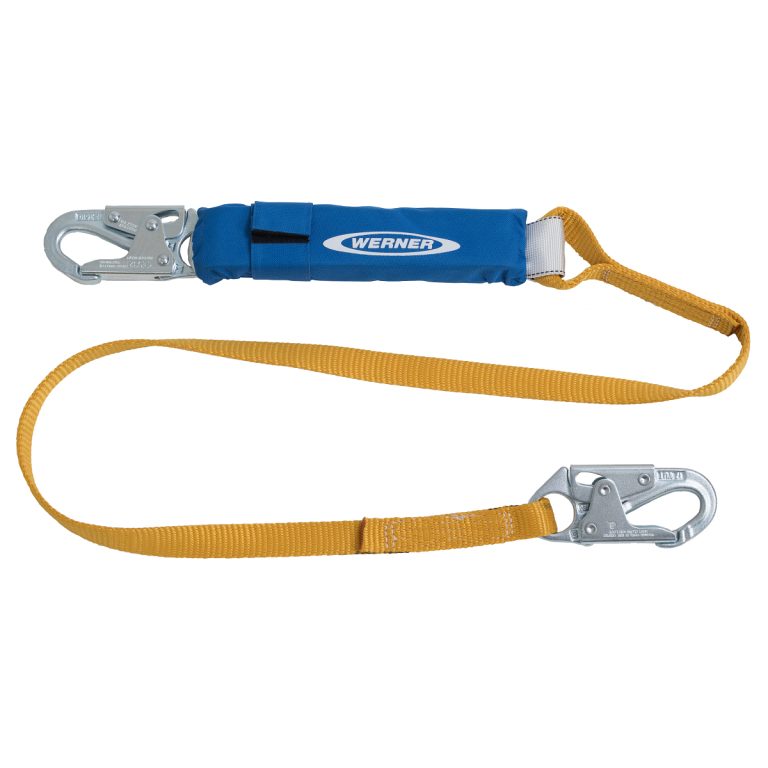
Clearance, Connections and OSHA Limits for DeCoil Lanyards From Werner
A shock pack only helps if the worker stops before reaching the next level down. OSHA 1926.502 requires a personal fall arrest system worn with a body harness to hold arresting force to 1,800 pounds, limit free fall to 6 feet and stop the worker within 3.5 feet of deceleration distance. It also sets 5,000 pounds as the minimum tensile strength for snap hooks and D-rings. Werner caps its shock-absorbing lanyards at 6 feet and makes 3, 4 and 5 foot lengths, so the shortest connector that reaches the work leaves the most clearance.
Connections cause as much trouble as length. Werner warns against clipping two snap hooks into one D-ring, hooking straight onto a horizontal lifeline or a webbing loop, and wrapping a standard lanyard around a beam, since only tie-back models carry that approval. OSHA and Werner both call for locking snap hooks designed for the connection they make. At an unprotected edge, Werner permits only connectors tested over an edge and marked for leading edge use, so read the label on Werner DeCoil lanyards before anyone ties off at foot level near an edge.
Our team checks anchor height, hook style and clearance from the details you send, so each DeCoil model on the quote suits the tie-off it will make.
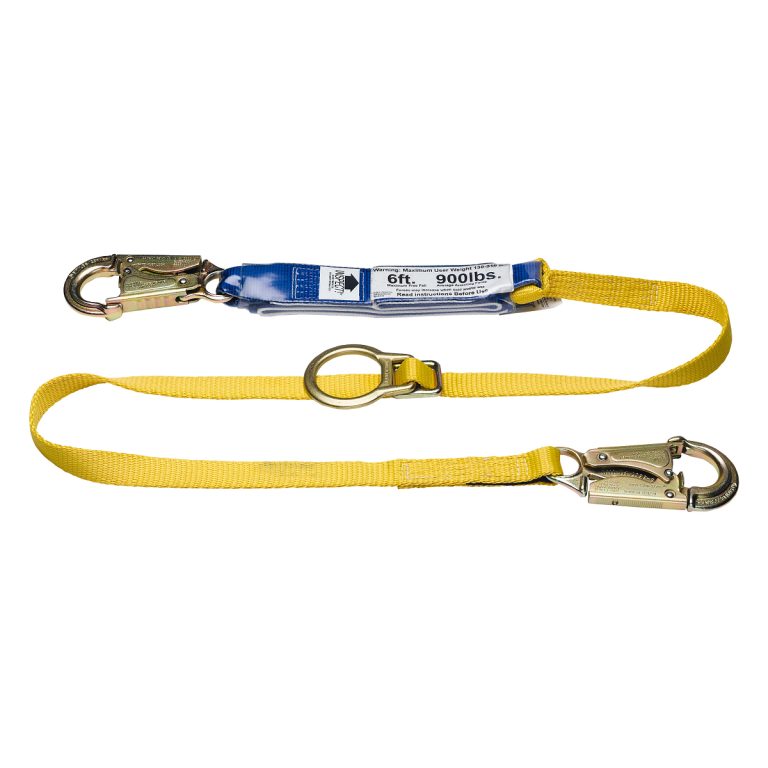
Inspecting and Cleaning Werner DeCoil Lanyards Between Jobs
Werner asks for a check before each use and an inspection at least once a year by a competent person other than the user. Start with the shock pack, since Werner says equipment showing a load indicator warning or any other defect must not be used. Run the web through your hands for cuts, burns, fraying and exposed wear fibers, check the stitching at both ends, and confirm each snap hook gate closes and locks on its own. On cable versions, look for kinks, broken strands and split vinyl, and on stretch models make sure the elastic still draws the lanyard back.
Werner does not mandate a five year service life, so the inspection decides when a lanyard retires, and one that has arrested a fall comes out of service. Clean the webbing by hand with a mild soap solution, rinse it, wipe it dry and hang it in a dry, shaded spot, never in a washer or dryer. To log inspections, Werner prefers that you write on the label, though a permanent marker is safe on polyester web.
Both our showrooms open Saturday mornings, so a crew can replace retired Werner DeCoil lanyards before Monday.
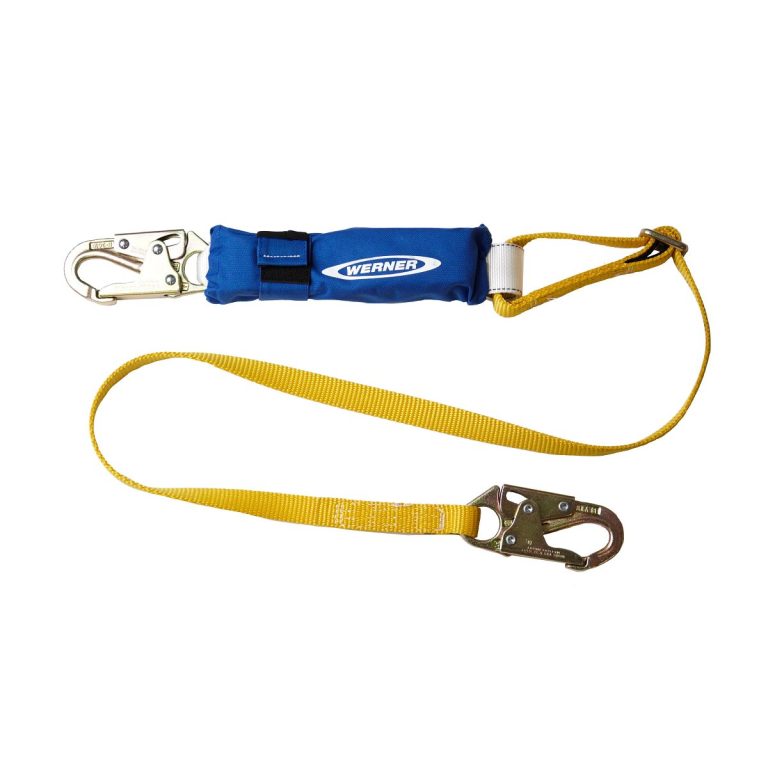
Where Werner DeCoil Lanyards Fit in the Wider Tie-Off Kit
A DeCoil connector sits between the harness on the worker and the anchor on the structure, so it is chosen alongside both. Many crews compare the range with the other Werner lanyards, then move to self-retracting lifelines as working distance grows. The ladders, staging and truck racks that get crews and gear up to the work usually come from other manufacturers.
If you are sourcing those as well, you can browse each maker we stock in our ladder and truck equipment brands hub.
Why Contractors Order Werner DeCoil Lanyards Through Us
Our own trucks deliver door to door across New England, with shipping anywhere in the US, so a mixed order of single leg, twin leg and stretch models arrives together. Start from the Werner brand page or the Werner store, then tell Nation Wide Ladder your anchors and tasks, and we will quote Werner DeCoil lanyards to match.
Werner DeCoil Lanyards FAQs
What does the DCELL pack do on Werner DeCoil lanyards?
It is the shock pack built into every model in the range, designed to tear in a controlled way during a fall so the arresting force on the worker is reduced.
Can Werner DeCoil lanyards be used for restraint?
Yes. Werner says shock-absorbing lanyards work for restraint as well as fall arrest, because restraint never loads the pack enough to deploy it.
Which Werner DeCoil lanyards can be tied back around a beam?
Only tie-back models, such as the C311101, C311701 and C411701, are meant to wrap an anchor and hook onto their own webbing.
How do DeCoil Stretch lanyards differ from standard DeCoil lanyards?
The C341 and C441 Stretch models use elastic webbing that contracts from 6 feet to 4 feet, which reduces tripping, dragging and snagging.
What lengths do Werner DeCoil lanyards come in?
Most are 6 feet, the longest length Werner offers for shock-absorbing lanyards, and the C311104 is a 3 foot option.
How often should Werner DeCoil lanyards be inspected?
Before every use, and at least once a year by a competent person other than the user.
Need help choosing the right Werner equipment?
Talk to the team or send us your list and we will put a quote together.