Werner Fall Protection Harnesses
Werner Positioning Harnesses With Back and Hip D-Rings, Climbing Front Rings, Belts and More
Hip D-ring layouts across Blue Armor, LiteFit, ProForm F3, Hi-Viz and Arc Flash models, the M2100 belt, OSHA free fall and anchorage limits, buckle fit and between-shift inspection.
Werner positioning harnesses add a pair of hip D-rings to the back fall arrest ring, so a worker can lean into a positioning lanyard and keep both hands on the job. The hard part is matching the ring layout, buckles and anchorage to the trade, and Nation Wide Ladder helps crews get that match across the Blue Armor, LiteFit, ProForm F3, Hi-Viz and Arc Flash families, the climbing models with a front D-ring, and the Werner M2100 positioning belt.




- Over 50 years serving contractors
- MA, NH, CT, ME, VT & RI
- Weekly Maine deliveries
Who Wears Werner Positioning Harnesses on the Job
OSHA’s general industry rules describe a positioning system as equipment that supports a worker on an elevated vertical surface, such as a wall or column, while leaving both hands free. That definition explains why rebar tiers, concrete form setters, masons, utility crews on poles and tower technicians choose Werner positioning harnesses with side rings. A positioning lanyard runs from one hip D-ring, around or onto the structure, and back to the other hip ring, so the worker can lean into the strap and use both hands.
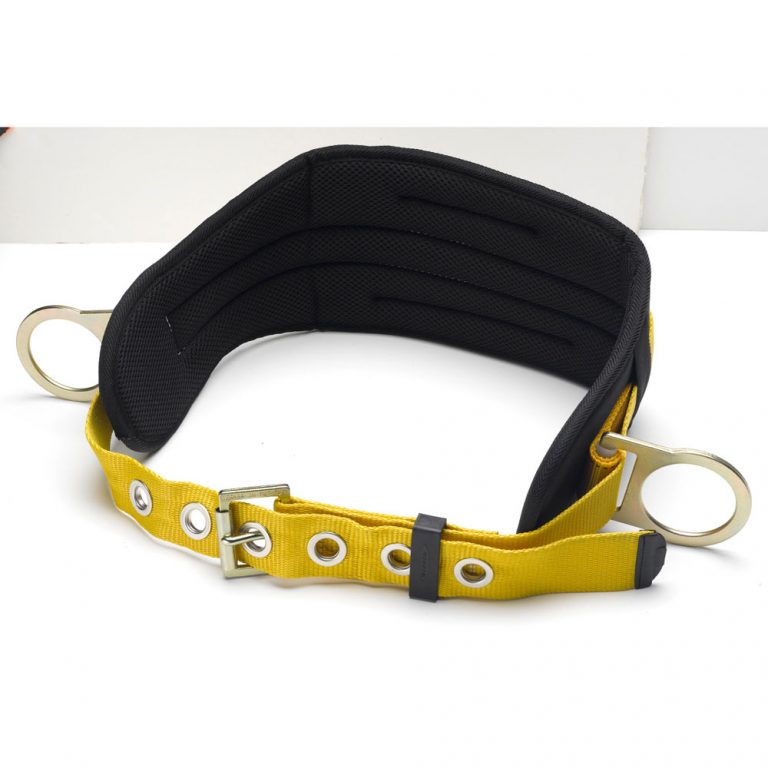
A fall still has to be stopped. Each of the Werner harnesses in the range keeps a dorsal D-ring between the shoulder blades, the attachment point OSHA requires for fall arrest, so a shock-absorbing lanyard or self-retracting lifeline stays clipped to the back while the hips carry the working load. OSHA has refused body belts in personal fall arrest systems since January 1, 1998, although it still accepts them for positioning, so the Werner M2100 belt belongs to positioning work only.
Our team checks the trade, the structure and the tie-off plan with you, so the Werner harnesses you order suit the work your crew actually does.
Werner Positioning Harnesses in Blue Armor, LiteFit and ProForm F3
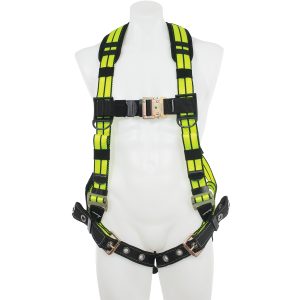
Blue Armor is the heavy-use family. The H132004, H133004, H231004 and H232004 pair a forged alloy steel dorsal ring with waist D-rings, relief handles for the Gravity Override position, WebAlert inspectable webbing and impact indicators. Buckles separate them, with quick connect chest and legs on the H133004, slotted pass-through buckles on the H231004 that Werner says fasten without twisting, and a pass-through chest with tongue buckle legs on the H232004. The Hi-Viz H132004XHV positioning harness switches to green webbing with load indicators for quicker inspection.
LiteFit models such as the H331004 and H332004 keep the back and hip layout at a lighter weight with five-point adjustment, and the LiteFit Plus H332004XQP adds foam padding on the back and shoulders. ProForm F3 comes as the H032004 with tongue buckle legs or the H033004 with quick connect legs, both with relief cords that drop a built-in seat after a fall. For ladder climbing systems, the Blue Armor H162004, LiteFit H361004 and ProForm F3 H062004 add a front D-ring, while the Arc Flash H934004 covers positioning near energized equipment.
You can talk through the Werner families at a free consultation in our Windham NH or Worcester MA showroom before committing a crew to one.

OSHA Free Fall, Anchorage and Hardware Limits for Werner Positioning Systems
Positioning has its own rules, separate from fall arrest. Under OSHA 1926.502(e), a positioning device has to be rigged so the worker cannot free fall more than 2 feet, and it must be secured to an anchorage able to support at least twice the potential impact load or 3,000 pounds, whichever is greater. A rebar mat or form tie rarely gets checked against that figure, so the competent person on site should confirm the anchor before anyone leans back.
Connectors must be drop forged, pressed or formed steel or an equivalent material with a corrosion-resistant finish. D-rings and snap hooks are proof tested to 3,600 pounds, connecting assemblies need a minimum tensile strength of 5,000 pounds, and only locking snap hooks are allowed, which matters on a strap clipped and unclipped dozens of times in a shift. OSHA 1910.140 adds that positioning systems must withstand a 4 foot drop of a 250 pound weight without failure. Werner states that components sold as a system are not interchangeable with other brands, so match the lanyard to the Werner harnesses rather than mixing makes.
Send us a list of the harnesses, lanyards and connectors on the job and we will quote a matched Werner system, by phone at 603-434-6911 in NH or 508-754-3030 in MA.
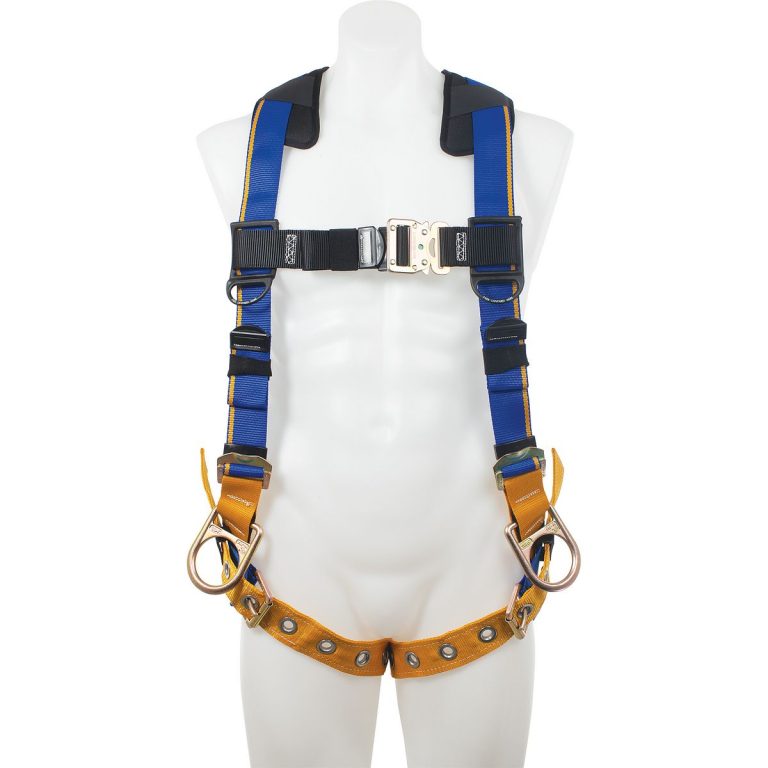
Fitting, Buckles and Inspection for Werner Positioning Harnesses
Hip rings only work when they sit at the hips. Once the leg and chest straps are snug, the waist D-rings should ride level on each side, with the dorsal ring centered near shoulder level, the location OSHA sets for the fall arrest attachment. Werner builds five-point adjustment into its Blue Armor and LiteFit harnesses so the wearer can square the fit before climbing. Tongue buckle legs make it easy to reset the fit when Werner harnesses are shared from the gang box, and Werner describes quick connect buckles as fast and easy to connect. The listings on our store are XL versions, so give us your crew’s sizes on the quote.
OSHA requires positioning systems to be inspected before each use, and Werner adds a yearly inspection by a competent person other than the user. Check each hip D-ring for cracks, sharp edges and distortion, and use WebAlert webbing, impact indicators or the Hi-Viz load indicators to spot wear or a fall. Any harness that has arrested a fall leaves service for good. Werner allows hand washing with mild soap and air drying away from direct sun, and it sets no fixed five-year expiry, so condition at inspection decides retirement.
When an inspection retires a harness, our own trucks deliver replacements door to door across New England, and we ship anywhere in the US.
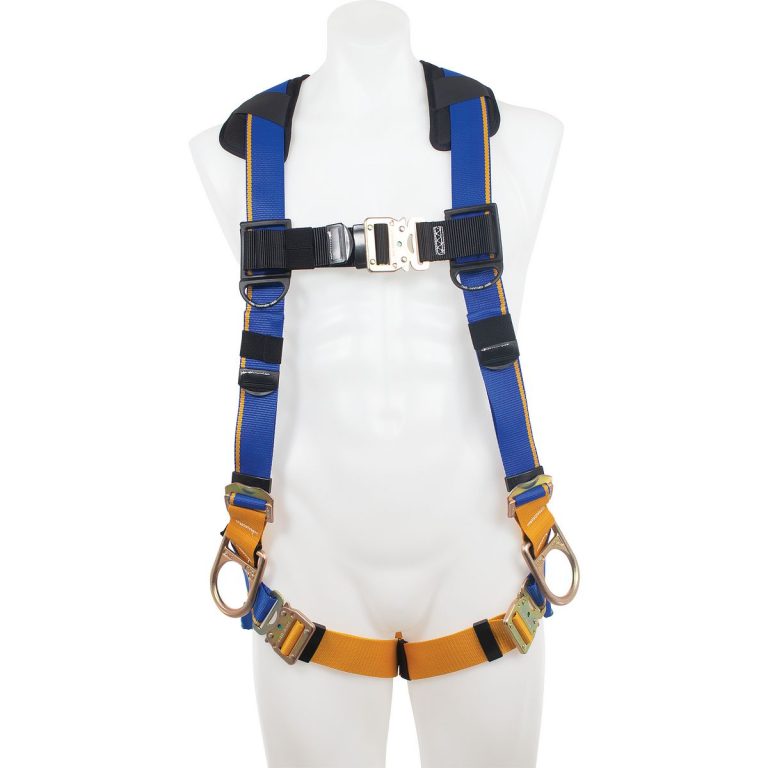
Werner Positioning Harnesses Within a Complete Fall Protection Setup
Hip rings are one piece of a larger plan. The crew still needs an anchor rated for the job, a fall arrest connection to the back ring, and the Werner positioning lanyards that clip between the hips, with other layouts in the wider Werner harness range. Contractors fitting out a site usually source that gear alongside ladders and truck equipment from several manufacturers.
You can line Werner up against the other manufacturers we carry in our ladder and truck equipment brands hub.
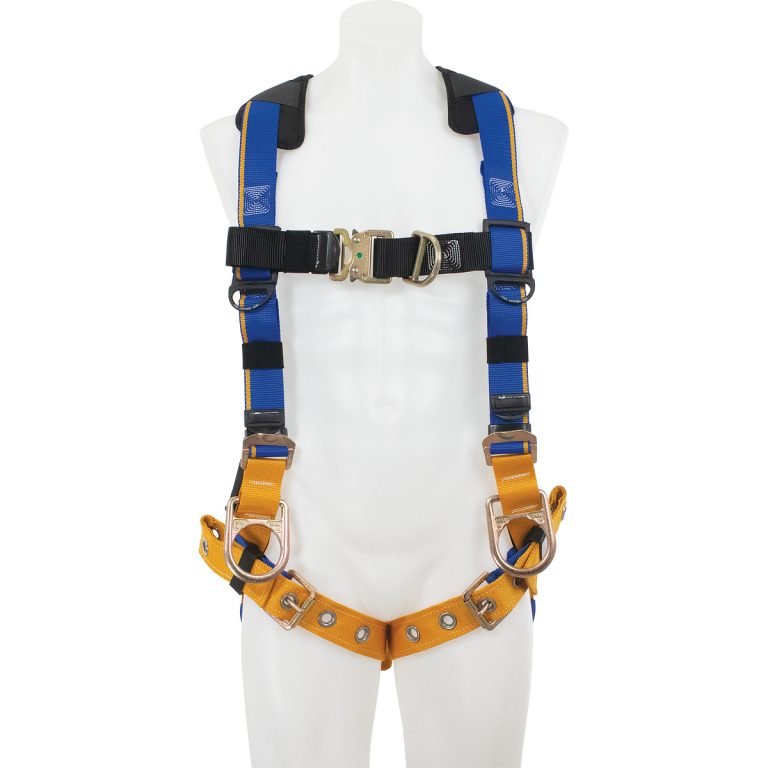
Why Contractors Source Werner Positioning Harnesses From Us
We have spent over 50 years serving homeowners and contractors, and our quotes start from the hip rings, the anchor and the fit that positioning work depends on. Compare models in our harness store category or the full Werner fall protection lineup, then send Nation Wide Ladder the trade, anchor setup and sizes for a quote on Werner positioning harnesses.
Werner Positioning Harnesses FAQs
Can I use the hip D-rings on Werner positioning harnesses for fall arrest?
No. OSHA places the fall arrest attachment at the center of the back near shoulder level. The hip D-rings are for positioning lanyards only.
How far can a worker free fall on a Werner positioning system?
OSHA 1926.502(e) limits positioning devices to 2 feet of free fall.
What anchorage do Werner positioning harnesses need?
One that supports at least twice the potential impact load of a fall or 3,000 pounds, whichever is greater.
Can the Werner M2100 positioning belt replace a harness?
Only for positioning. OSHA has not accepted body belts in personal fall arrest systems since January 1, 1998.
How often should Werner harnesses be inspected?
Before each use under OSHA, plus a yearly inspection by a competent person other than the user, as Werner recommends.
Which Werner harnesses add a front D-ring for ladder climbing?
The Blue Armor H162004, LiteFit H361004 and ProForm F3 H062004 add a front D-ring to the back and hip layout.
Need help choosing the right Werner equipment?
Talk to the team or send us your list and we will put a quote together.